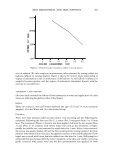
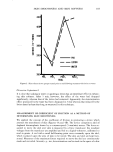
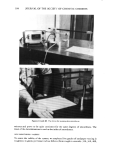
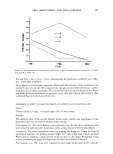
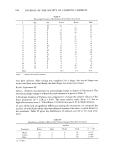
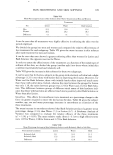
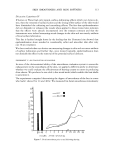
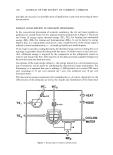
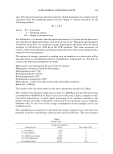
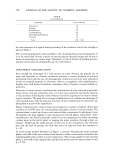
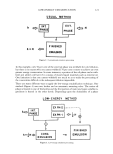
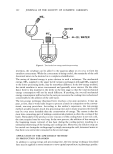
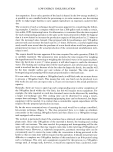
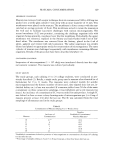
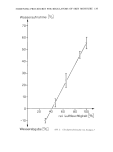
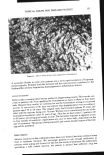
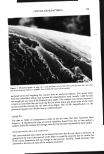
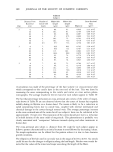
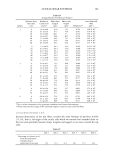
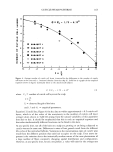
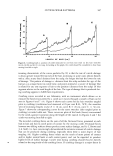
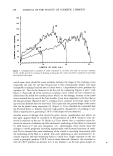
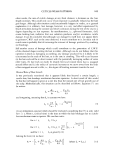
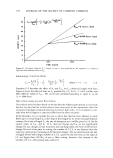
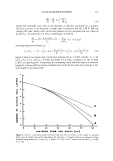
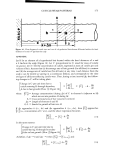
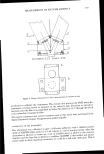
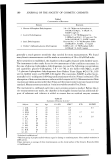
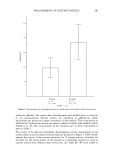
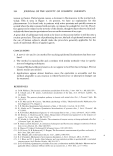
MEASUREMENT OF ENZYME KINETICS 181 4 • Normal Psoriasis n=6 n=6 • = 1.98 X = 3.75 t 0.995 =- 3.11 Figure 2. Epidermal glucose-6-phosphate activity in normal subjects and subjects with active psoriasis within the chamber. The system, after cleansing again with distilled water, is ready for in vivo measurements. Enzyme activity was calculated in /xM/min/cm2 (milli- micromoles per minute per square centimeter of skin surface). This is equiyalent to mU/min/cm 2 (miliunits per minute per square centimeter) which is'the method used by Schalla et al. (9). The concentration of the reactants used in these experiments is given in Table I. The results of the glucose-6-phosphate dehydrogenase activity measurement on six normal subjects and six subjects with psoriasis are presented in Figure 2. Table II sum- marizes the activity of the enzymes measured on 12 normal subjects. Activities are recorded for the dorsal surface of the forearm as considerable variation is noted in enzyme activity from different areas of the body (see Table III). We were unable to

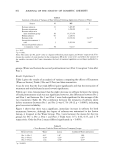
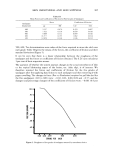
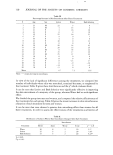
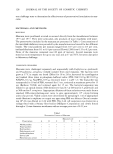
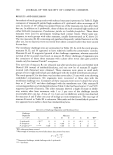
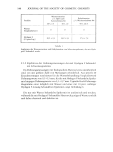
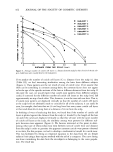
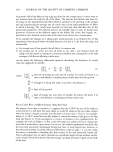
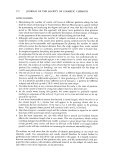
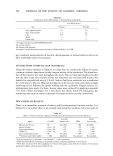
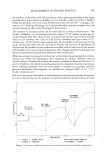
182 JOURNAL OF THE SOCIETY OF COSMETIC CHEMISTS Table III Comparison of G:6-PD Activity on Various Parts of the Body G-6-PD Activity • Site Normal Psoriasis Arm: palmar surface 2.2 3.9 Arm: dorsal surface 1.5 3.5 Calf 0.6 1.0 Thigh -- -- Lower back -- -- *Averages calculated in/zM NAPDH/3min/cm 2. Six normal subjects. Six subjects with psoriasis. Average of 3 measurements per area, per patient. Reproducibility _+ 0.6/zM. get consistent measurements of isocitric dehydrogenase in normal subjects and not at all in individuals with active psoriasis. STUDIES WITH COSMETIC RAW MATERIALS Using the values obtained in Table II as a base line, we studied the effects of certain common cosmetic ingredients on the enzyme activity of the epidermis. The dorsal sur- face of the forearm was used throughout the study. The test material was placed on the test site after a base line enzyme activity was obtained care was exercised to place the material in a preselected area of 3.8 cm 2. Subject had been instructed not to wash arm for 24 hr prior to the test. Material was placed on the test site with a microliter syringe delivering 10 /•1, followed by gentle rubbing into the epidermis. Repeat enzyme de- terminations were made 4 hr later. Anoxic states were induced by applying a standard 1-in.-wide rubber tourniquet for 3 rain above the elbow. Table IV summarizes the results reported as an increase or decrease of enzyme activity over the control rate. DISCUSSION OF RESULTS There is an immediate question of what is really being measured in these studies. It is believed by the author that we are actually measuring the oxidation-reduction state of Table IV Effect of Various Cosmetic Agents on the Reaction of Two Enzymes in Normal Subjects* G-6-PD LDH Agent G-6-PD Anoxic state LDH Anoxic state Mineral oil (70 visc.) -80 No effect -80 No effect Lanolin alcohol - 10 to -20 + 50 + 50 + 80 Isopropyl palmitate - 10 to - 20 + 50 + 50 + 80 •*Bath oil - 10 to -20 + 50 + 50 + 80 Lactic acid/sodium lactate - 90 No effect + 100 + 100 **•Sodium lauryl ether sulfate - 100 Inhibited Not studied Not studied *Activity expressed as % increase (+) or decrease (-) over control rate. **Experimental bath oil containing no isopropyl myristate, isopropyl palmitate, or mineral oil. ***The skin was tested 4 hr after application of 10/zl of the agents used, with the exception of the sodium lauryl ether sulfate, which was tested after 0.5 hr.
Purchased for the exclusive use of nofirst nolast (unknown)
From: SCC Media Library & Resource Center (library.scconline.org)