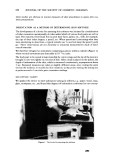
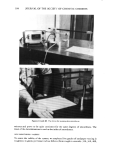
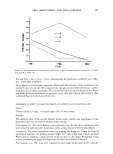
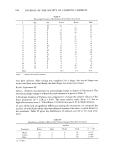
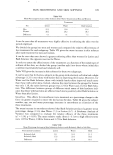
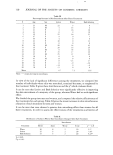
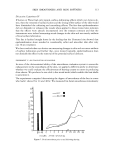
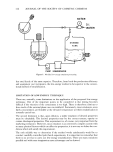
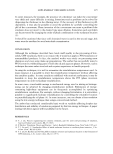
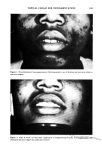
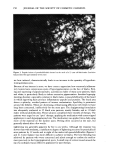
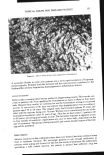
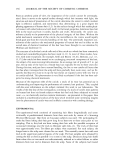
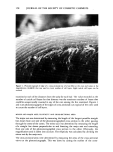
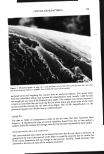
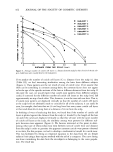
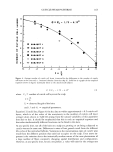
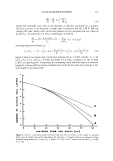
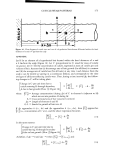
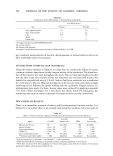
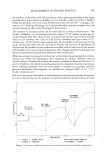
150 JOURNAL OF THE SOCIETY OF COSMETIC CHEMISTS Figure 3. Papular lesions of pseudofolliculitis located on the neck of a 23 year old black male. Condition had persisted for approximately seven years ter how induced, characteristically leads to an increase in the quantity of hyperfunc- tioning melanocytes. Because of our interest in acne, we have come to appreciate how commonly inflamma- tory lesions leave conspicuous spots of hyperpigmentation on the face of blacks. Pick- ing and squeezing of papulo-pustules, a pernicious habit of many acne patients, black and white, is particularly likely to induce excessive pigmentation. Another hyperpig- menting disorder, especially common in black males, is pseudofolliculitis of the beard in which ingrowing hairs produce inflammatory papules and pustules. The beard area shows a splotchy, mottled pattern of intense melanization. Speckling is prominent around the follicles. These are distressing, embarrassing afflictions with which we have long been concerned, ineffectively for the most part. The depigmenting formulation was adequately evaluated in 25 black acne patients, mainly females, and in 11 black males with pseudofolliculitis. These subjects completed three months of therapy. The patients were urged to use "spot" therapy, applying the medication with cotton-tipped applicators to each hyperpigmented site. The medication was applied twice daily using more of the material on the darkest spots. Peeling often occurred at the start, but generally abated after a few weeks. Lightening was generally apparent by five to six weeks. Although the response was slower than with melasma, a satisfactory degree of lightening occurred in practically all acne patients by 12 weeks and in eight of the males with pseudofolliculitis (Figures 3 and 4). Color balance was more difficult to achieve in blacks. The best blending was achieved by patients who were concerned and adroit enough to confine the medica- ment precisely to the hyperpigmented spots. A small wisp of cotton wound around the tip of a toothpick was an effective applicator for spot therapy.

TOPICAL CREAM FOR DEPIGMENTATION 151 -': .j •.-,-... • • • • , •-•...• -- •_•......& •.•..• • .., .•. • • ......:. • .'2•..-" •.: • 1.1•. Figure 4. After 5 weeks of twice-daily application of formulation A secondary benefit in some acne patients was a more rapid resolution hyperpi mented papules. Probably both the tretinoin and the corticosteroid contributethetoof healing effect of these long-lasting, hyperpigmented, inflammatory lesions. SENILE LENTIGINES Earlier trials in treating these lesions produced disappointing was out- come in patients who were applying the formulations daily. Despite these results, we continued to use the formulation, success. In one review of the data, we realized that alepigmentatioinandtheofyearsoccasitimesthefourpatientsoneatonfind-ofoccurrin65antheorapparentwasreportisThisdependenthreenotingtestedasresults.detailedhaveconcentratedmanytwiceincludedasto patients aged 50 to 60 years. The original study had patients older with the majority being over 70 years. We have since use formulation in patients under 65 years of age. Thus far, we 11 (40 to 60 years), recording good results in nine. The favorable response to four months of treatment. Applications are once daily, the rate of resolution. This group is being expanded and a more the ings will be published. DISCUSSION Adverse reactions to this combination have been very limited, the most mild to moderate irritation. We encourage patients to use enough produce some scaling and dryness for the first few weeks of treatment. provoking a mild irritant reaction, the patient is assured that sufficienthasdrugdelibertobeingmedicaticommonBy
Purchased for the exclusive use of nofirst nolast (unknown)
From: SCC Media Library & Resource Center (library.scconline.org)