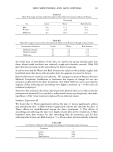
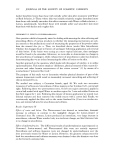
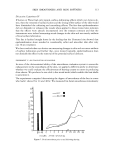
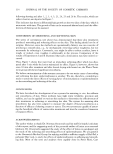
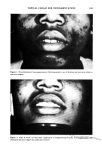
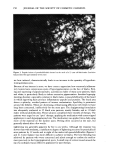
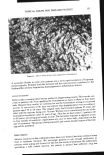
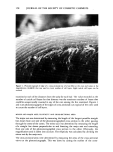
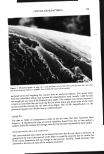
148 JOURNAL OF THE SOCIETY OF COSMETIC CHEMISTS and it seems a likelihood that the rapid outward migration of cells might interfere with the transfer of pigment granules from melanocytes to keratinocytes. Thus the triad of active components collaborate to curtail the synthesis of melanin, reduce the produc- tion of membrane-bound melanosomes in which the pigment is aggregated, impair the donation of melanosomes to keratinizing cells and promote the more rapid loss of pig- ment via increased epidermopoesis. Before a combination of such pharmacologically potent drugs can come into general use, there must be extensive clinical evaluation to learn the advantages and limitations in the therapy of hyperpigmentary disorders. The latter are misery-inducing conditions which cause great emotional suffering they should not be viewed as mere cosmetic nuisances. In this paper we shall report further experiences and a new indication for this depigmenting formulation. MATERIALS AND METHODS COMPOSITION AND SUBJECTS The subjects were out-patients of the Hospital of the University of Pennsylvania and the test formulation was: Tretinoin 0.1 per cent Hydroquinone 5.0 per cent Dexamethasone 0.1 per cent Hydrophilic Ointment U.S.P.q.s. and material was never more than two months old. CLINICAL STUDIES MELA SMA The subjects were 19 young adult females whose facial pigmentation was linked to the taking of contraceptive pills. The cream was applied before retiring once daily for the first week. In all but a few who experienced too much discomfort from peeling and dry- ness, the exposure was increased to twice daily to speed up the response. Lightening was generally clear-cut by the third to sixth week. By 12 weeks, the hy- perpigmented areas had virtually blended with the surrounding normal skin in 16 of the 19 patients. In these, the results were excellent. The normal skin of white persons is comparatively resistant to the lightening effect. The results were only moderately good, however, in two patients, though both expressed satisfaction with the result. One patient was inexplicably resistant and did not achieve a satisfactory result even after four months. Once-daily application was sufficient for maintaining the lightening at the desired level. POSTINFLAMMATORY HYPERPIGMENTATION Hyperpigmentation is a very common residium of inflammatory disorders on the skin of blacks. Intense pigmentation may follow a variety of pathologic changes: via insect bites, contact allergy, abrasions, burns, etc. (Figures 1, 2). Damage to the skin, no mat-

TOPICAL CREAM FOR DEPIGMENTATION 149 Figure I. Postinflammatory hyperpigmentation following patient's use of abradant and anti-acne lotion to treat acne vulgaris Figure 2. After 8 weeks of twice-daily application of depigmenting formula, hyperpigmentation ,,v.: eliminated and acne vulgaris was under good control
Purchased for the exclusive use of nofirst nolast (unknown)
From: SCC Media Library & Resource Center (library.scconline.org)