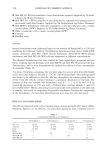
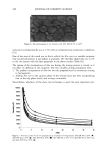
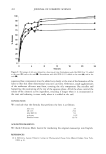
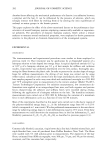
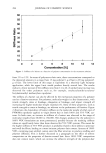
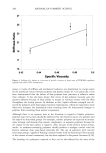
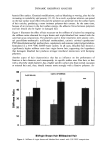
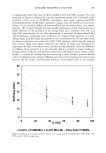
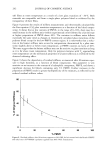
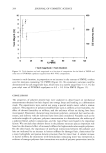
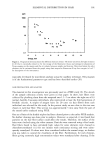
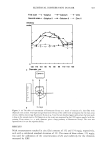
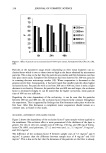
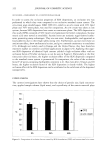
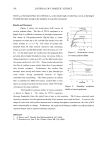
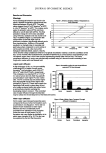
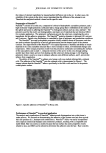
DYNAMIC HAIRSPRAY ANALYSIS 289 is significantly lower than that of fibers modified with low-VOC systems. The data presented in Figure 6, obtained for co(vinyl pyrrolidone-methacrylic acid-lauryl meth- acrylate), ethyl ester of PVM/MA copolymer, and vinyl caprolactam/PVP/ dimethylaminoethyl methacrylate copolymer, suggest that the presence of water con- tributes to an increased stiffness of resin-modified hair for both cationic and anionic polymers. We initially thought that one possible explanation of this observation was a small difference in the geometry of the omega loops after treatment with low- and high-VOC formulations. In our early experiments, a treatment of omega-shaped hair with formulations containing water resulted in the change of hair geometry to a more oblong shape, with the longer axis parallel to the vertical direction. On the other hand, no change in geometry was evident for 100% VOC products, which typically retained their circular shape after drying. However, the change of shape was eliminated by supporting the loops with teflon-coated cylinders during treatment. Since the difference in stiffness values persisted, it is now thought that it is related to water's ability to strongly interact with hair and facilitate interactions with fixative resins. Water, unlike alcohol, is capable of swelling hair and producing a more intimate polymer-keratin contact by allowing some polymer diffusion into hair or by activating ionic interactions between the hair surface and hairspray polymers. This should result in the stronger 6O 5O o 40 10 0 20 40 60 80 100 % voc * Co(VCL-VP-DMEMA) ß Co(VP-MA-LM) • Ethyl Ester PVM/MA Figure 6. Stiffness as a function of water content in a solvent system for 100% VOC, 80% VOC, 55% VOC, and 0% VOC compositions.

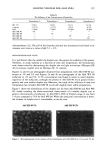
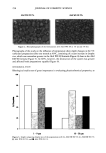
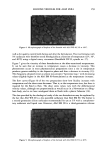
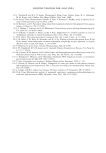
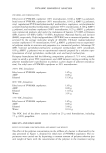
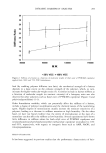
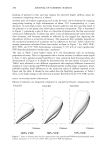
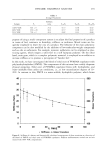
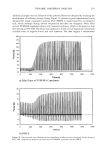
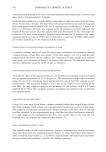
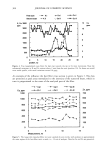
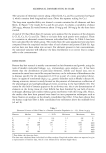
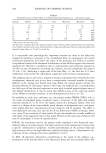
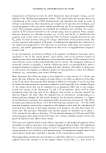
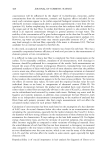
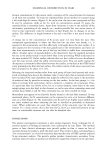
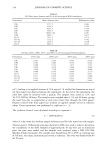
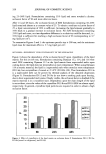
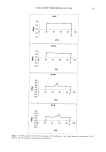
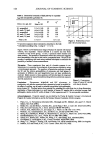
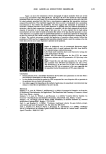
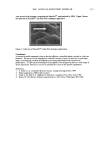
290 JOURNAL OF COSMETIC SCIENCE bonding of polymer to hair and may explain the observed higher stiffness values for treatments comprising water as a solvent. Another piece of evidence supporting such a role for water can be obtained by studying omega-loop bending at high deformations of about 25% (corresponding to 4 mm distance). At such high strains, the bonds between polymer and hair typically break if the polymer is in the glassy state below glass transition temperature. This is illustrated in Figure 7, presenting a plot of force as a function of distance for the first and several consecutive deformations. It shows that above 2 mm of deformation the stress levels off, then decreases, and becomes unstable as reflected by the jagged line depicting the dependence of force as a function of distance. The maximum force probably depends on the mechanical properties of a polymer and its adhesion to the hair. Table I shows the average parameters calculated from data similar to those in Figure 7 for 100% VOC, 80% VOC, and 55% VOC formulations containing 5.71% w/w of vinyl caprolactam/ PVP/dimethylaminoethyl methacrylate copolymer. The data in Table I show higher values of F• for formulations with an increasing proportion of water. This is in agreement with a similar increase in stiffness ratios (equal to force (1 mm, polymer-treated hair)/force (1 mm, untreated hair) discussed above and demonstrated in Figure 6. It should be mentioned that the data shown in Figure 6 and Table I were obtained in two different experiments that employed different commercial samples of vinyl caprolactam/PVP/dimethylaminoethyl methacrylate copolymer, which probably explains small differences in the numerical values of stiffness reported in the figure and the table. It should be also added that the flexibility parameters in Table I show a very slight change in the direction of greater flexibility for the 55 % VOC system. EFFECT OF POLYMER BLEND COMPOSITION Blends of polymers are frequently employed in commercial fixative compositions. The Force [G] Force [G] Force [G] Distance Distance Distance 100% VOC 80% VOC 55% VOC Figure 7. Force vs distance plots for hair treated with vinyl caprolactam/PVP/dimethylaminoethyl meth- acrylate copolymer at 5.71% w/w 100%, 80%, and 55% VOC formulations.
Purchased for the exclusive use of nofirst nolast (unknown)
From: SCC Media Library & Resource Center (library.scconline.org)