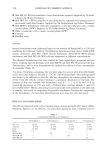
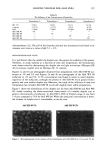
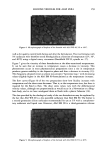
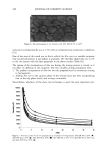
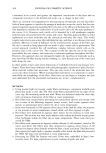
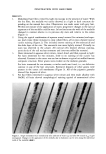
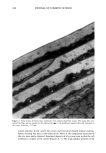
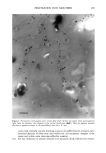
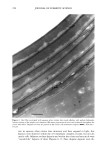
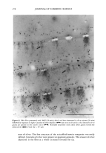
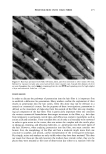
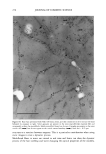
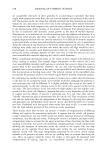
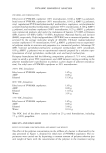
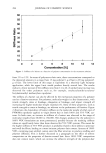
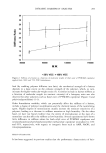
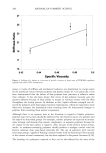
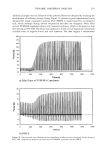
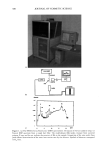
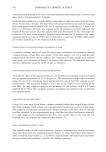
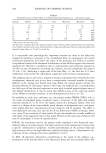
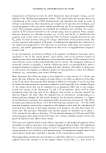
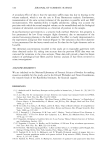
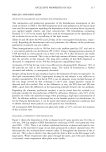
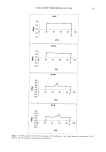
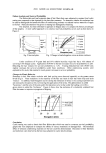
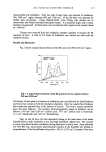
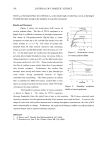
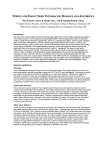
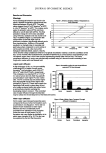
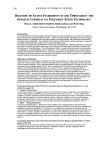
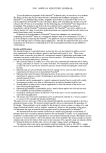
DYNAMIC HAIRSPRAY ANALYSIS 293 Additional insight into the behavior of this polymer blend was obtained by studying the development of tackiness during drying. Figure 10 presents typical experimental traces obtained for single component systems. Pure PMVE is characterized by a permanent tack, which develops during solvent evaporation and does not disappear, while ethyl ester of PVM/MA copolymer shows only transient tackiness, which is decreased to zero after drying at 50% RH. The blend was analyzed in terms of tack magnitude (maximum recorded value of negative force) and tack duration. The data suggest a monotonous 190 170 150 130 • 110 • 90 ,, 70 5O 3O 10 -10 0 200 400 600 800 Time {s} a) Ethyl Ester of PVM/MA Copolymer lOOO 12oo 1400 25 2O 15 -lO o 200 400 600 800 lOOO 12oo 14oo Time (s) b) PMVE Figure 10. Experimental traces illustrating time dependence of adhesive forces developed during drying of 80% VOC compositions based on (a) ethyl ester of PVM/MA copolymer and (b) PMVE.

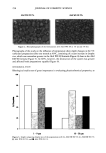
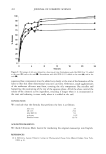
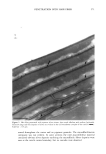
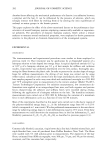
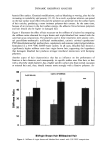
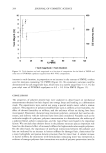
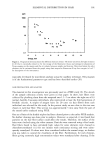
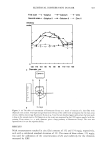
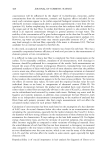
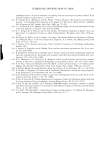
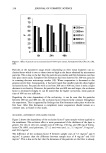
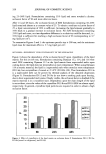
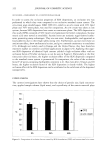
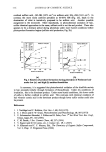
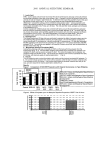
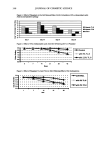
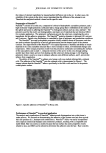
294 JOURNAL OF COSMETIC SCIENCE 10 45O 8 7 6 4 3 2 0 0 I I I 20 40 60 % PMVE I I 0 80 100 120 300 o 15o ß Tack magnitude ß Tack Duration Figure 11. Tack duration and tack magnitude as a function of composition for the blend of PMVE and ethyl ester of PVM/MA copolymer applied from 80% VOC compositions. increase in tack duration, in proportion to an increase in the content of PMVE, evident even for mixtures containing 5% PMVE (Figure 11). No systematic variation could be demonstrated by tack magnitude data, which vary in a narrow range from 5.3+ 1.3 G for pure ethyl ester of PVM/MA copolymer to 6.9 + 0.2 G for PMVE (Figure 11). CONCLUSIONS The properties of polymer-treated hair were analyzed in detail based on mechanical measurements obtained on hair shaped into omega loops and bending as a deformation mode. The experiments were carried out using a special tensile meter called a texture analyzer. The properties of polymer-modified hair such as stiffness at low humidity, the effect of elevated humidity on stiffness, and the tackiness of hair on drying have been investigated. Parameters characterizing treatment polymers, untreated hair used as sub- strates, and delivery vehicles (solvents) have been also considered. Variables such as the molecular weight of a polymer, polymer concentration in a formulation, the make-up of a polymer blend, solvent composition, and the type of hair were found to be important factors. We conclude that cohesive forces in the polymer structure play an important role based on the observed effect of increased stiffness for higher-molecular-weight polymers. On the other hand, the importance of interfacial interactions between the polymer and hair are indicated by an increase in hairset stiffness for damaged hair, characterized by a more hydrophilic and porous keratin structure than for intact hair. A similar increase in hairset stiffness for treatments with formulations containing water was interpreted as evidence of stronger polymer-hair interactions as a result of polymer penetration into the
Purchased for the exclusive use of nofirst nolast (unknown)
From: SCC Media Library & Resource Center (library.scconline.org)