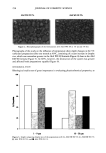
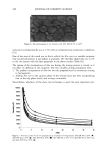
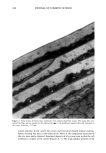
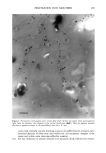
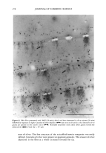
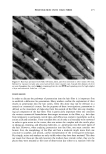
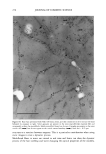
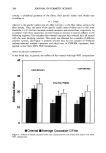
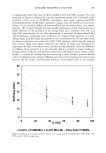
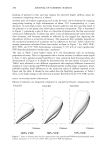
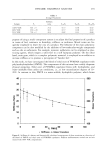
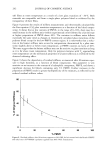
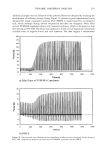
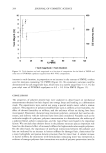
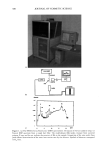
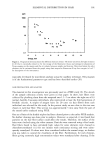
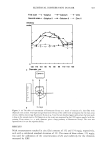
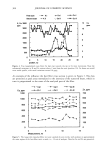
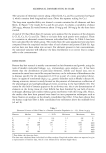
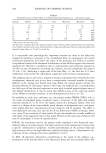
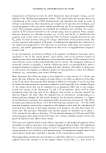
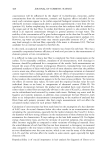
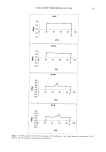
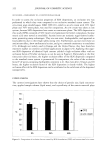
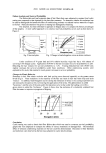
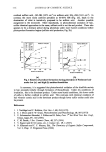
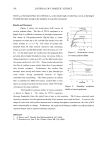
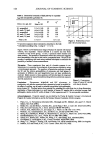
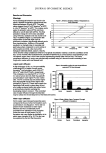
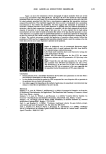
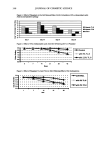
302 JOURNAL OF COSMETIC SCIENCE concentration was found to be lower for some elements when reanalyzed, the latter data were used in the presentation of results. Each hair was mounted on a sample holder using adhesive tape, the point of fixture being about 10 mm from the root. The hair fibers were placed in the beam with the hair axis positioned approximately parallel with the X-ray beam axis, so that about 1.5 mm of the fiber, 2-3 mm from the root, was exposed to the X-ray beam and thus analyzed. The length of the hair section that was analyzed was also determined by the solid angle (for detection of X-rays) of the detector. Analysis was performed for 12 minutes (real time), operating the X-ray tube at 55 kV and 30 mA and at a count rate of 1000-3000 counts per second, depending on the mass of each hair section. CALIBRATION OF CONCENTRATIONS OF ELEMENTS IN HAIR In order to calibrate analytical data, Zn values were determined in a sample containing a larger amount of hair from one person. From this sample, two 0.5-g samples were analysed with neutron activation analysis. For comparison, 61 hair strands were analyzed twice each, with a distance of about 1 cm between the analyses. The obtained data were used for calibration using the NAA results as reference. MEASUREMENTS RELATED TO HAIR FIBER CROSS SECTION To study the effect of hair mass attenuation, one hair fiber was rotated around its length axis in angular increments of 22.5 ø (Figure 3). The cross section of the fiber as viewed along the axis of the impinging beam was recorded by one of the CCD cameras at each measurement. The registered diameter varied due to the elliptical cross section of the hair fiber. At each angle an analysis was performed of the volume within a 0.3-ram segment of the fiber. The complete sequence of analysis was repeated once to estimate the reproducibility. VARIATIONS ALONG HAIR FIBERS Using a 0.3-mm-wide X-ray beam, volumes contained within this length along the hair fiber were analyzed. Each volume was separated from the previous one in 0.2-mm steps. The variation of elemental concentrations along a portion of the fiber close to the root was thus recorded. In this experimental setup, the fiber was placed and moved vertically at a right angle to the impinging beam. The scan started close to the root and was repeated once to estimate the reproducibility (Figure 4). LONG-TERM REPRODUCIBILITY TESTS The reproducibility of the results given by this new technique has been tested using three hair fibers from the analyzed material (Figure 5). These hair fibers were analyzed twice a week for seven weeks (i.e., 14 times) in approximately the same region and under the given analytical conditions used for the database analyses.

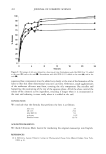
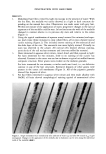
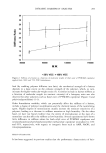
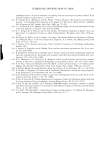
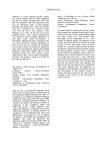
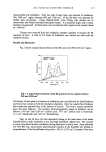
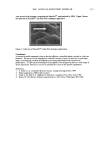
ELEMENTAL DISTRIBUTION IN HAIR 303 First scan --) -Sulphur = Calcium -- •-- Zinc Second scoa : -Sulphur II --m -Calcium II .... •, --Zinc II Arbitrary scale 0 I I 120 116 101 a Diameter, IJm 80 b X-rays I I I I I 70 85 96 110 115 105 Figure 3. (a) The effect of attenuation of fluorescent X-rays as a result of rotation of a hair fiber with elliptical cross section. The high-energy fluorescent X-rays of Zn suffer little attenuation by the mass cross section, whereas low-energy fluorescent X-rays (e.g., S and Ca) are absorbed appreciably when the beam path is long in the sample matrix. (b) Diameters on the x-axis are measured by the CCD camera parallel with the primary X-ray source, i.e., a wide diameter gives a long pathway to fluorescent X-rays. The scan was repeated once to test the reproducibility. RESULTS NAA measurements resulted in zinc (Zn) contents of 152 and 154 rag/g, respectively, each with a calculated standard deviation of 1%. The mean of these values, 153 rag/g, was used for calibration of the concentrations of Zn and indirectly for the elements measured by XRF.
Purchased for the exclusive use of nofirst nolast (unknown)
From: SCC Media Library & Resource Center (library.scconline.org)