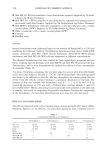
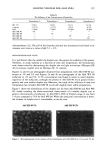
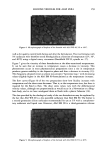
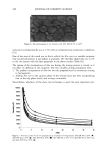
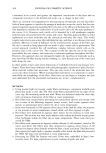
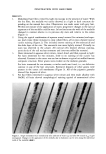
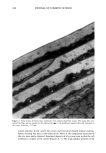
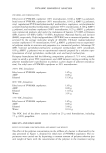
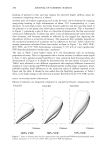
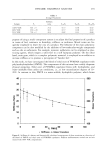
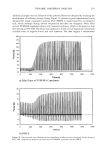
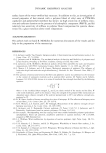
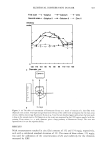
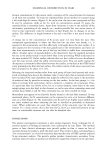
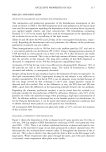
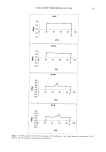
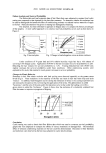
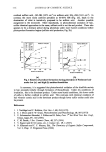
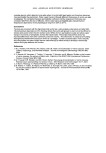
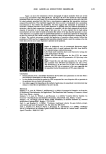
OCCLUSIVE PROPERTIES OF SLN 321 0,4 0,0 -0,2 -0,4 Dl12 20 40 60 80 [øC] lOO 0,4 0,2 o,o -0,2 -0,4 -0,6 D114a 20 40 60 80 100 [øC] D114b 0,8 0,6 0,4 • ,2 ,_, 0,0 -0,2 -0,4 -0,6 8'oJ 20 40 60 [oc] Dl16 lOO o,8 0,6 0,4 0,2 o,o -o,2 -o,4 -o,6 20 40 60 80 [oc] lOO Figure 5. DSC analysis for the determination of crystallinity of the lipid matrix (formulations Dl12, D114a, D114b [stored in refrigerator], and D116).

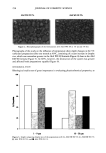
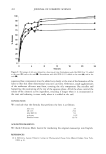
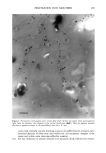
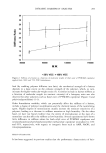
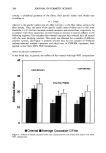
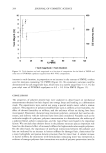
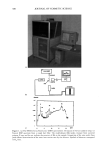
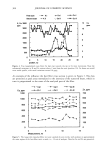
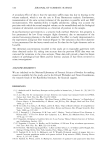
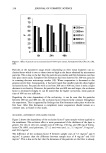
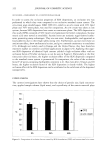
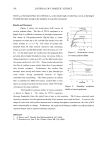
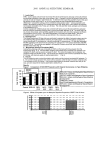
322 JOURNAL OF COSMETIC SCIENCE OCCLUSION--COMPARISON TO A CONVENTIONAL CREAM In order to assess the occlusion properties of SLN dispersions, an occlusion test was performed in which they were compared to an occlusive standard cream system. The o/w-cream ungt.emulsif. aquos. DAB 1998 (21), which is an o/w cream with 30% lipid phase and 70% water phase, was used for comparison. An o/w cream was taken as test system, because SLN dispersions have water as continuous phase. The SLN dispersion in this study (CPZ) consisted of 30% lipid (cetyl palmitate) for better comparison. Sucrose stearic acid ester served as emulsifier. Sucrose esters are nonionic sugar-derived surfac- rants presenting many advantages. They are non-toxic, biodegradable, and approved as food additives due to their high safety rating (22). Furthermore, sucrose esters have an antiirritant effect, show antibacterial action, and give a smooth consistency to emulsions (23). Although not widely used in Europe and the United States, they have found an extensive market in cosmetics and food applications in Japan (24). Applying this aque- ous SLN dispersion of identical lipid content yielded a high occlusion effect with an occlusion factor of 50 after six hours, as can be seen in Figure 6. Particularly at the first time point after six hours, the higher occlusion effect of the SLN dispersion compared to the standard cream system is pronounced. In comparison, the value of the occlusion factor F of water-containing hydrophilic ointment is 41. But even after 24 hours and 48 hours, the higher occlusion factor of the SLN dispersion is clearly visible. The higher occlusion effect of the SLN dispersion can be attributed to the solid state of the dispersed nanoparticles. CONCLUSIONS The current investigations have shown that the choice of particle size, lipid concentra- tion, applied sample volume (lipid mass), and crystallinity of the matrix material plays 70- 60 50 40 30 20 10 6h 24h 48h ß cPz [] o/w cream Figure 6. Comparison of occlusion factors caused by SLN formulation (CPZ) and conventional o/w cream.
Purchased for the exclusive use of nofirst nolast (unknown)
From: SCC Media Library & Resource Center (library.scconline.org)