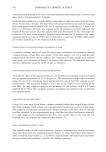
334 JOURNAL OF COSMETIC SCIENCE FTIR INVESTIGATION OF THE AMBIENT DEPENDENT PHOTODAMAGE IN HAIR K.R. Ramaprasad, Ph.D., N. Vasanthan, Ph.D. and Yash Kameth, Ph.D. TRl/Princeton, Princeton, NJ 08542 Introduction The literature on the oxidation of the disulfide bond, be it in model compounds or keratin fibers, spans many years. Both chemical and photochemical studies have established the general course of oxidation (see, for example, 1-5). The products of oxidation, mostly sulfoxides and sulfonic acid, are dependent on the chemical agents used and other reaction conditions. Photolysis of cystinc itself in aqueous acid solutions [2] yields various products including cysteine, ammonia, cysteic acid and alaninc. Using the model compound N,N'-bisacetyl-L-cystine bismethylamide (ACM), Schumacher- Hamedat, et al [3] have shown the formation of monoxide (K-SO-S-R) and dioxide (K- SO2-S-R) when treated with performic acid or a commercial bleaching solution. Such oxides were also identified in similarly treated hair. With particular reference to the weathering, that is, photodegradation, of hair, in an FTn• investigation, Signori and Lewis [5] report mainly cysteic acid from peroxide bleaching and photodegradation [5]. Using FT Raman spectroscopy, Pande [4] has contrasted results from chemical oxidation with those from photodamage, pointing out the formation of intermediate sulfur oxides in the latter compared to the highly oxidized sulfur (cysteic acid) from the chemical route. The present work is a reinvestigation of the FTn• spectra of hair that has been photodamaged under two different ambient humidities. The goal was to examine the existence, if any, of different pathways for the photodamage, depending on the ambient. Earlier literature on disulfides [6] suggests that, during the oxidation of the disulfide bond, anhydrous conditions favor formation of oxides whereas hydrolyric conditions are conducive to formation of the acids with sulfur oxidized to higher states. The final stable product will in all cases be sulfonic acid, where sulfur is in its highest state of oxidation. Both brown European and Piedmont hair fibers were investigated in this work. Experimental Hair tresses were supplied by De Meo Bros., New York. Irradiation work was carried out at two relative humidities (10 - 14% and 60-65% ranges). Low humidity work was performed using Q-UV Weatherometer (Model QUV/SE). Atlas Fade-O- Meter (Model 25-FR) was used in the higher humidity photolysis. Though the two instruments have different radiation intensities, for FTIR work, as explained below, use of Amide I internal standard circumvents different radiation levels at the substrates. Infrared spectra were collected on a Nicolet 560 FTn• Spectrometer. All the spectra were gathered using an attenuated total reflectance accessory (ATR) and a ZnSe crystal. At least 128 scans were obtained to achieve an adequate signal to noise ratio. Hair tresses were suitably mounted to have a constant tress configuration during n•

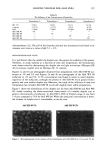
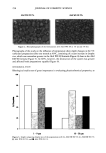
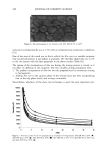
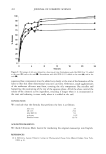
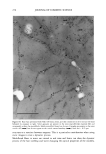
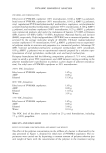
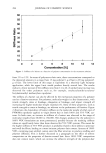
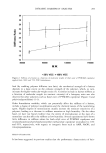
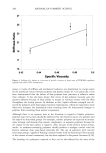
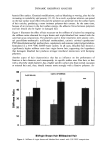
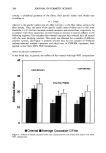
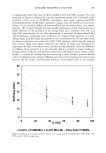
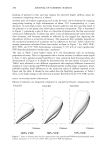
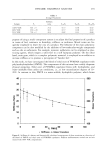
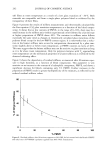
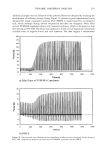
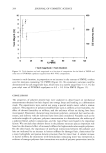
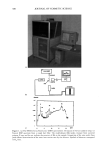
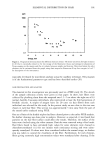
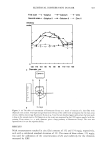
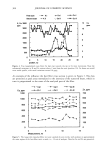
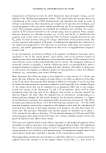
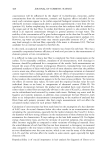
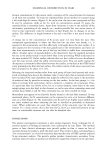
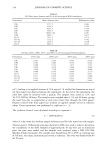
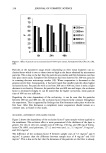
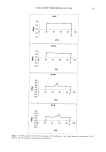
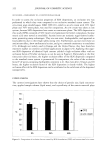
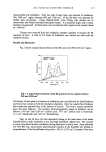
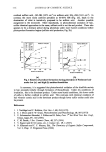
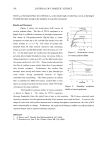
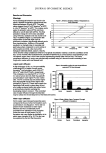
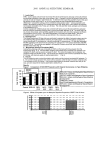
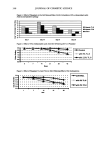
2001 ANNUAL SCIENTIFIC SEMINAR 335 measurement and irradiation. Only one side of each tress was exposed to irradiation. The 1200 cm 'l region, between 900 and 1300 cm 'l, of the IR trace was selected for further data processing. Using PeaksolveTM, curve fitting was carried out to deconvolute and isolate individual absorption bands. A Lorentzian shape with a linear baseline was assumed. All band areas were normalized with respect to the Amide I band at -1640 cm 4. Tresses were removed from the irradiation chamber regularly to monitor the IR spectrum of each. A total of 412 hours of irradiation was carried out with both the radiation sources. Results and Discussion Fig. 1 shows a typical deconvolution of the IR trace in the 900-1300 cm 'l region. 0.0,10 0 035 - ß i 0 030 - ß m, 0.025 - 1.0•111Bai•I 4.1tll Z. 1•.1 tilt '1 S. 1117 •111 3.1•473 cll• -I s. 12ZI 0.020 , , , , 900 1000 1100 1200 1300 1400 Wivenumber. am '• Fig. 1 A typical deconvolution of the IR spectrum in the region between 900 and 1300 cm 4 The history of each peak as a function of irradiation time was followed for both Piedmont and brown hair tresses in both the irradiation chambers. Only the results from Piedmont hair tresses are reported here in the interest of brevity. The brown tresses essentially show the same behavior. The tentative band assignments, based on literature, are as follows: 1041 cm 'l and 1229 cm 'l sulfonic acid 1073 cm 'l sulfinic acid or monoxide 1111 cm 'l disulfoxide and 1167 cm 'l thiosulfonate. Figs. 2a and 2b show the time dependent change in the peak areas of the bands identified above under irradiation at low and high humidities respectively. The contrast in terms of preferred product production during photolysis is clearly seen. Drier ambients (10-14% R/I, Fig. 2a) promote photochemical reaction at the disulfide site leading to preponderance of the thiosulfonate end product, -SO2-S- (1167 cm'l), instead of the more
Purchased for the exclusive use of nofirst nolast (unknown)
From: SCC Media Library & Resource Center (library.scconline.org)