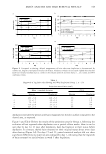
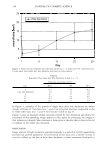
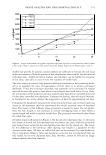
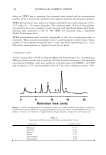
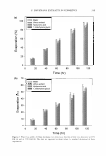
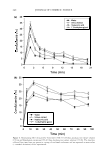
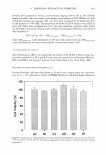
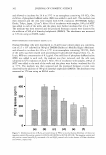
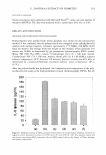
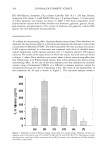
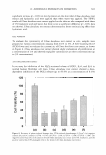
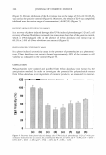
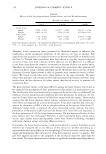
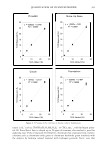
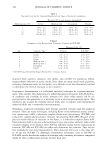
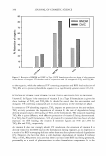
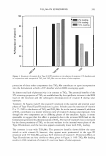
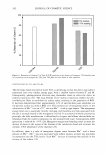
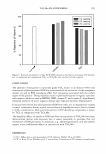
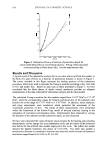
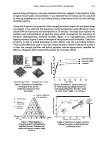
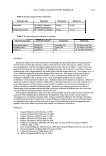
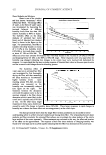
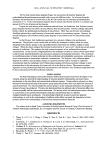
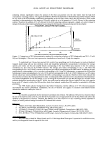
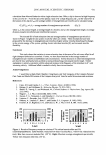
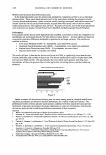
366 JOURNAL OF COSMETIC SCIENCE (Figure 5). Percent inhibition of the IL-6 release was in the range of 45.6---64.5% (H 2 0 2 was used as the positive control) (Figure 6). Moreover, the release ofIL-8 was completely inhibited over the entire range of concentration (0.0025%) (Figure 7). RECOVERY FROM PHOTO-INDUCED DAMAGE In a recovery of photo-induced damage after UVA-induced phorodamage (3 J/cm2 ), cell recovery of human fibroblasts increased two times more than that of the positive control, which is UVA-damaged cells in the absence of Ulmus davidiana root extract (up to 60.2% at 3.0% of Ulmus davidiana root extract) (Figure 8). PHOTO-INDUCED CYTOTOXICITY ASSAY In a photo-induced cytotoxicity assay in the presence of promethazine as a photosensi tizer, U Imus davidiana root extract showed approximately 48% of the increase in cell viability as compared to the control (Figure 9). CONCLUSION Polysaccharides were isolated and purified from U Imus davidiana root extract by the precipitation method. In order to investigate the potential for polysaccharide extract from U Imus davidiana as an ingredient of cosmetic products, we measured its moistur- 120 100 80 :.a 60 (IJ 40 t) 20 0 (a) (b) (c) (d) (e) (f) (g) (h) Figure 9. Recovery from photo-induced damage after UVA-induced photodamage (3 J/cm2) with pro methazine hydrochloride: (a) control (b) promethazine· HCl (P) (c) UV A (d) P + UVA (e) P + UVA + 0.5% (f) P +UVA+ 1.0% (g) P +UVA+ 2.0% (h) P +UVA+ 3.0%.

U. DA VIVIANA EXTRACTS IN COSMETICS 367 izing effect. HPLC experiments showed that the main components of the polysaccharide are rhamnose and galactose. U lmus davidiana root extract showed nearly the same mois turizing effect as hyaluronic acid. In an anti-inflammatory effect assay for inhibition of the H2Oractivated release of PGE2, IL-6, and IL-8 in normal human fibroblast cell lines, U lmus davidiana root extract showed inhibitory activity of PGE2 production in a dose-dependent manner (up to 85 .9% at a concentration of 0.1 % ). Percent inhibition of the release of IL-6 was in the range of 45.6-64.5% (H202 was used as the positive control). Moreover, the release of IL-8 was completely inhibited over the entire range of concentration (0.0025%). In a photo-induced cytotoxicity assay in the presence of promethazine as a photosensitizer, Ulmus davidiana root extract showed approximately 48% of the increase in cell viability as compared to the control. It also demonstrated good recovery from UV A-induced damage. Therefore, U lmus davidiana root extract has potential for future use as a cosmetic ingredient. ACKNOWLEDGMENT This work was supported by a grant from the Ministry of Health and Welfare: "New Material Research Center for Cosmeceuticals" (Grant Number 2005-A050432). REFERENCES (1) S. J. Lee, Korea Folk Medicine (Publishing Center of Seoul National University, Seoul, South Korea, 1996), monographs series No. 3, pp. 39-42. (2) C. D.Jun, H. 0. Pae, Y. C. Kim, S. J.Jeong,J. C. Yoo, E. J. Lee, B. M. Choi, S. W. Choe, R. K. Park, and H. T. Chung, Inhibition of nitric oxide synthesis by butanol fraction of the methanol extract of Ulmus davidiana in murine macrophages,]. Ethnopharmacol., 62, 129-135 (1998). (3) B. W. Son, J. H. Park, and 0. P. Zee, Catechin glycoside from Ulmus davidiana, Arch. Phann. Res., 12, 219-222 (1989). (4) S. H. Kim, K. T. Hwang, and J. C. Park, Isolation of flavonoids and determination of rutin from the leaves of Ulmus jJarvifolia, Kor. J. Pharmacogn., 23, 229-234 (1992). (5) Y. H. Moon and G. R. Rim, Studies on the constituents of Ulmusparvifolia, Kor.]. Pharmcogn., 26, 1-7 (1995). (6) E. B. Lee, 0. K. Kim, C. S. Jung, and K. H. Jung, The influence of methanol extract of Ulmus davidiana var. japonica cortex on gastric erosion and ulcer and paw edema in rats,]. Pharrn. Soc. Korea, 39, 671-675 (1995). (7) N. D. Hong, Y. S. Rho, N. J. Kim, and J. S. Kim, A study on efficacy of Ulmi cortex, Kor. J. Pharmacogn., 21, 217-222 (1990). (8) S. K. Cho, S. G. Lee, and C. J. Kim, Anti-inflammatory and analgesic activities of water extract of root bark of Ulmus parvifolia, Kor. J. Pharmacogn., 27, 274-281 (1996). (9) Y. M. Yang, J. W. Hyun, K. H. Lim, M. S. Sung, S.S.Kang, W. H. Paik, K. W. Bae, H. Cho, H.J. Kim, E. R. Woo, H.K. Park, and J. G. Park, Antineoplastic effect of extracts from traditional medicine plants and various plants (III), Kor. J. Pharmacogn., 27, 105-110 (1996). (10) Y. M. Kwon, J. H. Lee, and M. W. Lee, Phenolic compounds from barks of Ulmus macrocarpa and its antioxidative activities, Kor. J. Pharmacogn., 33, 404-410 (2002). (11) G. R. Leonardi, L. R. Gaspar, and P. M. B. G. Maia Campos, Application of a non-invasive method to study the moisturizing effect of formulations containing vitamins A or E or ceramide on human skin, J. Cosmet. Sci., 53, 263-268 (2002). (12) J. Levin and H. Maibach, The correlation between transepidermal water loss and percutaneous ab sorption: An overview,]. Controlled Release, 105, 291-299 (2005). (13) M. Richard, R. Lasarow, I. Rivkah, and C. G. Edward, Quantitative in vitro assessment of phototox icity by a fibroblast-neutral red assay, j. Invest. Dermatol. 98, 725-729 (1992). (14) K. B. Eberlein, A. Bindl, and B. Przybilla, Phototoxic properties of neuroleptic drugs, Dermatology, 194, 131-135 (1997).
Purchased for the exclusive use of nofirst nolast (unknown)
From: SCC Media Library & Resource Center (library.scconline.org)