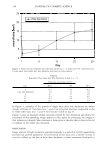
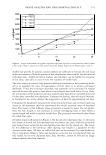
386 JOURNAL OF COSMETIC SCIENCE and has implicated UV A radiation in both photocarcinogenesis and photoaging, 1.e., collagen breakdown, of the skin (3-5 ). The mechanisms behind the deleterious effects of UV A radiation appear unified by the presence of reactive oxygen species (ROS), which are generated as a result of reactions with endogenous skin photosenstizers and chromophores. It has been demonstrated that ROS generated in these ways can lead to DNA damage such as strand breaks or mutations and a severe loss of interstitial collagen (5 ,6). The skin's defense mechanisms are principally enzyme- and non-enzyme-based ROS scavengers (anti-oxidants). Enzyme-based systems have superoxide dismutase (SOD) as the principal component, and this group subdivides into Cu, Zn, Mn-SOD. It has been demonstrated that an inhibition of SOD leads to an increase in UV-induced lipid peroxidation and enhanced cellular damage (5). Glutathione peroxidases and catalase are other components of the enzyme defense mechanism (7). The two principal non-enzymatic scavengers are vitamin C, a hydrophilic anti-oxidant, and vitamin E, the most important lipophilic anti-oxidant (8). There is ample evidence that lipid-soluble anti-oxidants, in particular vitamin E, are themselves depleted within human skin during UV exposure, i.e. they are not photostable. Remarkably, a single suberythemogenic (0.75 MED) dose of solar-simulated UV radiation reduced human skin a-tocopherol (one of eight molecules comprising vitamin E) by 50% (9). Modern cosmetic skin protection systems therefore typically comprise two principal groups of active components, UV absorbers and anti-oxidants. The UV absorber group may be further subdivided into organics, such as butyl methoxydibenzoylmethane (BMDM) and octyl methoxycinnamate (OMC), and inorganics, principally fine-particle titanium dioxide (TiO2). Both present technical challenges: photostability (particularly in the case of UV A absorbers) in the case of organics and photoactivity in the case of TiO2 (10-12). The photoactivity of TiO2 is particularly important, as ROS generated within the cosmetic emulsion will be scavenged by anti-oxidants that will therefore not be available during topical application. It has recently been demonstrated that the incorporation of manganese ions within the lattice of TiO2 acts to quench free-radical generation, scavenge free radicals, and increase UVA absorbance. These improved TiO 2 properties manifest in a stabilization of organic UV-absorbing components during solar exposure (13). In the current paper, we extend the study of the properties of manganese-doped titanium dioxide (Ti0 2 :Mn) to include the interaction of the material with 1-ascorbic acid (vitamin C), vitamin E, BMDM, and OMC in oil-in-water emulsions. Vitamin C is very sensitive to light, oxidizing agents, metal ions, and heating. However, its important biological functions have made the stabilization of this compound an important research topic in cosmetic science. A number of approaches to the stabilization of vitamin C have been described in the literature, of which the most promising appears to be incorporation into the internal water phase of a water-in-oil-in-water (W/0/W) emulsion (14-18). Consequently, we compare the solar photostability of vitamin C in both the external water phase of an O/W emulsion and the internal water phase of a W/O/W emulsion. The interactions of TiO 2 :Mn particles (50-60 nm) with organic actives are compared to those of a standard cosmetic grade Ti 02, Degussa T805.

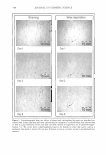
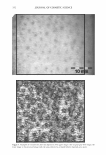
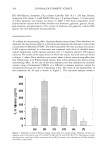
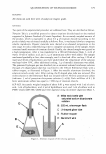
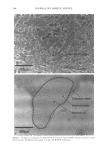
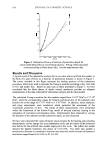
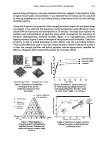
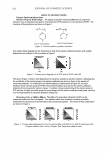
TiO2:Mn IN SUNSCREENS 387 EXPERIMENT AL PROCEDURES SYNTHESIS OF O/W AND W/O/W EMULSIONS Uncoated TiO2 :Mn (50-60 nm) was used as supplied by Umicore. The material was compared to 10-100 nm octylsilane-coated rutile TiO 2 used as supplied by Degussa. Type I emulsions. Type I O/W sunscreen emulsions were formulated containing 3% BMDM and 5% OMC in conjunction with 5% TiO 2 and 5% TiO 2 :Mn. The oil phase consisting of the UV filters was heated to 65°C with vigorous stirring to ensure com plete dispersion of all the active ingredients. The water phase was also heated to 70°C, and on complete dissolution of the ingredients the heated oil phase was added slowly under homogenization. After complete addition of the oil phase, the final formulation was left to cool to room temperature. Type II emulsions. Type II O/W anti-aging emulsions were formulated to test the stability of vitamin C and vitamin E. The vitamin C formulations consisted of Ti0 2 in the oil phase and 5 % vitamin C in the water phase. The vitamin E formulations consisted of both 5% vitamin E and the titanium dioxide in the oil phase. These formulations were then made up in the same way as the Type I O/W formulations. Type III emulsions. Type III W/0/W emulsions were prepared by a two-step process. In the first step an overall concentration of 3% 1-ascorbic acid was combined with anhy drous MgSO4 and dissolved in water to constitute the internal water phase (W 1). This internal water phase was then adjusted to pH 7 through the addition of 10 wt% NaOH solution. The total internal water phase was then made up to a known volume through the addition of water. The oil phase was prepared by heating Puresyn 4, Dehymuls LE to 70°C and then adding the titanium dioxide slowly while homogenizing at 7000 rpm. Once addition of the titanium dioxide was complete and a uniform dispersion was obtained, the internal water phase was added slowly, with homogenizing at the same rate, to create the primary W/O emulsion. The primary emulsion was then left to cool to room temperature. The second step of the process required the very slow addition, about 15 g/min, of the primary emulsion, while shear mixing at 4000 rpm into the external water phase containing the Poloxamer 407. After an additional five minutes of homogenization after addition of the primary W/O emulsion was completed, the emulsions were stabilized sterically through the addition of xanthan gum. Structure of emulsions. Micrographs showing the principal features of Type I and Type III emulsions are given in Figure 1. Type I emulsions are 0/W (Figure lA), with a typical droplet size in the oil phase of 10-20 µm. Type III W/O/W emulsions, (Figure lB) are more complex, with an internal water phase droplet size of sub 10 µm and an internal oil phase droplet size of, on average, 500-800 µm. This is surrounded by the external water phase (19-21). ANALYSIS OF EMULSIONS Vitro-Skin™ substrate for UV-visible absorption experiments was purchased from IMS Testing Group, USA. The substrate was cut into 6 x 9-cm rectangles and placed in a
Purchased for the exclusive use of nofirst nolast (unknown)
From: SCC Media Library & Resource Center (library.scconline.org)