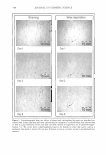
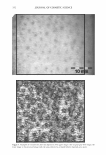
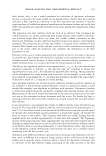
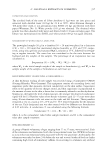
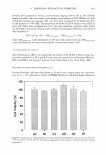
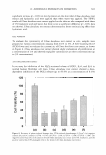
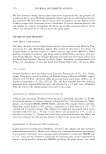
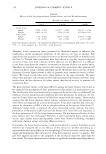
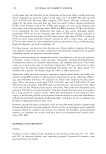
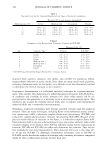
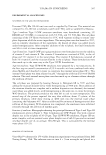
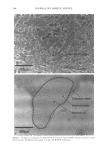
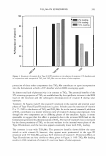
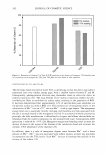
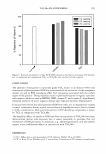
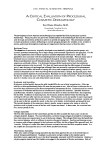
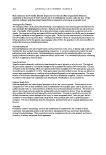
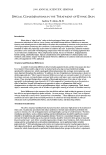
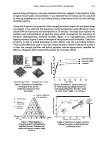
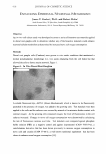
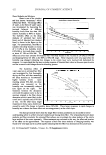
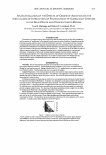
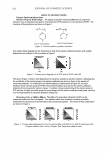
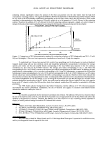
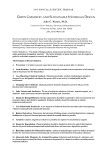
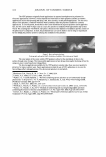
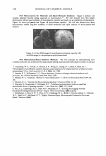
388 JOURNAL OF COSMETIC SCIENCE Figure 1. (A) Optical micrograph of a Type I O/W formulation. Type II O/W formulations show a similar microstructure. (B) Optical micrograph of a Type III W/O/W formulation.

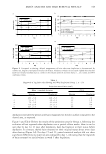
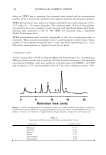
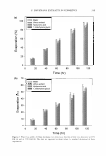
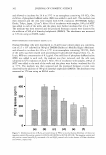
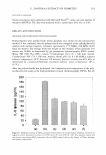
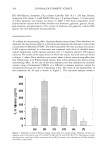
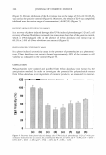
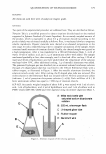
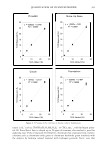
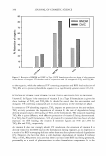
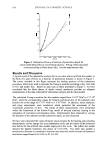
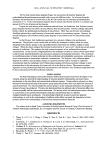
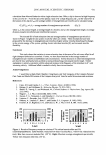
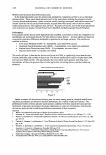
TiO2:Mn IN SUNSCREENS 389 hydration chamber containing glycerin [15% (w/v)} at room temperature for 16-24 hours. Sunscreen samples were applied to the substrate at a surface density of 2 mg/cm2 and rubbed into the film with a gloved finger. The film was then mounted into a 6 x 6-cm glassless slide mount and left for 15 minutes to dry. Samples were illuminated in a Honle Sol-2 solar simulator with an output energy over the 290 nm to 400 nm range of 10 mW/cm- 2 . Typically, an exposure time of two hours was employed. Following solar exposure, the Vitro-Skin™ was cut up into smaller pieces and placed in a 50-ml tube. To the 50-ml tube was added 15 ml MeOH, for oil-soluble organics, or H 2 O, for water-soluble organics. The 50-ml tubes containing the Vitro-Skin™ and appropriate solvent was then placed in an ultrasonic bath and sonicated for 30 minutes. Following sonication, 1 ml of solvent was removed and the insoluble components were removed by centrifugation (12000g, 15 minutes). The supernatant was taken and ana lyzed by HPLC using a LiChrospher® 100 RP-18 (5 µM) column attached to a UV-Vis that will detect each organic at its specific "- max · The following mobile phases were used for: • BMDM and OMC: 88% (w/w) MeOH, 0.1 % (w/w) TFA, and 11.9% (w/w) H 2 O detection at 354 nm and 290 nm, respectively • Vitamin E: 28% (w/w) MeCN and 72% MeOH detection at 290 nm • Vitamin C: 89% (w/w) O. lM HClO,1 and 11 % MeCN detection at 254 nm RESULTS RETENTION OF BMDM AND OMC IN O/W TYPE I EMULSIONS In Figure 2 the % retention of BMDM and OMC after two hours of solar exposure in Type I formulations is given. BMDM retention is significantly enhanced by incorpora tion of TiO2 :Mn into the formulation (63% retention with TiO2 :Mn compared with 20% retention with no TiO2 present). The incorporation of an undoped TiO2 sunscreen grade component does show some improvement in protection of BMDM however, this is limited in comparison with TiO2:Mn (36% retention with TiO2 compared with 20% retention with no TiO2 present). The trend with OMC is similar however, the inherent improved photostability of OMC over BMDM results in a higher level of retention in all cases. In a TiOrfree formulation 24% OMC is retained over two hours of exposure in formulations containing TiO2:Mn and TiO 2 the retention levels are 83% and 49%, respectively. The photodegradation mechanisms of a variety of organic sunscreen components have been discussed in the literature, BMDM being the most commonly investigated. The reported retention rates vary greatly, depending on sample conditions and exposure protocol, but in perhaps the closest reported study to the current one, an O/W emulsion containing a variety of UV-absorbing organics irradiated under 3X solar intensity ex hibited a retention of BMDM of 64% over one hour. These figures appear consistent with the figures quoted herein, given that the results will vary to a certain extent depending on the specific emulsion formula (22). It seems clear that the degradation reaction initially involves mainly photo- but also ROS-induced bond cleavage, and from there a ROS-mediated decomposition pathway. Consequently, the UV screening properties of TiO 2 act to impart a degree of protection
Purchased for the exclusive use of nofirst nolast (unknown)
From: SCC Media Library & Resource Center (library.scconline.org)