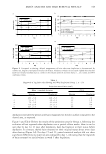
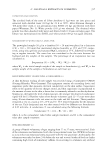
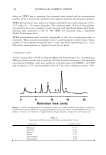
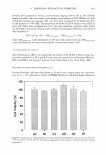
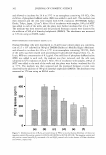
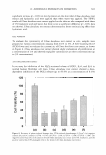
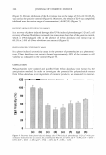
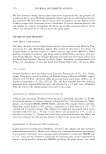
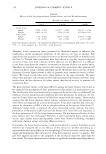
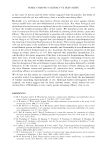
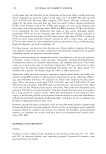
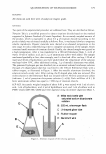
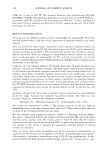
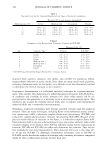
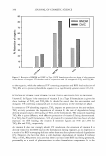
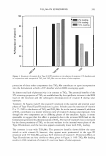
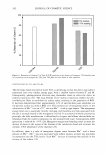
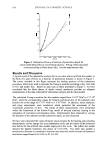
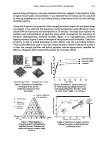
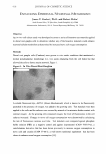
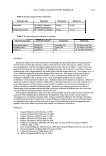
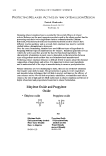
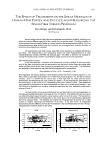
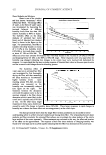
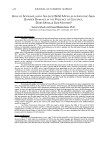
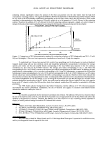
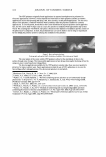
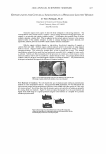
390 -� C 0 '+-- 0 C 0 C Q) Q) -::R. 0 90 80 70 60 50 40 30 20 10 0 JOUR NAL OF COSMETIC SCIENCE c:::::J BM DM ... OMC Figure 2. Retention of BMDM and OMC in Type I 0/W formulations after two hours of solar exposure in the absence of inorganic UV absorbers and in conjunction with 5% nanoparticle Ti02 and Ti02:Mn. to the organics, while the enhanced UV screening properties and ROS load reduction of Ti0 2 :Mn act to protect photolabile organics ro a significantly greater extent (23,24). RETENTION OF VITAMIN E AND VITAMIN C IN O/W (TYPE II) AND W/O/W (TYPE Ill) EMULSIONS Vitamin E. In Figure 3 the retention of vitamin E in a Type II formulation is given for three loadings of TiO2 and TiO2:Mn. It should be noted that the anti-oxidant and inorganic UV-screening compounds are in close proximity in the internal oil phase. In contrast to UV-absorbing organics, TiO2 imparts no protection to the anti-oxidant. TiO 2 actively promotes the degradation of vitamin E, the rate of degradation being directly proportional to the loading of TiO2 in the formulation. The situation regarding TiO 2 :Mn is quite different, with effective protection of vitamin E being demonstrated. In a TiO2-free Type II formulation, 78% of vitamin Eis retained after two hours of solar exposure. At 10% loading, the vitamin E retention figures are 95% and 24% for TiO 2 :Mn and TiO 2 , respectively. As vitamin E does not strongly absorb UV irradiation , the retention of vitamin E is directly related to the ROS load on the formulation during exposure, as its depletion is a result of its ROS scavenging abilities rather than any direct photo-induced degradation (25 ). However, the fact that there is still moderate degradation of vitamin E without TiO2 or TiO2:Mn present indicates that there is at least some ROS load being generated, presumably as a result of photoreactions in other formulation components. It is the

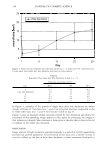
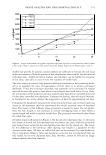
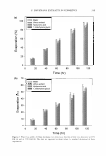
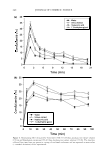
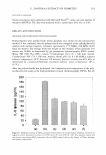
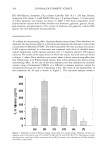
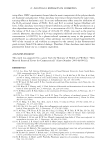
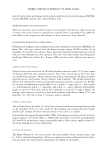
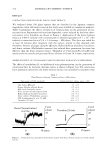
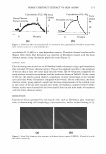
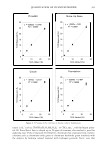
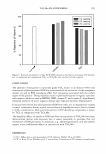
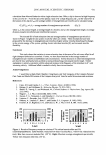
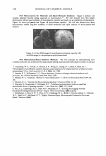
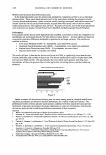
w C: .E - 5 0 C: 0 C: Q) - Q) '::!:!. 0 TiO 2 :Mn IN SUNSCREENS 391 100---------------------------- 80 60 40 20 0 -----"-T-------- - 2% loading r=J 5%1oading - 10% loading Figure 3. Retention of vitamin E in Type II 0/W emulsion in the absence of inorganic UV absorbers and in conjunction with nanoparticle Ti02 and Ti02:Mn over two hours of solar exposure. protection of these other components that TiO2:Mn contributes to upon incorporation into the formulation as both a UV absorber and an ROS scavenging agent. Its almost total lack of photoactivity is in contrast to TiO 2• The potential benefits of the UV-screening properties of TiO 2 are overwhelmed by the significant increase in the ROS load on the emulsion and the subsequent decomposition of vitamin E during solar exposure. Vitamin C. In Figures 4 and 5 the vitamin C retention in the external and internal water phases of Type II and Type III emulsions is given. In both cases the retention of vitamin C is 77-78% in the absence of TiO 2 and TiO 2 :Mn. As in the case of vitamin E, addition of TiO 2 contributes to a shorter retention time of vitamin C during solar exposure, even though the two components are in differing phases of the emulsion. Again, it seems reasonable to suggest that this effect is primarily due to the increased ROS load on the formulation generated by photoexcitation ofTiO 2 • The rate of vitamin Closs is increased by the closer proximity of TiO 2 to the anti-oxidant in the internal water phase of the Type III emulsion, and the loss rate appears essentially linear with TiO 2 loading. The converse is true with TiO2:Mn. The protective benefits shown follow the same trends as with vitamin E however, they appear more pronounced in the type III emulsion with 3% TiO2:Mn, giving a 92% retention of vitamin C. Protection effects in Type II emulsions are very similar to those given in Figure 3: 10% TiO2:Mn loading results in 94% retention of vitamin C over two hours of solar exposure.
Purchased for the exclusive use of nofirst nolast (unknown)
From: SCC Media Library & Resource Center (library.scconline.org)