408 JOURNAL OF COSMETIC SCIENCE Laser hair removal, which involves the targeting of the melanin-rich hair follicle, must also be performed with special considerations in order to prevent absorption of laser light by epidermal melanin. Potential complications of laser hair removal and other laser procedures include dyspigmentation, thennal injury, and scarring. As such, the appropriate selection oflaser settings is paramount in the treatment of ethnic skin and these should be tailored to the patient's skin type. Currently, the long-pulsed 1064nm Nd:YAG and 810 nm diode lasers can be used safely for hair removal in darker skin and are commonly used in the treatment of pseudofolliculitis barbae. 6 Given the importance of even skin tone among darkly pigmented ethnic groups, bleaching agents containing hydroquinone or kojic acid are commonly prescribed to treat hyperpigmentation in skin of color. Postinflammatory hyperpigmentation secondary to acne is the leading cause of dyspigmentation in the author's experience. Therefore, bleaching agents and chemical peels are often incorporated into the treatment of acne in ethnic skin. Conclusion: Understanding the unique structural and functional characteristics of pigmented skin is essential in the cosmetic treatment of dark skinned ethnic populations. Special care must be taken to limit epidermal and dermal injury in ethnic skin in order to minimize dyspigmentation and hypertrophic or keloid scarring. With appropriate care, chemical peels, microdennabrasion, and various laser procedures can be performed safely and effectively in skin of color. 1 Richards G.M. Oresajo C.O. Halder RM. Structure and function of ethnic skin and hair. Dermatol Clin 21: 595-600 (2003) 2 Bolognia J.L. Orlow S.J. Melanocyte Biology. In: Bolognia J.L. Jorizzo J.L. Rapini R.P. et al. (eds) Dermatology. New York: Mosby, 2003, pp:935-946. 3 Richards G.M. Oresajo C.O. Halder RM. Structure and function of ethnic skin and hair. Dermatol Clin 21: 595-600 (2003) 4 Grimes P.E. The safety and efficacy of salicylic acid chemical peels in darker racial-ethnic groups. Dermatol Surg 25 (1): 18-22 (1999) 5 Hurley M.E., Guevara LL. Goanzales RM. Pandya A.G. Efficacy of glycolic acid peels in the treatment of melasma.Arch Dermatol 138(12): 1578-1582 (2002) 6 Battle E.F. Jr., Hobbs L.M. Laser therapy on darker ethnic skin. Dermatol C/in 21(4): 713-23 (2003)

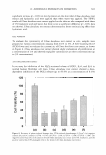
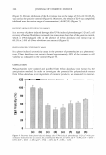
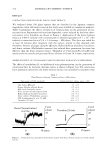
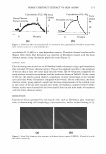
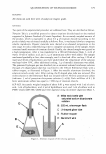
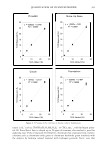
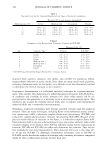
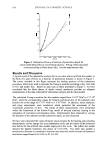
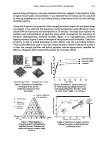
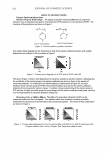
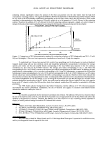
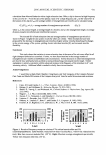
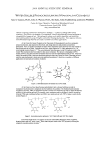
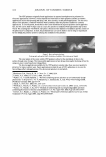
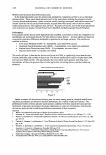
2006 ANNUAL SCIENTIFIC SEMINAR 409 INDENTOMETRIC OF SKIN Roger McMullen, Ph.D., Janusz Jachowicz, Ph.D. and Donald Prettypaul International Specialty Products) Wayne, NJ 07470 Introduction Mechanical properties of skin and its variability as a function of age or as a result of cosmetic treatments has been a central focus of research by cosmetic chemists and dermatologists for a very long time. Torsional analysis, cutometry or levarometry, gas bearing electrodynamometry, single-axis extensions tests, ballistometry, and indentometry were employed to determine basic mechanical parameters such as Young's modulus as well as more complex parameters such as skin extensibility in the dermal torque technique, Dynamic Spring Rate in Gas-Bearing Electrodynamometry, or cutaneous rigidity. In this work, we have carried out indentometric analysis of the forearm and facial skin of IO human panelists as well as six artificial skin models, which were prepared to simulate skin elasticity. The objective was to compare the mechanical properties of natural skin with that of the rubber models with the intention of future utilization of skin models for the evaluation of the mechanical effects ( elastic modulae, viscoelastic parameters, tackiness, etc) of cosmetic treatments such as skin tightening or firming agents, emollients, thickeners, etc. The advantages of using artificial skin are numerous and include the possibility of working with well-defined and reproducible materials, eliminating mechanical artifacts from the measurements caused by panelist movement, and eliminating the necessity of toxicological testing for experimental actives. Instrumentation The instrument employed was a texture analyzer, which is a mechanical tensiometer simulating the process of touch. The experiments were carried out on human subjects as well as on artificial skin models. They included indentometry tests performed by using spherical probes with various geometrical dimensions as well as stress relaxation and creep experiments. The experimental data were interpreted by using Hertz theory of contact mechanics and by calculation of fundamental parameters such as the modulus of elasticity according to the following equation (Figure 1 )[I]: Where P is the indentation force, o is the penetration depth, E* is the equivalent Young's modulus of skin elasticity, and R is the radius of the contacting probe. Viscoelastic properties of skin were modeled by the Kelvin-Voigt model, which consists of a spring, and parallel spring-and-dashpot system. The measurements were carried out by performing creep or stress relaxation measurements.
Purchased for the exclusive use of nofirst nolast (unknown)
From: SCC Media Library & Resource Center (library.scconline.org)