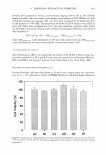
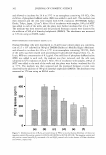
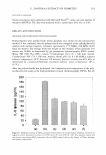
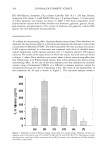
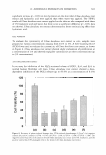
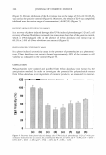
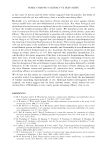
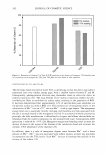
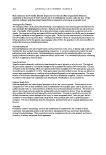
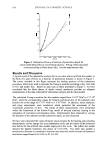
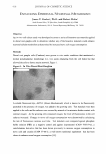
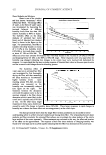
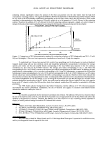
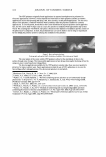
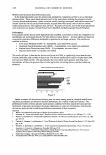
410 JOURNAL OF COSMETIC SCIENCE 0.06 0.05 0.04 0.03 0.02 0.01 0-+---..---..----.----.----.------1 0 0.0002 0,0004 0,0006 0.0008 0.001 0.0012 Strain(m) Figure 1 Indentation force as a function of penetration depth for a skin model(♦) and for in-vivo forearm skin (x). Fitting of the calculated curves according to Hertz theory (Eq. 1) to the experimental data. Results and Discussion A typical result of the indentation analysis for in-vivo skin and an artificial skin model, in the form of a plot of force as a function of penetration distance is shown in Figure 1. The curves included in this figure represent the loading portions of the indentation procedure, which were used to calculate the Young's modulae according to Eq. 1 for both in-vivo and model skin. Based on data such as those presented in Figure 1, we have concluded that the Hertz theory of elastic contact mechanics provides an adequate interpretation of the data collected for both human subjects and for skin models. The calculated Young's modulae for skin models ranged from 5.5·104 N/m2 to 17.7·104 N/m2, while the corresponding values for forearm and facial skin of ten panelists were found to be in the range of O. 7 · 104 N/m2 to 3. 3 · 104 N/m2 . In addition, stress relaxation and creep experiments were conducted, which permitted the assessment of the viscoelastic properties of skin. The results of these measurements were interpreted within the framework of the Kelvin-Voigt model of delayed elasticity leading to the calculation of viscosities and relaxation times. Indentometric data, obtained by varying the diameter of the indenter and the indentation depth, are also discussed. We have also calculated the values of elastic strain energies for the loading and unloading indentometric curves, energy loss in an indentation cycle, and the values of the hysteresis loss factors for the artificial skin models employed in this work. The softest skin model showed the highest hysteresis loss factor of 51.0±1.8%. For other skin models a monotonous decrease in viscoelastic character was observed, which in terms of hysteresis loss factor ranged from 36.9±3.6% to 25.1±5.2%.

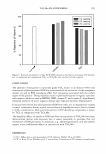
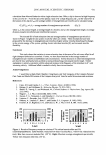
2006 ANNUAL SCIENTIFIC SEMINAR 411 The hysteresis factors for the forearm skin varied broadly from 17. 5% to 7 5%, with the highest value obtained for the oldest panelist. Excluding data obtained for the oldest panelist, the hysteresis factor of the skin of other subjects ranged from 17.5% to 38% and was similar in terms of viscoelastic contribution as compared to the skin models. A similar range of hysteresis factors ( or viscous coefficients), from 9. 3 % to 19% based on the analysis of three subjects, was reported by Zahuani et al. [2] In contrast to this, the strain energy data obtained for the periorbital region of the face suggest higher contribution of viscoelasticity with the hysteresis factor ranging from 35% to 49% . Conclusions: - The data from indentometric analysis of both artificial models of skin as well as forearm and periorbital skin of panelists obtained in-vivo can be interpreted by using Hertz theory of contact mechanics. The loading and unloading indentometric curves can be employed to calculate total and elastic strain energies as well as hysteresis ratio, which is the measure of viscoelasticity of an investigated material. - The indentometric creep and stress relaxation analysis of in-vivo skin and skin models can be described quantitatively by the Kelvin-Voigt model with one relaxation time. - The artificial skin models represent a good approximation of the behavior of in-vivo skin in terms of viscoelastic/elastic character. Skin models were, however, stiffer than natural skin with Young's modulae ranging from 5.5·104 N/m2 to 17.7·104 N/m2 for models vs. 0.7·104 N/m2 to 3.3 ·104 N/m2 for forearm and facial skin. In forthcoming studies we are planning to employ artificial skin models and natural skin to study the effect of thin polymer films on the mechanical behavior of skin. References [1] -KL.Johnson, Contact Mechanics, Cambridge University Press, 1985. [2] - H.Zahuani, C.Pailler-Mattei, R.Vargiolu, and M.A. Abellan, Assessment of the elasticity and tactile properties of the human skin surface by tribological tests, Proceedings of the 22nd IFSCC Congress in Edinburgh, 2002, podium 33.
Purchased for the exclusive use of nofirst nolast (unknown)
From: SCC Media Library & Resource Center (library.scconline.org)