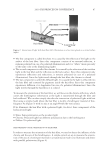
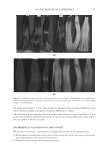
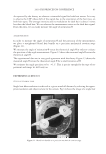
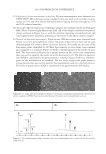
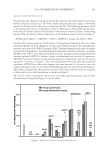
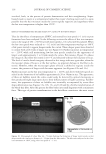
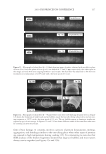
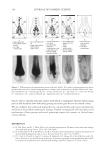
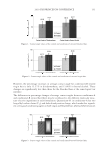
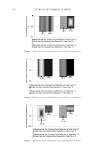
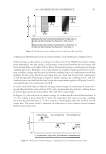
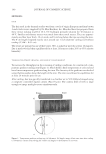
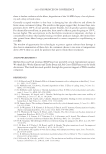
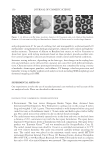
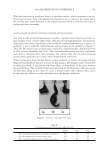
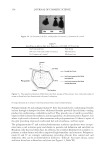
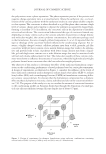
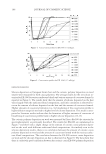
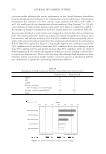
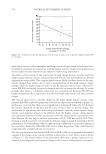
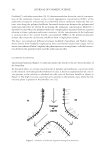
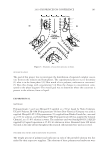
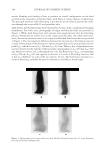
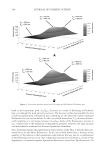
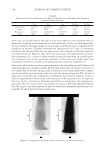
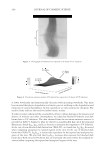
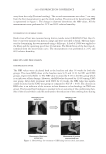
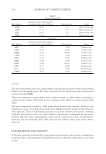
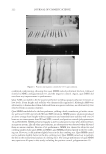
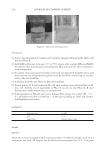
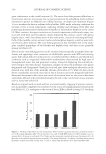
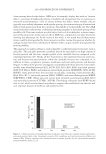
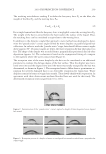
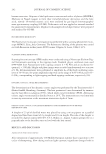
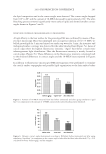
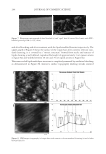
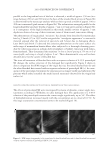
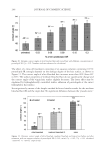
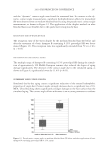
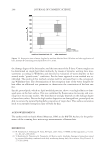
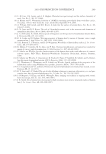
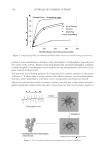
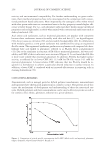
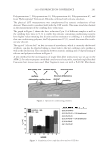
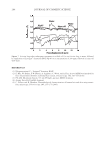
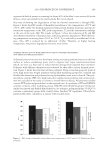
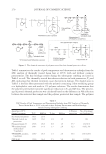
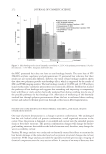
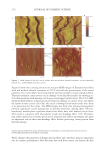
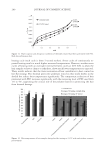
JOURNAL OF COSMETIC SCIENCE 124 then be able to identify molecular targets with which to manipulate the hair follicle aging process and therefore slow down hair graying or restore gray hair to its natural colour. We are confi dent that with such approaches one can specifi cally target genes and proteins involved in hair follicle melanocyte biology. Further investigation will elucidate novel mechanisms of hair graying and reveal promising targets for cosmetic or clinical inter- vention therein. REFERENCES (1) D. Van Neste and D. J. Tobin, Hair cycle and hair pigmentation: Dynamic interactions and changes associated with aging, Micron, 35(3), 193–200 (2004). (2) N. V. Botchkareva, V. A. Botchkarev, and B. A. Gilchrest, Fate of melanocytes during development of the hair follicle pigmentary unit, J. Invest. Dermatol. Symp. Proc., 8(1), 76–79 (2003). (3) P. C. Arck, R. Overall, K. Spatz, C. Liezman, B. Handjiski, B. F. Klapp, M. A. Birch-Machin, and E. M. Peters, Towards a “free radical theory of graying”: melanocyte apoptosis in the aging human hair follicle is an indicator of oxidative stress induced tissue damage, FASEB J., 20(9), 1567–1569, (2006). Figure 2. Differentiation of pigmentation status in the hair follicle. Five grades of pigmentation are distin- guished and assessed by characterizing melanocyte density and localization in the hair follicle bulb. bm – basal membrane dp – dermal papilla em – ectopic melanocyte hs – hair shaft irs – inner root sheath m – melanocyte ors – outer root sheath pu – pigmentary unit rm – rounded melanocyte.

2010 TRI/PRINCETON CONFERENCE 125 (4) E. K. Nishimura, S. R. Granter, and D. E Fisher, Mechanisms of hair graying: Incomplete melanocyte stem cell maintenance in the niche, Science, 307, 720–724 (2005). (5) J. M. Wood, H. Decker, H. Hartmann, B. Chavan, H. Rokos, J. D. Spencer, S. Hasse, M J. Thornton, M. Shalbaf, R. Paus, and K. U. Schallreuter, Senile hair graying: H2O2-mediated oxidative stress affects human hair color by blunting methionine sulfoxide repair, FASEB J., 23(7), 2065–2075 (2009). (6) E. K. Nishimura, S. A. Jordan, H. Oshima, H. Yoshida, M. Osawa, M. Moriyama, I. J. Jackson, Y. Barrandon, Y. Miyachi, and S. Nishikawa, Dominant role of the niche in melanocyte stem-cell fate determination, Nature, 416, 854–860, (2002). (7) N. V. Botchkareva, M. Khlgatian, B. J. Longley, V. A. Botchkarev, and B. A. Gilchrest, SCF/c-kit signaling is required for cyclic regeneration of the hair pigmentation unit, FASEB J., 15(3), 654–658 (2001). (8) E. M. Peters, M. Maurer, V. A. Botchkarev, K. Jensen, P. Welker, G. A. Scott, and R. Paus, Kit is expressed by epithelial cells in vivo, J Invest. Dermatol., 121(5), 976–984 (2003). (9) D. J. Tobin, Aging of the hair follicle pigmentation system, Int. J. Trichology, 1(2), 83–93 (2009). (10) E. M. Peters, S. Hendrix, G. Gölz, B. F. Klapp, P. C. Arck, and R. Paus, Nerve growth factor and its precursor differentially regulate hair cycle progression in mice, J. Histochem. Cytochem., 54(3), 275–288 (2006). (11) E. M. Peters, S. Liotiri, E. Bodó, E. Hagen, T. Bíró, P. C. Arck, and R. Paus, Probing the effects of stress mediators on the human hair follicle: Substance P holds central position, Am. J. Pathol., 171(6), 1872– 1886 (2007). (12) E. M. Peters, C. Liezmann, K. Spatz, M. Daniltchenko, J. Kruse, B. F. Klapp, D. Imfeld, and R. Gräub, Profi lling mRNA of the graying human hair follicle constitutes a promising state of the art tool to assess the aging process and stress defence (in preparation).
Purchased for the exclusive use of nofirst nolast (unknown)
From: SCC Media Library & Resource Center (library.scconline.org)