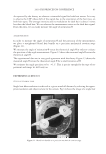
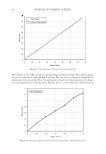
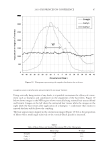
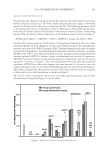
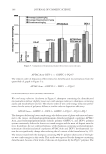
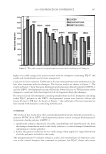
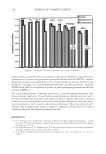
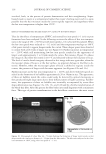
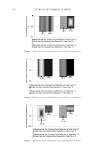
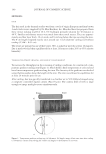
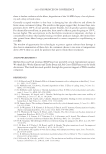
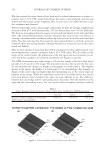
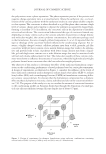
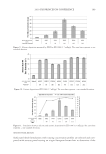
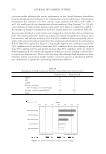
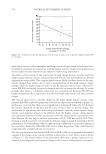
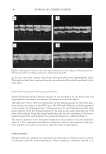
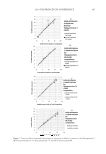
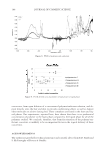
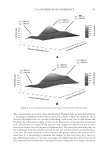
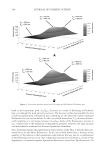
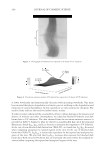
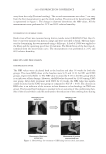
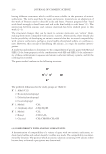
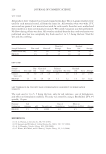
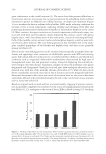
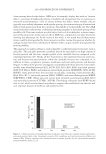
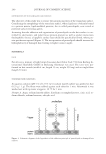
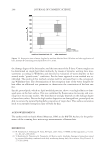
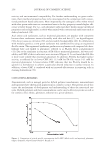
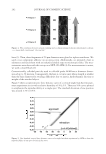
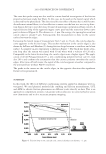
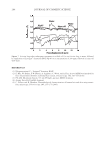
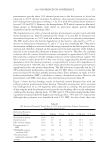
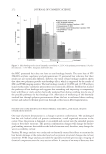
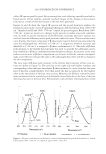
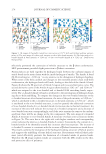
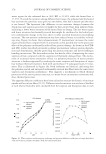
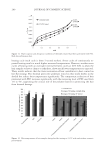
JOURNAL OF COSMETIC SCIENCE 136 CONCLUSIONS Based on these experimental results, we may conclude: Hair surface energy can be determined by using the Fowkes theory in a two-component 1. liquid system. After conditioner treatment, the combing forces of hair tresses reduced with a decrease 2. in average hair surface energy. The percentage reduction in average surface energy of treated hair fi bers depends on 3. the applied conditioner formulation and the type of hair. The percentage decrease in dry/wet combing forces of cosmetically treated hair tresses 4. also depends on the applied conditioner and the type of hair. Determination of change in average surface energy of cosmetically treated hair samples 5. can be used to evaluate/screen the conditioning performance of applied formulations (ingredients). ACKNOWLEDGMENTS The authors thank Mr. Abhijit Bidaye and Mr. Scott Cardinali of Croda Application Group for providing conditioner formulations. They thank the Research Director, Mr. Abel Pereira, and the Vice President of R&D, Dr. Rob Comber, for their support of the project. REFERENCES (1) Y. I. Tarasevich, Theoretical and Experimental Chemistry, Vol. 42, No. 2 (2006). (2) C. Rulison, Application Note 401 (Augustien Scientifi c). (3) Y. K. Kamath and H-D Weigmann, Modifi cation of human hair through fi ber surface treatments: Char- acterization by wettability, C&T Magazine, 101, 37–49 (1986) (4) Y. K. Kamath, C. J. Dansizer, S. Hornby, and H. D. Weigmann, Surface wettability scanning of long fi laments by a liquid membrane method, Textile Res. J., 57, 205–213 (1987) (5) H. D. Weigmann, Y. K. Kamath, S. B. Ruetsch, P. Busch, and H. Tesmann, Characterization of surface deposits on human hair fi bers, JSCS, 41, 379–390 (1990) (6) F. K. Hansen, “The Measurement of Surface Energy of Polymer by Means of Contact Angles of Liquids on Solid Surfaces”, short overview (University of Oslo). (7) M. Zenkiewick, Methods for the calculation of surface free energy of solids, J. Achiev. Mater. Manuf. Eng. 24(1), 137–145 (2007). Figure 10. Reduction of surface energy vs combing force for conditioner-B treated hair.

2010 TRI/PRINCETON CONFERENCE 137 (8) M. A. Brown, T. A. Hutchin, S. H. Page, and S. Jain, US Patent Application 2009/0087398, “Method for Testing Damaged Hair,” April 2, 2009. (9) R. A. Lodge and B. Bhushan, Wetting properties of human hair by means of dynamic contact angle measurement, J. Appl. Polym. Sci., 102, 5255–5265 (2006). (10) T. Gao, A. Pereira, P. Obukowho, and A. Bedell, The premier quaternary ammonium salt for hair and skin cares—Behenyl trimethylammonium methosulfate, Cosmet. Aerosols Toiletr. Australia, 16(1), 25–30 (2003). (11) C. LaTorre and B. Bhushan, Investigation of scale effects and directionality dependence on friction and adhesion of human hair using AFM and microscale friction test apparatus, Ultramicroscopy, 109, 720– 734 (2006). (12) R. A. Lodge, “Wetting Behavior and Surface Potential Characteristics of Human Hair,” Master’s Thesis, Graduate School of The Ohio State University (2007).
Purchased for the exclusive use of nofirst nolast (unknown)
From: SCC Media Library & Resource Center (library.scconline.org)