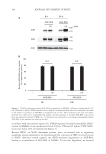
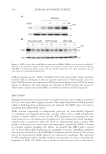
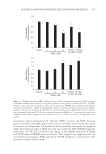
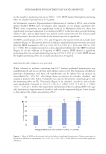
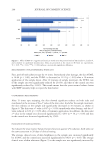
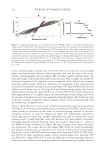
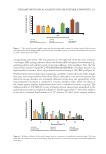
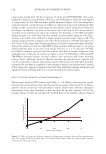
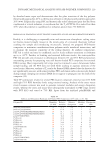
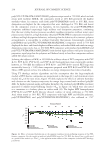
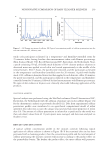
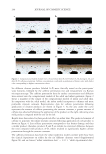
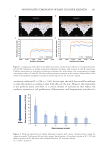
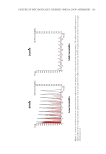
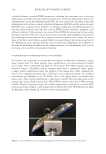
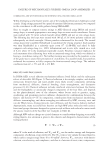
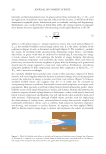
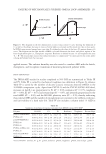
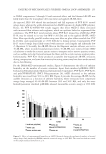
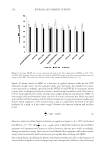
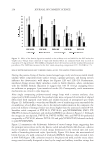
196 JOURNAL OF COSMETIC SCIENCE AGE-detoxifying enzymes, GLO1 and GLO2. It has been reported that a high correlation between AGE accumulation in the skin and the expression of GLO enzymes exists (17). After UVA/B exposure, the expression of GLO1 decreased, whereas that of GLO2 increased (Figure 5). Moreover, the same pattern was observed in EX527-treated cells (Figure 5). These results clearly indicate that SIRT1 is involved in GLO1 and GLO2 expression. DISCUSSION Although long-term skin exposure to UV is considered to be the cause of AGE accumulation (14,15), it was unclear what triggers this event. This study showed that UVA/B irradiation enhances AGE deposition in keratinocytes and indicated that SIRT1 plays a key role in regulating intracellular AGE content. AGEs, whether exogenously or endogenously generated, are intracellularly degraded via autophagy and ubiquitin-proteasome systems, which work as AGE detoxification systems to remove AGEs in tissues (18,19). AGE degredation via autophagy has also been shown to occur in keratinocytes. Laughlin et al. have shown that several autophagy inducers such as rapamycin reduce the levels of carboxymethyl lysine, a major AGE product, in keratinocytes treated with a glycating agent, glyoxal (20). SIRT1 is known to positively regulate autophagy (21). Hence, we presume that SIRT1 plays a crucial role in intracellular AGE degradation via autophagy activation. Autophagy inhibitors increased the subcellular levels of AGE-BSA. Consistent with the literature (20), at least part of the degradation of AGEs appears to be mediated by autophagy. The stagnation of AGE degradation induces further oxidation and glycation, in turn, accelerating the formation of AGEs (22). AGEs cause a decline in skin function such as skin barrier EX527 - - 0.1 1 10 AGE-BSA 2 1 0.5 1 0.5 10 1 .1 0 0 0 0 μM) ( RT1720 S mM) ( NMN (μM) Resveratrol A B AGE Actin AGE Actin 95 72 43 95 72 43 (kDa) (kDa) μM Figure 4. SIRT1 activity affects AGE-BSA accumulation in NHEKs. NHEKs were cultured in an EpiLife® medium in the presence or absence of each agent at the indicated concentrations. After 24 h of incubation, AGE-BSA (1.5 mg/ml) was added, and the cells were further cultured for 24 h. After incubation, the cells were subjected to immunoblotting analyses.

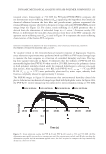
197 Accumulation of Advanced Glycation End Products maintenance and wound healing (23). Therefore, SIRT1 activators and NAD+-boosting agents, resveratrol and NMN, respectively, seem to contribute to preventing skin aging. In contrast, we showed that UV irradiation did not promote the uptake of exogenous AGEs. Intracellular uptake of AGEs proceeds via receptor for AGE (RAGE)-dependent endocytosis (20). We did not observe any change in the mRNA expression of RAGE in UVA/B-exposed NHEKs (data not shown). This supports our suggestion that the accumulation of exogenous AGEs induced by UVA/B irradiation is not because of the promotion of their cellular uptake. 0 0.2 0.4 0.6 0.8 1 1.2 (-) Ex 1 Ex 3 Ex 5 UV 5 UV10 0 0.2 0.4 0.6 0.8 1 1.2 1.4 1.6 (-) Ex 1 Ex 3 Ex 5 UV 5 UV10 Control 6 + 12 UVB 13 + 23 UVB Control EX527 (μM) EX527 (μM) 6 + 12 UVB 13 + 23 UVB ** ** ** * * ** ** Figure 5. UVA/B irradiation or SIRT1 inhibition decreases GLO1 expression but increases GLO2 expression in NHEKs. NHEKs were cultured in an EpiLife® medium in the presence or absence of EX527, an SIRT1 inhibitor, at the indicated concentrations. After 24 h of incubation, NHEKs were irradiated with UVA/B at the indicated dosages in a phenol red-free EpiLife® medium, and they were then cultured in the EpiLife® medium in the presence or absence of EX527 for 24 h. After incubation, the mRNA levels of GLO1 and GLO2 were quantified by real-time PCR. Data are expressed as means ± SEMs (n = 3) the means are expressed as numbers of fold-change compared to that of control cells. *p 0.05 and **p 0.01, in comparison to the control. Fold induction ( expression) Fold induction ( expression)
Purchased for the exclusive use of nofirst nolast (unknown)
From: SCC Media Library & Resource Center (library.scconline.org)