201 J. Cosmet. Sci., 73, 201–212 (July/August 2022) Address all correspondence to Ziyan Zhou, a13579bcd@163.com Validation of the Tight Junction Promotion and Skin Barrier Enhancement by Saccharomyces Rice Ferment Filtrate FAN YANG, ZHENG ZHOU, MIAO GUO AND ZIYAN ZHOU Research & Development Center, Mageline Biology Tech Co., Ltd., Wuhan, Hubei, China (F.Y., Z.Z., M.G., Z.Z) Accepted for publication July 26, 2022. Synopsis Saccharomyces/rice ferment filtrate (SRFF) has been reported to have antiaging properties, provide good skin hydration, and make wrinkles less visible. We investigated the effects of SRFF on skin barrier function through normal human epidermal keratinocytes and clinical testing. Protein expressions of tight junction (TJ) proteins (claudin-1, claudin-4, and occludin) were evaluated by enzyme-linked immunosorbent assay. The barrier effect of skin protection by SRFF in cosmetic products was evaluated by tape-stripping testing and clinical dermatologist assessment during 28 days of treatment. The expression of TJs including claudin-1, claudin-4, and occludin increased in epidermal keratinocytes treated with SRFF (12.5 µg/mL), promoting rates up to 116.0 ± 4.0% (p 0.01), 108.9 ± 5.5%, and 113.5 ± 2.4% (p 0.01). After 28 days of clinical treatment with the same sunscreen cream, the side treated with yeast essence balance lotion with SRFF showed significant changes: skin brightness increased by 16.98%, whiteness increased by 20.13%, and gloss increased by 17.39%. SRFF can increase skin barrier function by increasing the expression of TJs, such as claudin-1, claudin-4, and occludin, and reducing photoaging and its synergy with sunscreen products. The skin treated with yeast essence balance lotion with SRFF showed immediate repair and provided an enhanced long-term barrier that protects skin from sun-induced damage. INTRODUCTION Rice is the most important and consumed grain in the world. We chose refined rice from 40 degrees north latitude as a starting raw material and fermented it using special saccharomyces selected from 1,000 kinds of saccharomyces. We obtained the saccharomyces/ rice ferment filtrate (SRFF Maifuyin) that contains 90 kinds of active ingredients, such as alpha-ketoglutarate (Alpha-KG) (1). We focused on fermentation with yeast as an efficient production method of Alpha-KG for developing a cosmetic ingredient containing Alpha-KG. Yeast cells have mitochondria in which the tricarboxylic acid cycle takes place and could boost the production of amino acids by fermentation. In a previous study, Yang et al. (1) demonstrated that the SRFF (Maifuyin) containing Alpha-KG could be a promising cosmetic ingredient for skin care products. They showed that the sample can reduce eye outer corner wrinkles and nasolabial groove

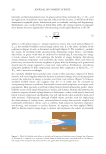
202 JOURNAL OF COSMETIC SCIENCE wrinkles, improve skin firmness, reduce forehead wrinkles, and demonstrate antiaging effects. Taken together, it was considered that fermentation is one of the best ways to produce Alpha-KG effectively and to develop beneficial ingredients in cosmetics. As is well known, the skin creates a barrier from the outer environment and is the largest organ in a human organism. The skin provides a protective barrier against sunlight, pathogens, physical and chemical damage, and water loss (2). Human skin is constantly exposed to sun radiation causing photoaging over time. Skin aging is a complex process affecting cells and molecules (3,4), and it impairs the barrier function of the skin. The barrier function was primarily attributed to the stratum corneum (SC), but recent studies confirmed that epidermal tight junctions (TJs) also play an important role in maintaining barrier properties of the skin, acting not only as a physical barrier but also as a regulatory element. This prompted investigation of the effects of SRFF on TJ promotion and skin barrier function by normal human epidermal keratinocytes. Ultraviolet (UV) exposure was reported to induce epidermal barrier damage by altering the TJ protein expression, disrupting the basement membrane junctions, decreasing the level of covalently bound ceramides, increasing SC thickness, increasing transepidermal water loss (TEWL), and degrading the structural and mechanical integrity of the skin (5). As a major factor of photoaging, UV radiation impairs TJ proteins, but TJs have great self-regenerative potential (2). Epidermal TJs contributing to the barrier and regulatory functions of the skin could therefore provide the missing link in the barrier function of the skin of elderly individuals. Claudins, occludin, and tricellulin, which act mainly as physical barriers in TJ complexes, are tetraspan transmembrane proteins with two extracellular loops (6–10). Under different intensities and types of UV radiation, several studies were conducted to simulate UV exposure of the skin (11). The results have shown that UV exposure diminishes TJs as well as barrier function along with oil–water barrier. UV exposure was found to have structural and quantitative deregulatory effects on TJs. Using immunohistochemical staining, changes in localization of claudin-1, claudin-4, and occludin as well as reduction of claudin-1 after UV dose were observed in the epidermis (11). Yuki et al. presented rather convincing evidence of the relation of TJs with barrier function along with TEWL. UV irradiation has been shown to have a negative impact on TJ proteins, which can cause serious disruption of the skin barrier (11–14). In our study, we investigated the upregulation of TJ-related proteins (claudin-1, claudin-4, and occludin) expressed by SRFF treatment. The skin barrier repair effect of the yeast essence balance lotion with SRFF was evaluated by 15 times tape-stripping testing. Brightness, whiteness, and gloss affectation of the lotion are evaluated by the clinical dermatologist assessment after 28 days of treatment using the yeast essence balance lotion with SRFF and sunscreen cream the control sample used only sunscreen cream. We want to explore the immediate repair and enhanced long-term barrier function of sun protection with lotion with SRFF, which works in synergy with sunscreen. MATERIALS AND METHODS MATERIALS SFRR (Maifuyin) was provided by the research and development center of Mageline Biology Tech Co., Ltd. The yeast essence balance lotion with SRFF (Maifuyin) and sunscreen cream were provided by Mageline Biology Tech Co., Ltd.
Purchased for the exclusive use of nofirst nolast (unknown)
From: SCC Media Library & Resource Center (library.scconline.org)