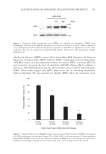
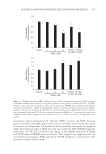
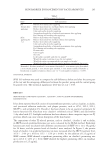
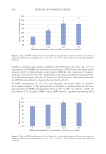
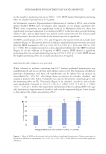
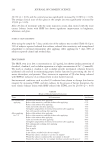
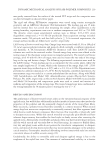
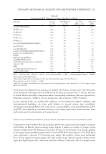
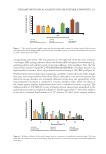
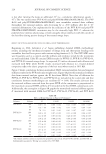
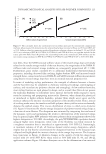
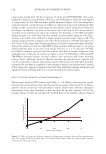
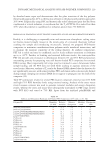
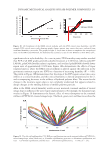
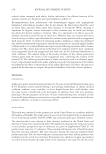
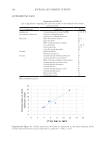
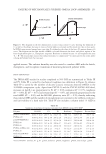
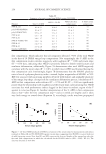
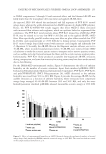
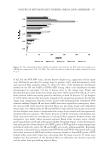
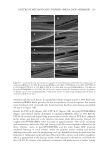
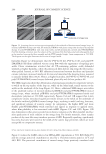
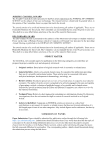
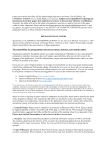
205 Skin Barrier Enhancement by Saccharomyces STATISTICAL ANALYSIS SPSS 19.0 software was used to compare the self-differences before and after the same part of the test and the intergroup differences between the product group and the control group by paired t-test. The statistical significance level was set as p 0.05. RESULTS SRFF INDUCED TJ PROTEINS (CLAUDIN-1, CLAUDIN-4, AND OCCLUDIN) IN EPIDERMAL KERATINOCYTE It has been reported that TJs consist of transmembrane proteins, such as claudins, occludin, and junctional adhesion molecules, and plaque proteins, such as ZO-1, ZO-2, ZO-3, MUPP-1, and symplekin (15). Claudin-1 has been shown to be an essential component for barrier function (16). Knockout mice claudin-1 exhibited critical TEWL and died within 1 day after birth (17). Sunlight irradiation has been shown to have a negative impact on TJ proteins, which can cause serious disruption of the skin barrier. The expressions of other TJ-related proteins, such as claudin-1, claudin-4, and occludin, in SRFF-treated epidermal keratinocytes were evaluated by the ELISA method. Epidermal keratinocytes were incubated with different concentrations of SRFF (3.13, 12.5, 50 µg/mL) for 24 hours, and the protein levels of claudin-1 were analyzed. In Figure 2, the protein levels of claudin-1 in epidermal keratinocyte were increased after the SRFF treatment from 107.6 ± 2.4% (p 0.05) to 115.5 ± 1.5% (p 0.001). At the addition of 12.5 µg/mL of SRFF content, SRFF showed a significant promoting effect on claudin-1 promoting rate up to 116.0 ± 4.0% (p 0.01). SRFF showed the highest promoting effect on claudin-1 production at 12.5 µg/mL. Table I Self-Assessment Evaluationa Time Self-assessment D0 Instant after applying Relieve skin redness after applying Relieve skin sensitivity and skin redness after applying Reduce skin redness after applying Calm and soothe skin after applying Strengthen adaptability of external environment after applying Feel calming and soothing after applying After applying for 7 d Relieve skin redness after applying Relieve skin sensitivity and skin redness after applying Reduce skin redness after applying Calm and soothe skin after applying Strengthen adaptability of external environment after applying Feel calming and soothing after applying Pleasant odor Easy to apply Not oily Is the subject satisfied with the test sample? Would the subject continue to use the test sample? Would the subject recommend the test sample to friends? Would the subject buy the test sample (without considering the price)? a Remarks 1: Evaluate standard: 0 score means dissatisfied, 1 score means quite dissatisfied, 2 score means general, 3 score means quite satisfied, 4 score means satisfied. Remarks 2: Satisfaction = number of subjects whose score 2 ÷ total number of subjects × 100%.

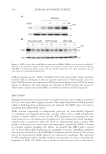
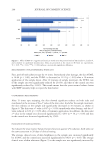
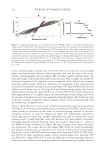
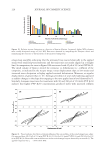
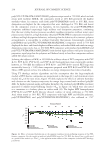
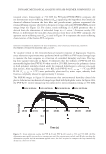
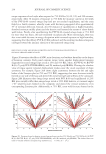
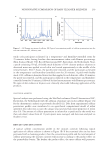
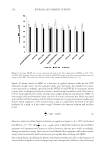
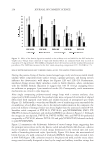
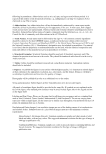
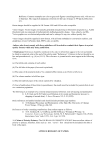
206 JOURNAL OF COSMETIC SCIENCE Claudin-1, claudin-4, and occludin contribute to the TJ barrier to ions (Na+, Cl−, Ca2+) in experiments with NHEKs and intermediate-sized tracers (4 kDa fluorescein isothiocyanate dextran) (18,19). In Madin-Darby canine kidney (MDCK) cells, induction of claudin-4 expression selectively blocked Na+ permeability, increasing transepithelial resistance (20). As in Kirschner’s report, the lack of claudin-4 in TJ structures of cultured keratinocytes and MDCK cells resulted in impaired barrier function (20,21). At SRFF concentrations of 3.13, 12.5, and 50 µg/mL, the protein levels of claudin-4 were analyzed (Figure 3). The protein levels of claudin-4 in epidermal keratinocyte were increased after the SRFF treatment from 103.9 ± 3.0% to 108.4 ± 2.5% (p 0.001). At the addition of 12.5 µg/mL of SRFF content, SRFF showed a significant promoting effect Figure 2. Effect of SRFF on the protein levels of claudin-1 in epidermal keratinocytes. Data are presented as the mean ± SE from six experiments. *p 0.05, **p 0.01, ***p 0.001 indicate a statistically significant difference. Figure 3. Effect of SRFF on the protein levels of claudin-4 in epidermal keratinocytes. Data are presented as the mean ± SE from six experiments. *p 0.05, **p 0.01, ***p 0.001 indicate a statistically significant difference.
Purchased for the exclusive use of nofirst nolast (unknown)
From: SCC Media Library & Resource Center (library.scconline.org)