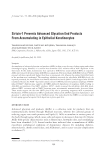
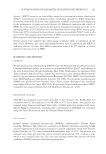
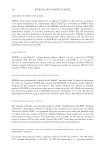
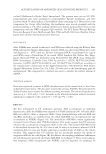
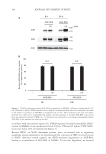
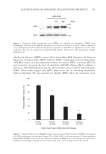
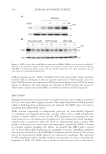
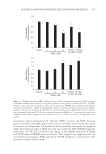
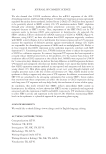
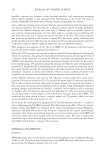
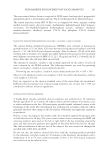
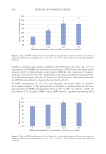
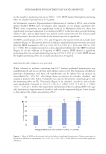
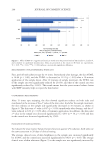
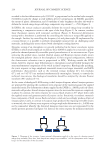
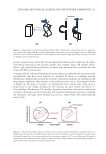
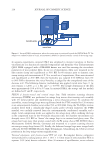
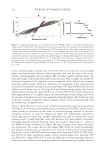
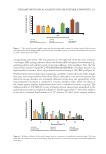
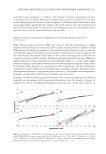
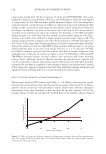
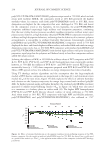
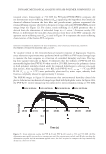
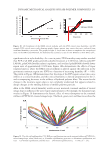
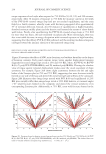
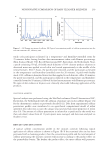
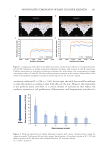
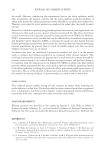
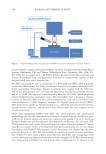
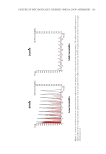
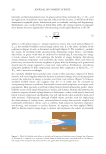
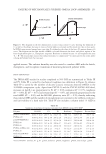
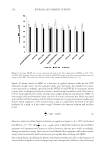
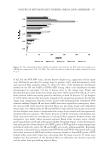
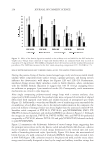
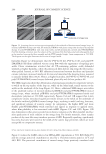
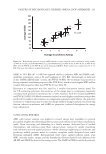
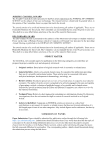
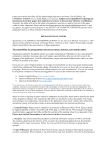
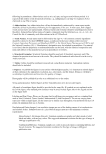
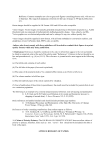
Figure 3. Acoustic emission spectra as a function of time and humidity for omega loops of hair treated with styling polymer. The stiffness and AED responses are highly influenced by changes in polymer plasticity. Each red vertical line represents a single acoustic emission. Each black triangle represents the force trace for a single deformation cycle. 249 Failure of Mechanically Stressed Omega Loop Assemblies

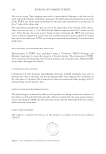
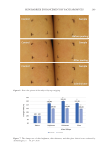
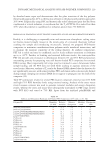
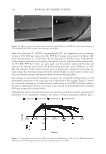
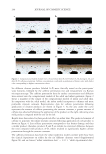
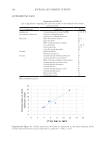
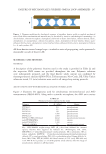
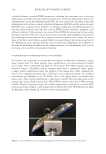
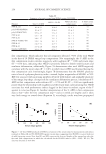
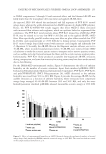
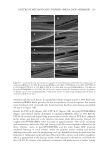
250 JOURNAL OF COSMETIC SCIENCE indicated isohume. Standard DHSA properties, including the maximum force in the first deformation cycle (F1) the ratio of the maximum force in the last deformation cycle to the maximum force in the first deformation (F10/F1) the ratio of the elastic modulus in the 10th deformation cycle to that recorded in the first deformation (E10/E1) and the plasticity index (H10/H1) were evaluated (9,11). Further, we introduce definitions of additional properties that have been extracted from the first cycle in DHSA testing: resilience, toughness, and stiffness durability. Style resilience was assessed from DHSA by integrating the area under the elastic segment of the force versus distance plot similarly, style toughness was extracted by evaluating the area under the force against maximum distance trace. Lastly, the return slope in the force versus distance graph, which is assessed during the extension segment of the deformation cycle, and just after the initial 4-mm loop compression, was evaluated to describe the durability of stiffness for the compressed style. At each humidity level, at least five loops were tested for each polymer treatment. POSTMORTEM SEM OF COMPRESSED OMEGA LOOP ASSEMBLIES To visualize the dichotomic enviromechanical behavior of fiber-film composites, omega loops treated with 2% (w/w) polymer were equilibrated in an environmental chamber set at either 35% or 90% RH and held for 120 minutes. The PTFE mandrel was then removed. Using a TA.XTplus texture analyzer fitted with a cylindrical acrylic probe, a single 4-mm compression stroke was applied to the omega loop. After confining the loop in the compressed position for a 45-minute stress relaxation period, the chamber environment was abruptly set to 35% RH to “freeze” the omega loop in its strained and glassy state. After proper equilibration, a thin layer of Au/Pd vapor was deposited on the omega loops using a high-vacuum Leica EM ACE600 sputter coater (Leica Mikrosysteme GmbH, Wetzlar, Germany) lastly, the coated samples were mounted on a custom SEM omega loop fixture (Figure 4) and imaged with a Hitachi SU-5000 FESEM (Hitachi High Technologies, Schaumburg, IL, USA) at various magnifications. Figure 4. Custom SEM rig for recording micrographs of enviromechanically stressed omega loops.
Purchased for the exclusive use of nofirst nolast (unknown)
From: SCC Media Library & Resource Center (library.scconline.org)