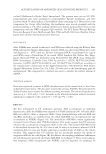
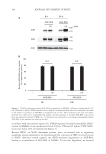
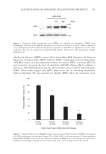
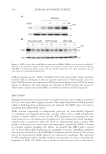
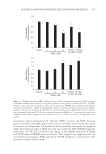
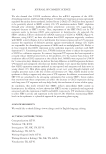
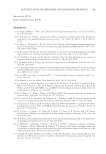
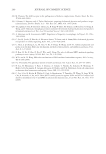
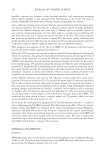
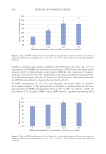
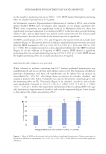
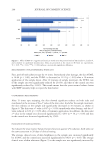
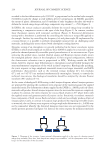
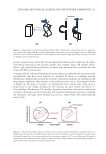
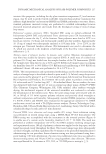
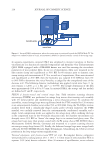
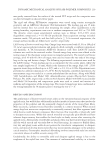
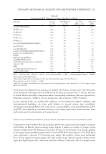
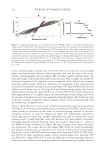
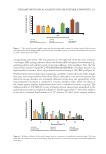
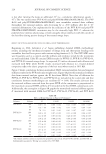
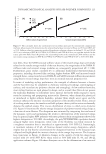
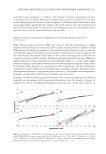
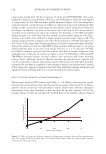
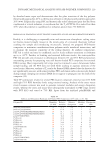
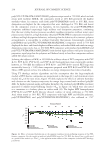
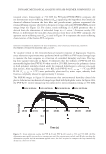
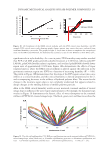
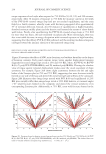
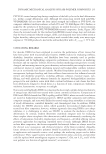
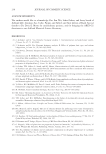
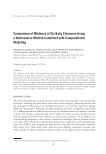
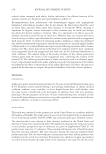
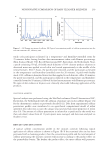
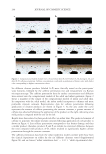
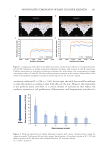
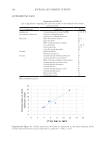
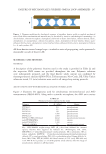
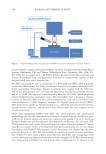
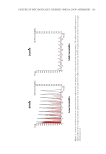
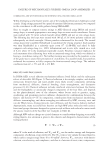
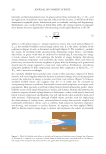
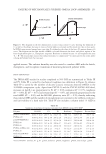
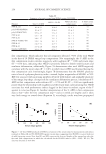
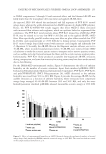
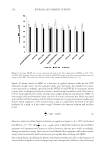
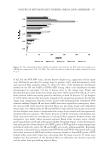
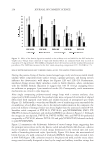
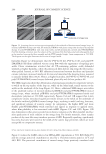
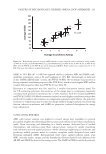
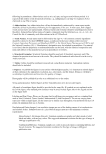
225 DYNAMIC MECHANICAL ANALYSIS OF HAIR-POLYMER COMPOSITES neat films. Since the SAOS torsional stiffness values of the treated omega loops are linearly related to the tensile storage moduli of the neat fixatives, the magnitudes of the DHSA F1 stiffness index and uniaxial storage modulus are consequently proportional (R2 = 0.98). Furthermore, prior studies correlated F1 to additional fundamental thermomechanical properties, including decreased film cracking, higher absolute MW, and increased tensile strength hence, connections between DHSA F1 and SAOS torsional stiffness measurements using fixative-treated omega loops have roots in essential material properties (12). In terms of modeling styling performance, the strength of adhesion between a fixative and the hair fiber may be simplified to chemistry (interfacial bonding), intermingling of surfaces, and viscoelasticity (polymer cohesion and entangling). At low ambient humidity, most styling fixatives are rigid glasses by design, and as a result their films do not possess the molecular flexibility to redistribute stress. Instead, the brittle welds respond to excess strain by initiating and propagating microcracks. However, when chemically plasticized or introduced to higher ambient humidity, polymer films absorb water vapor, and the moisture enhances the intrinsic viscoelastic properties of the interfiber welds. Hence, instead of cracking under stress, the interface and bulk polymer chains yield in unison to thermally disperse the applied energy. This viscous distribution of stress is called energy dissipation (13). Figure 10 examines the relative energy dissipation of polymer-treated omega loops as a function of resin dilution. The dissipation was estimated by integrating the total area of the Lissajous curves and normalizing the results to the hysteresis of the untreated omega loop. In general, higher MW polymers with more polymer chain entanglements showed the highest dissipation at 50% RH. Accordingly, the poly(VP/DMAPMA) copolymer showed uniquely higher stress dissipation, where some of the flexibility was likely initiated by a toughness transition that is introduced at approximately 50% RH (12). Interestingly, at treatment volumes of 45 µL, all fixatives showed similar energy dissipation—which implies that (at low fixative concentration) the dissipation hysteresis in the Lissajous loops collapsed and highlighted the intrinsic elasticity of the omega loop wet set. The Lissajous loop trajectories in Figure 11 illustrate changes in the quality of style for omega loops treated with 1% (w/w) PVP K-30, when tested at 50% RH with 45, 90, and 180 µL application volumes. Figure 11A shows Lissajous curves for the deformation of an untreated R² = 0.941 0.0 0.5 1.0 1.5 2.0 2.5 3.0 3.5 4.0 4.5 50 70 90 110 130 150 170 190 210 230 Stiffness Values F1 (grams force) R² 50 100 150 200 250 300 350 400 450 Un Storage Modulus (MPa) R2 = 0.941 R2 = 0.9911990.= Uniaiaxial xial Storage Modulus (MPa)) Uniaxial Sg415ffness values,,F1 (grams force) (A) (B) 45 μL 90 μL 180 μL X Figure 9. The scatterplot shows the correlation between stiffness measured by torsional and compressional methods, wherein panel (A) demonstrates the relationship between torsional stiffness and F1 from DHSA (R2 = 0.94). Stiffness values for composites produced from fixative solution volumes, including 45, 90, and 180 µL of 1% (w/w) solutions of PVP K-15, PVP K-30, PVP K-60, and PVP K-90 data, are together included in the scatter plot (50% RH). Panel (B) provides the relationship between the normalized LAOS stiffness and the neat tensile storage modulus for PVP K-15, PVP K-30, PVP K-60, and PVP K-90 (R2 = 0.99) (50% RH). NormalizedNormalizedLALAOSOSsg415Stiffnesffnesss(AU)

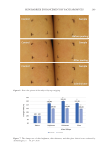
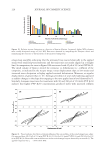
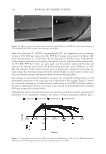
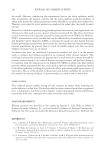
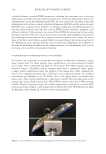
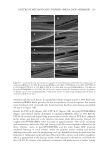
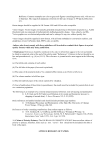
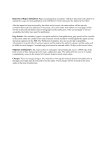
226 JOURNAL OF COSMETIC SCIENCE omega loop assembly, indicating that the untreated tress reacted elastically to the applied strain (very small loop-area hysteresis and the trajectories are nearly aligned in a straight line). In comparison, the tress in Figure 11B was treated with 45 µL of 1% (w/w) PVP K-30. The small volume of fixative altered the resistance to deformation (i.e., stiffness) of the composite, as indicated by the steeper torque versus displacement slope at low strains and increased stress dissipation at higher applied torsional deformation. Moreover, at angular displacements of greater than ± 10°, rheological evidence of seam weld splitting appeared as sudden changes in the slope after stepping to the next applied strain level (denoted by *). Similarly, Lissajous trajectories for treatments with 90 and 180 µL of 1% (w/w) PVP K-30 indicate that higher PVP K-30 concentrations produced styles with increased stiffness Figure 11. Visual evidence that fixative dilution influenced the survivability of the styled omega loop, where: (A) untreated hair (B) 45 µL of 1% (w/w) PVP K-30 (C) 90 µL of 1% (w/w) PVP K-30 and (D) 180 µL of 1% (w/w) PVP K-30. Observable seam weld fractures in the treated omega loop are denoted by an asterisk (*). The applied frequency was ω = 1.0 Hz (50% RH). 0.00 1.00 2.00 3.00 4.00 5.00 6.00 7.00 8.00 9.00 180 90 45 Volume of 1% (w/w) solug415on (μL) PVP K-90 PVP K-60 PVP K-30 Branched PVP PVP K-15 p(VP/DMAPMA) p(VCL/VP/DMAPMA/MAPLDMAC) p(VP/DMAPMA/MAPLDMAC) p(VP/LM/AA) Figure 10. Relative viscous dissipation as a function of fixative dilution. In general, higher MW polymers more readily dissipated energy at 50% RH. Data were obtained by integrating the Lissajous curves and normalizing the total area to the hysteresis of the untreated omega loop. Relag415ve Dissipag415on (AU)
Purchased for the exclusive use of nofirst nolast (unknown)
From: SCC Media Library & Resource Center (library.scconline.org)