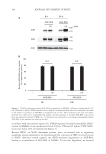
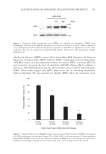
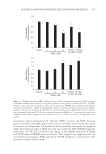
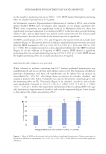
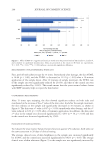
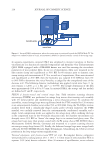
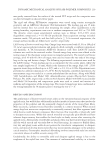
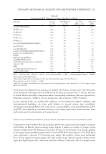
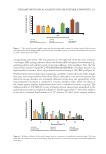
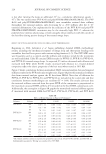
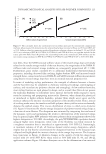
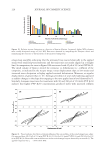
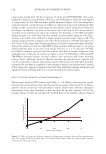
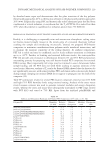
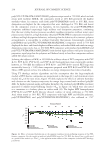
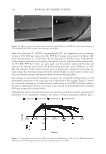
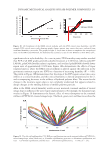
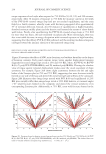
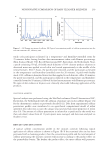
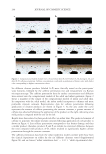
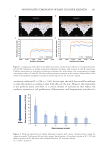
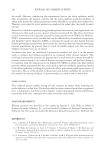
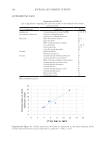
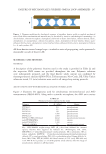
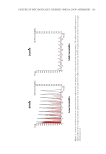
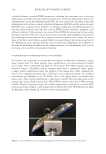
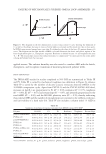
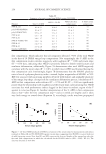
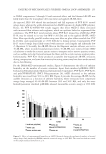
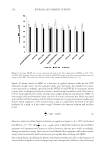
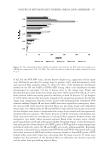
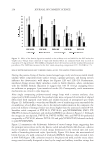
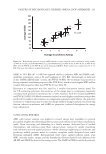
255 Failure of Mechanically Stressed Omega Loop Assemblies in DHSA compressions 2 through 10 with minimal effort, and the liberated dB-SPL was likely lower than the microphone detection limit and applied dB-SPL filter. As expected, PEG 400 altered the mechanical and AE responses of PVP K-30–treated omega loops, wherein the welds demonstrated an #AED response of a higher MW polymer. Hence, the PVP K-30/PEG-400 results suggest that lower #AED is likely associated with increased film softness and toughness, which are qualities linked to augmented film compliance. The PVP K-15 trend anomaly, where PVP K-15 showed less #AED than PVP K-30, may be related to its very low MW ( 10 kDa) and to the applied dB-SPL #AED filter. More specifically, parallel studies using neat films on glass slides revealed that PVP K-15 films crack spontaneously at 50% RH due to drying stresses. Consequently, PVP K-15–treated omega loops likely started with non-zero crack lengths and inherently low σ f (Equation 2). Secondly, the dB-SPL filter in the Exponent analysis software was set to 30 dB-SPL, where recorded sound pressures below 30 dB-SPL were removed from #AED calculations to make the acoustic spectra easier to interpret and to remove spurious events, such as audible stick-slip friction between the fibers and the acrylic texture analyzer probe. Unfortunately, PVP K-15 likely produced acceptable low-magnitude dB-SPL emissions during compression, and some low-intensity fracturing events may have been undercounted due to data filtering. For the DHSA-AED environmental studies, Figure 8 demonstrates the effect of ambient humidity on the number of acoustic emissions. Apart from imidized p(IB/MA) (INCI: Isobutylene/Ethylmaleimide/Hydroxyethylmaleimide Copolymer), PVP K-60, PVP K-90, and poly(VP/MAPTAC) (INCI: Polyquaternium 28), #AED decreased as the ambient humidity was raised from 50% to 60% RH. Figure 9 provides the average dB-SPL for the audible emissions as a function of ambient humidity, where emissions from compressed omega loops averaged 45–60 dB-SPL between 30% and 50% RH, and only the more humidity-resistant imidized p(IB/MA) released measurable acoustic energy at 90% RH. Figure 8. Effect of environmental humidity on #AED liberated during the mechanical analysis of treated omega loops. Only imidized p(IB/MA) emitted acoustical energy at 90% RH. The error bars indicate trends in the sample standard deviation (n ≥ 5).

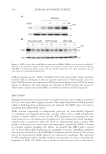
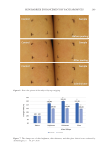
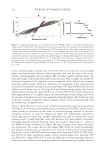
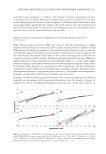
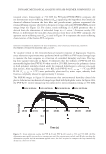
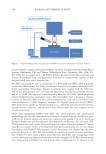
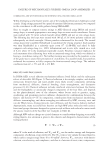
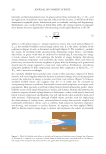
256 JOURNAL OF COSMETIC SCIENCE Figure 10 shows trends in #AED as a function of applied solution solids for the PVP molecular weight series. As the polymer solids were increased, the number of acoustic events increased accordingly, especially for the PVP K-15 and PVP K-30 treatments, which require more overlapping of polymer chains to build stronger interfiber welds. Note that at 0.313% (w/w) applied resin solids, all molecular weights produced similarly low #AED. At low testing solids and humidity levels, the lack of acoustic emissions was likely associated with ineffectual fiber bonding and the likely introduction of gaps (d) between neighboring fixative welds. Equation 3 (16) indicates that a gap in a liquid film will heal if the film thickness (h) is high, or if the contact angle θ between the aqueous solution and the fiber is low: h d 2 1- ( cosθ) (3) However, when very dilute fixative solutions are applied to virgin (ca. θ 100°) or bleached hair fibers (ca. θ 70°), then h d - 2(1 cosθ), and it is likely that numerous uncoated fiber segments will spontaneously appear as defects between adjacent spot welds accordingly, during mechanical testing, these uncoated and flexible fiber segments will redirect strain energy away from brittle welds and decrease perceptible film cracking and #AED. Like resin dilution, modifying the fixative distribution method also affects the frequency of uncoated fiber lengths in treated omega loops and consequently influences the production Figure 9. Average dB-SPL for acoustic emissions released in the first compression of DHSA at 30%, 50%, and 90% RH isohumes. Note that only the imidized p(IB/MA) omega loops liberated measurable acoustical energy at 90% RH. The error bars indicate trends in the sample standard deviation (n ≥ 5).
Purchased for the exclusive use of nofirst nolast (unknown)
From: SCC Media Library & Resource Center (library.scconline.org)