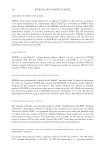
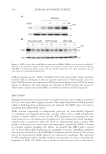
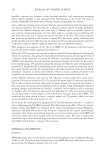
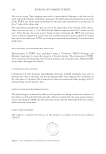
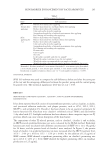
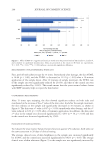
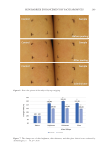
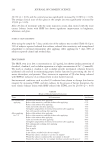
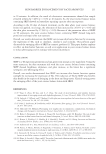
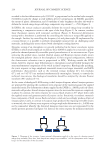
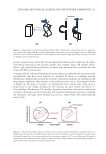
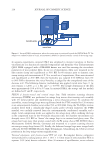
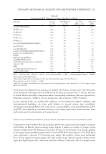
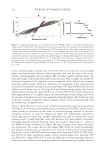
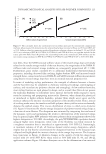
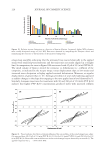
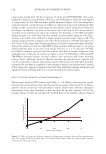
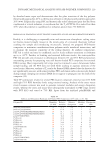
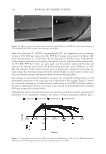
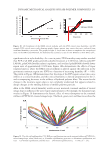
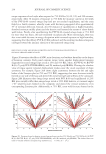
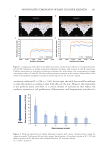
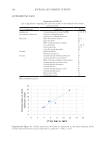
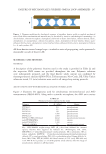
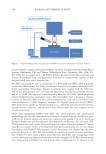
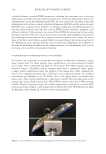
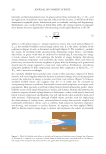
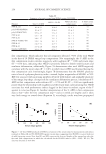
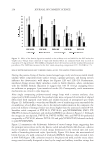
247 Failure of Mechanically Stressed Omega Loop Assemblies AE from fixative-treated omega loops—in which a series of propagating cracks generated a measurable cascade of discrete AE. MATERIALS AND METHODS MATERIALS A description of the polymeric fixatives used in the study is provided in Table II, and the respective INCI names are specified throughout the text. Polymeric solutions were subsequently prepared, and the final fixative solids content was confirmed by thermogravimetric analysis (Q5000 TGA, TA Instruments, New Castle, DE, USA). Unless otherwise stated, 1% (w/w) solutions were used in all omega-loop testing protocols. AED IN CONJUNCTION WITH MECHANICAL ANALYSIS OF OMEGA LOOPS Figure 2 illustrates the apparatus used for simultaneous enviromechanical and AED measurements (DHSA-AED). Along with a scientific microphone, the AED unit consists Figure 1. Diagram modeling the rheological response of interfiber fixative welds to applied mechanical stress. Each failure mechanism and material may be described by intuitive and rheological terminology: (a) ductile failure, cohesion (viscoplastic, elastoplastic) (b) brittle or elastic limit failure, cohesion (brittle, elastic, elastoplastic) (c) crazing failure, cohesion (viscoplastic, elastic, elastoplastic) (d) near-interface failure, quasi- adhesion (brittle, elastic, elastoplastic) and (e) interface failure, adhesion (brittle, elastic, elastoplastic). Failures b, c, d, and e produce AE. TABLE II Polymeric fixatives employed in the study Polymer Mw (kDa)* Charge PVP K-15 9.6 pseudocationic PVP K-30 50 pseudocationic PVP K-60 350 pseudocationic PVP K-90 1,400 pseudocationic PVP K-120 1,800 pseudocationic PVP K-30:PEG 400 blend blend pseudocationic/nonionic poly(VP/DMAPMA) 2,800 cationic poly(VP/MAPTAC) 1,300 cationic Imidized p(IB/MA) 70 pseudocationic/anionic Key: *GPC/MALLS weight-average MW (Mw) data from Ashland Inc. internal reports fixatives were supplied by Ashland Inc. (Wilmington, DE, USA) DMAPMA = 3-(dimethylaminopropyl) methacrylamide IB = isobutylene MA = maleic anhydride MAPTAC = [3-(methacryloylamino)propyl]trimethylammonium chloride VP = vinyl pyrrolidone PEG 400 = polyethylene glycol (Sigma-Aldrich, St. Louis, MO, USA) PVP K-30:PEG 400 blend consists of 0.1% (w/w) PEG 400 and 1.0% PVP K-30 to produce a 1.1% (w/w) polymer solids solution effective charge of pseudocationic polymers is pH dependent.

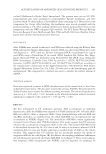
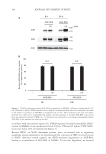
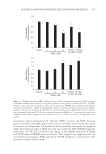
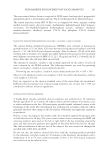
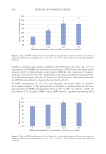
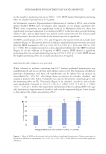
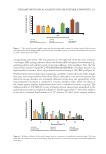
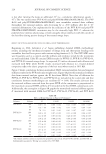
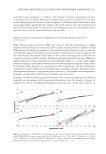
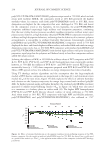
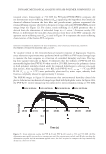
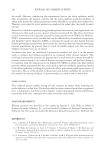
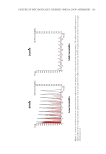
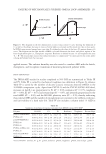
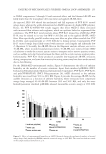
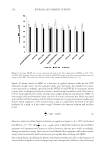
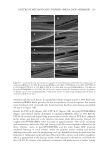
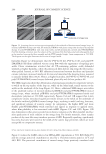
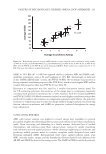
248 JOURNAL OF COSMETIC SCIENCE of a preamplifier, signal conditioning hardware, and data acquisition systems (Stable Micro Systems, Goldaming, UK, and Texture Technologies Corp., Hamilton, MA, USA) (15). The AED unit is coupled with a TA.XTplus Texture Analyzer (Stable Micro Systems and Texture Technologies Corp.) and Exponent v.6 software to synchronously capture acoustic emissions with force versus distance data. All AED measurements were accomplished in a WhisperRoom MDL 6084-E portable sound room (Morristown, TN, USA). A calibrated free-field microphone and Model 4188- A-021 preamplifier (Brüel-Kjær, Nærum, Denmark) were coupled with the AED unit and set at a fixed distance (1.25 cm) from the omega loop. For all measurements the gain was set to 18 dB. The high-pass corner frequency filter was 3.125 kHz, which adequately removed high-frequency instrument noise. The microphone had a frequency response between 12 Hz and 20 kHz, but the acoustic emissions were collected over a narrower and noise-minimized 3–12 kHz frequency envelope (15). Typical brittle and ductile DHSA- AED performance profiles are exhibited in Figure 3—where the red vertical lines represent discrete acoustic emissions, and the black trace demonstrates the force response of the treated omega loop. Other than augmenting DHSA with AED, the instrumentation and experimental methodology used for the enviromechanical analysis of omega loops are described in prior work (8–12). In brief, omega loop tresses are constructed by gluing 0.3 g of 3.5-inch-long European dark brown hair (International Hair Importers and Products, Inc., Glendale, NY, USA) between two acrylic plates, thus producing a tress that is 0.4 inches wide and 1.5 inches long. For our studies, tresses were dampened with water and quickly wet set into omega loop shapes using Teflon (PTFE) mandrels, acrylic base plates, and adhesive tape (8). After passively drying at ca. 50% RH, the mechanical response of several untreated assemblies was evaluated to later assess stiffness ratios (SR) (11). Next, the same omega loops were treated with aqueous polymer solutions and air-dried overnight at 50% RH. Measurements were subsequently performed on treated loops after conditioning for 45 minutes at the Figure 2. Diagram showing AED incorporated with DHSA in an environmentally controlled chamber.
Purchased for the exclusive use of nofirst nolast (unknown)
From: SCC Media Library & Resource Center (library.scconline.org)