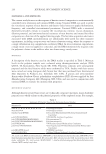
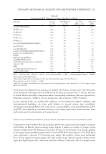
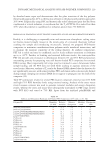
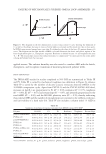
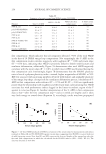
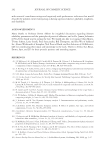
229 DYNAMIC MECHANICAL ANALYSIS OF HAIR-POLYMER COMPOSITES by absorbed water vapor and demonstrates that the glass transition of the dry polymer theoretically approaches 26°C as the fraction of water in the plasticized polymer approaches 20% (w/w). Empirically, using DSC and hermetically sealed aluminum pans that had been conditioned at several isohumes, it was shown that the T g of PVP K-30 is indeed less than 10°C when the polymer is equilibrated at isohumes greater than 75% RH (12). RHEOLOGICAL EVALUATION OF PET-FIXATIVE COMPOSITES AT LOW AND HIGH RELATIVE HUMIDITY Frankly, it is challenging to repeatedly trim and mount neat elastoplastic styling resins (or fixative-treated straight tresses) in the tensile grips of a torsional rheometer without crushing the sample and introducing microcracks. Instead, we prepared PET-fixative composites to minimize contributions from polymer-cuticle interfacial interactions, and to examine the moisture sensitivity of the styling fixatives. At ambient temperature, PET felt is stable and may be confidently used to study stiffness transitions at isotherms up to ca. 60°C. Further, in bending and torsional deflection modes, the semicrystalline PET felt provides zero resistance to deformation between 0% and 95% RH and possesses outstanding porosity for preparing very stiff fixative-loaded PET composites for torsional DMA testing. Most importantly, felt strips may be trimmed to exact dimensions before sample loading, and the PET does not swell while soaking in aqueous solutions of the tested resins. Moreover, analysis of T g results by flexural DMA showed that the fixatives do not significantly associate with semicrystalline PET, and minor surface microcracks formed during sample clamping in torsional DMA do not appear to propagate into the bulk of the composite (12). Table IV summarizes results for several PET-fixative composites tested at low (10% RH) and high (75% RH) humidity levels using torsional testing. Analysis of the stress versus strain Lissajous contours was used to generate torsional modulus and energy dissipation results, wherein the stress and strain were subsequently normalized to PET strips treated with PVP K-15 and tested at 75% RH. Apart from the imidized poly(IB/MA) and Table IV Stiffness and Dissipation Rankings for Polymer-PET Composites (26°C and ω = 0.1 Hz) Polymer ID Humidity (% RH) Relative modulus Relative dissipation Modulus rank Dissipation rank Imidized poly(IB/MA) 75 71.1 2.5 1 5 Imidized poly(IB/MA) 10 62.6 1.3 2 15 poly(VCL/VP/DMAPMA/MAPLDMAC) 10 51.7 1.1 3 16 poly(VCL/VP/DMAPMA/MAPLDMAC) 75 51.1 1.8 4 9 poly(VP/DMAPMA) 10 46.0 2.8 5 3 PVP K-90 10 38.9 1.5 6 14 PVP K-60 10 37.5 1.6 7 12 PVP K-120 10 34.9 1.5 8 13 PVP K-30 10 34.7 1.7 9 11 poly(VP/LM/AA) 10 31.3 1.7 10 10 PVP K-90 75 30.8 2.1 11 7 PVP K-120 75 30.8 2.2 12 6 PVP K-60 75 25.2 1.9 13 8 PVP K-30 75 18.5 2.6 14 4 poly(VP/DMAPMA) 75 16.5 3.6 15 1 poly(VP/LM/AA) 75 12.3 3.3 16 2

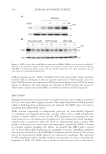
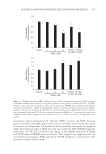
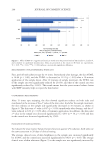
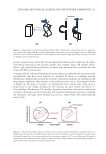
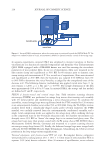
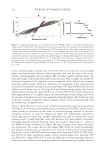
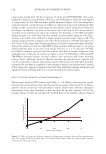
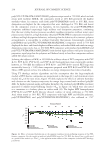
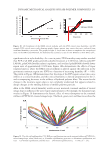
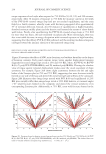
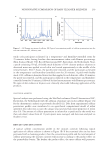
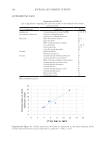
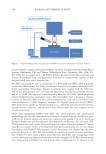
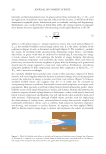
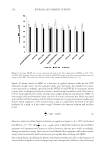
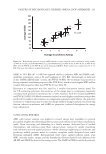
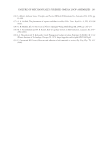
230 JOURNAL OF COSMETIC SCIENCE poly(VCL/VP/DMAPMA/MAPLDMAC) polyester strips tested at 75% RH, which include resins with excellent HHCR, the composites tested at 10% RH presented the highest modulus values. In contrast, aside from poly(VP/DMAPMA) tested at 10% RH, stress dissipation was highest for the composites that were challenged at 75% RH, and lowest for the composites tested at low humidity. At low humidity, the poly(VP/DMAPMA) composite exhibited surprisingly high stiffness and dissipation properties, confirming that the neat styling fixative possesses excellent toughness properties without water vapor plasticization however, at high humidity the poly(VP/DMAPMA) composite revealed poor stiffness and high dissipation behaviors, indicating that the lubricity of its intrinsic polymer entanglements is susceptible to ambient humidity fluctuations. Interestingly, imidized poly(IB/MA) and poly(VCL/VP/DMAPMA/MAPLDMAC) composites tested at 75% RH displayed the first- and fourth-highest stiffness values, and ranked fifth and ninth in energy dissipation, respectively but, at 10% RH, PET composites with imidized poly(IB/MA) and poly(VCL/VP/DMAPMA/MAPLDMAC) both showed high stiffness with poor dissipation properties, signifying that the polymers will behave brittly in hair fiber composites without added film plasticization. Isolating the influence of MW, at 10% RH the stiffness values of PET composites with PVP K-30, PVP K-60, PVP K-90, and PVP K-120 homopolymers were statistically similar however, at 75% RH the stiffness of PVP K-30– and PVP K-60–treated PET strips was statistically lower (p 0.05) than composites prepared with PVP K-90 and PVP K-120. Hence, MW appears to have less influence on energy dissipation than relative humidity. Using FT rheology analysis algorithms and the assumption that the large-amplitude moduli of PET-fixative composites are proportional to the large (G’ L ) and minimum strain moduli (G’ M ) of the neat resins, Figure 14 likely explains the effects of ambient humidity and cohesion on the Lissajous trajectories for omega loops treated with imidized poly(IB/ MA). At higher torsional angles and higher humidity, the imidized poly(IB/MA) treatment appeared to exhibit strain-stiffening trends (+S app in Figure 14), which were also noted as a transition to a leathery phase in earlier work (12). The higher MW homopolymers (PVP K-60 and PVP K-90) likewise showed evidence of strain stiffening at 75% RH. And, when tested at 10% RH, PET composites with high MW and flexible polymers, poly(VP/DMAPMA) and poly(VP/DMAPMA/MAPLDMAC), also stiffened at 50° -0.22 -0.17 -0.12 -0.07 -0.02 0.03 0.08 0 10 20 30 40 50 60 70 80 Torsional Twist (°) PVP K-60 10RH PVP K-60 75RH PVP K-90 10RH PVP K-90 75RH p(VP/DMAPMA) 10RH p(VP/DMAPMA) 75RH Imidized p(IB/MA) 10RH Imidized p(IB/MA) 75RH p(VP/DMAPMA/MAPLDMAC) 10RH p(VP/DMAPMA/MAPLDMAC) 75RH Figure 14. Effect of torsional deformation on the apparent nonlinear strain-stiffening response of the PET- fixative composite. For the trends in imidized poly(IB/MA) tested at 75% RH, the dotted line is solely used as a guide for the reader’s eye. The Sapp is the apparent strain stiffness of the composite (calculated FT rheology parameter). S app
Purchased for the exclusive use of nofirst nolast (unknown)
From: SCC Media Library & Resource Center (library.scconline.org)