245 J. Cosmet. Sci., 73, 245–263 (July/August 2022) Address all correspondence to Timothy W. Gillece, tgillece@gmail.com Eavesdropping on the Failure of Mechanically Stressed Omega Loop Assemblies TIMOTHY W. GILLECE AND ROGER L. MCMULLEN Ashland Inc., Bridgewater, New Jersey, USA (T.W.G., R.L.M.) Accepted for publication October 17, 2022. Synopsis Acoustic emission detection (AED) was combined with mechanical deformation to complement the understanding of fixative-treated hair fiber assembly failure. Among the factors investigated were the effects of humidity, fixative molecular weight, and formulation dilution. In the dry state, brittle and highly elastic welds fractured in polymer-treated hair shaped into omega loops and produced numerous audible emissions. However, the same fixative treatments yielded flexibly at higher ambient humidity and quietly dissipated the applied stress. Results from AED were then correlated with sensorial “style crunch” panel evaluations, wherein omega loops treated with brittle fixatives released copious audible emissions and were rated crunchier than flexible and more durable treatments (R2 = 0.98). Texture analysis, AED, and scanning electron microscopy (SEM) revealed that film-fiber composites failed adhesively at lower humidity, but augmented film ductility inhibited catastrophic debonding in higher-humidity environments. INTRODUCTION Differing from light waves, sound is perturbation in the pressure of an elastic medium, such as air or water, where the deflected medium returns to its relaxed state after the mechanical wave propagates through its boundaries. Sound waves in air are directed longitudinally from the source and are composed of phases of compression and rarefaction. Decaying quickly with distance, these transient waves are gathered by the ear and transferred to the brain via anatomical mechanotransduction machinery (1–4). The dynamic range of human hearing is quite extensive, and sound pressure levels (dB-SPL) are consequently scaled logarithmically (Table I) (3). As diaphragms of scientific microphones are oscillated by the same molecular vibrations of air that stimulate our ear drums, a calibrated microphone set at a precise distance from the source may similarly be used to detect, quantify, and correlate acoustic events. AED has been employed in the food industry to quantify crispiness and crunchiness in products, including apples, cereals, and potato chips, where the production of acoustic emissions (AE) is associated with the rapid breakdown and recovery of the elastic microstructure (5). The velocity of recovery is related to the characteristic stiffness of the

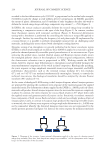
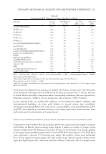
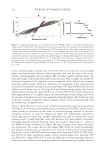
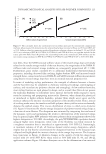
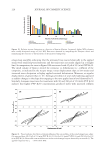
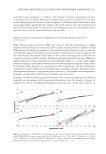
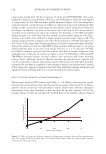
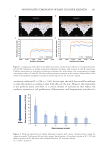
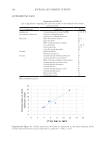
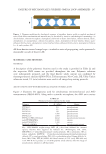
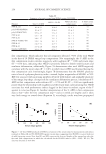
246 JOURNAL OF COSMETIC SCIENCE vibrating remnants, where stiffer materials vibrate faster than dissipative materials (6). Similarly, fracturing of weld junctions induces debonding of polymeric films from hair fibers, in which crack propagation and the elastic recovery of the omega loop produce mechanical waves that translate from the film surface and propagate to our ears via transient air pressure fluctuations (1). While limited studies have evaluated the viscoelasticity of fixative-treated hair, dynamic hairspray analysis (DHSA) with treated omega loops has been stalwart in the hair-fixative industry since being first employed in the mid-1990s (7–14). In DHSA testing, Jachowicz used texture analysis to model fixative performance factors such as fiber surface energy, fixative chemistry, molecular weight (MW), solvent effects, and the influence of relative humidity (RH) on the stress response of the composite. More recent work by McMullen utilized DHSA with various molecular weights of poly(vinyl pyrrolidone) (International Nomenclature Cosmetic Ingredient [INCI]: PVP) to demonstrate that the quantity of naturally occurring surface lipids affects the stiffness properties of treated hair fiber assemblies (12). In DHSA, aqueous polymer solutions are distributed to the omega loop and meticulously spread across the accessible surface. During slow and passive drying, the dilute solution readily wicks between fibers until viscosity limits segmental and translational mobility of the polymer chains. Finally, the continuous film locks into glassy welds between adhered fibers. When the treated omega loops are subsequently strained with a texture analyzer, brittle and elastic interfiber junctions crack and liberate acoustic energy, whereas flexible welds quietly stretch and yield to dissipate applied stress (σ). Figure 1 shows five potential responses to applied nonlinear deformation, in which simplified cohesion or adhesion mechanisms are implicated in weld failure. In Figure 1a, adhesion is strong, but the rubbery polymer film elongates to avoid fracture. For soft welds, the deformation may be described as ductile or viscoplastic—in which welds flow with irreversible changes in microstructure. Instead, firmer, or more rubbery welds may elongate elastoplastically, wherein elastoplastics resist shape change but inevitably yield to critical deformation. Figure 1b indicates that adhesion is strong, but fracturing arises because the brittle or highly elastic resin is intrinsically too rigid and glassy to yield and dissipate excess stress. In Figure 1c, the polymer is in a rubbery-leathery state and yields and crazes under duress instead of fracturing. A craze zone develops perpendicular to the applied stress, and tough elongated polymer fibrils bridge the fracture to absorb energy and decrease the likelihood of further crack propagation. Lastly, Figures 1d and 1e show near-interface and interface failures, respectively. The former is a type of quasi-cohesional failure, meaning that a thin layer of polymer adheres to the fiber upon fracturing, whereas the latter involves true delamination at the polymer-fiber interface. In our investigation, mechanisms 1b, 1c, 1d, and 1e produced fracturing patterns associated with the release of Table I Measured dB-SPL from various sources* Type of Sound dB-SPL Rock concert (Sep. 2018, Holmdel, NJ) 119 NYC subway train (Sep. 2017, New York, NY) 93 Laboratory with working hoods (Apr. 2021, Bridgewater, NJ) 54 Office space with closed door (Apr. 2021, Bridgewater, NJ) 39 WhisperRoom MDL 6084-E (Jan. 2021, Bridgewater, NJ) 27 Key: *dB-SPL measured in dB(A) mode using SPLnFFT Sound Meter v7.0 (Fabien Lefebvre) and an Apple iPhone 11 Pro (Cupertino, CA, USA).
Purchased for the exclusive use of nofirst nolast (unknown)
From: SCC Media Library & Resource Center (library.scconline.org)