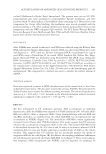
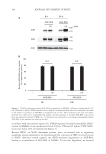
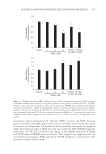
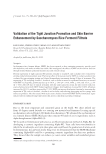
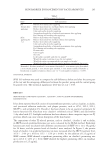
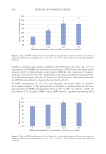
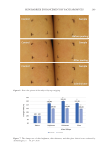
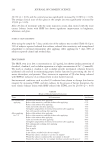
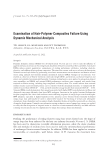
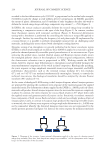
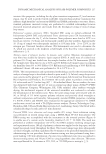
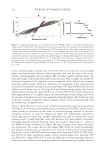
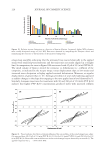
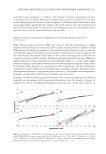
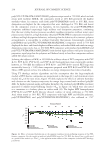
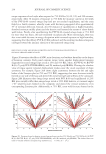
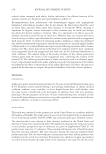
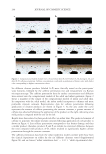
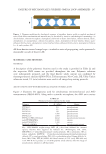
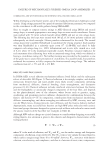
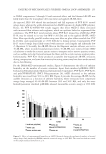
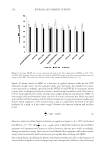
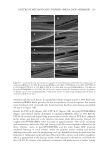
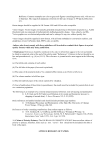
259 Failure of Mechanically Stressed Omega Loop Assemblies extended with the crack fissure. In unpublished tensile strength studies at 90% RH, these imidized p(IB/MA) fibrils proved to be less susceptible to viscous dissipation, but instead strain hardened until catastrophically detaching from the fiber and releasing perceptible AE (see * in Figure 12B). Results for PVP K-90 (Figure 12C), PVP K-15 (Figure 12E), and poly(VP/DMAPMA) (Figure 12G) showed similar dichotomy to imidized p(IB/MA), where at 35% RH the PVP K-90–treated style formed long near-interfacial cracks, whereas PVP K-15 exhibited brittle failure and shattered at the interface into many small film particles. Instead, the tougher poly(VP/DMAPMA) welds fractured in jagged patterns, with cracks oscillating and terminating within the film and leaving tooth-like resin fragments adhered to the fibers. Further, cracks in poly(VP/DMAPMA) and the other higher MW materials exhibited blunting of crack stresses, where the polymer matrix yielded and formed diffusing nanocracks near the propagating crack tip, herewith reducing focused stress (see Equation 2). Additional cracks and jagged fractures reflect greater crack surface roughness, which is proportional to the fracture surface work required to debond the weld from the fiber (19,20). In contrast, after sufficient acclimation and plasticization at higher testing Figure 12. Scanning electron microscope micrographs of treated European dark brown hair omega loops: A) imidized p(IB/MA) at 35% RH B) imidized p(IB/MA) at 90% RH C) PVP K-90 at 35% RH D) PVP K-90 at 90% RH E) PVP K-15 at 35% RH F) PVP K-15 at 90% RH G) poly(VP/DMAPMA) at 35% RH and H) poly(VP/DMAPMA) at 90% RH. The side-by-side images portray the dichotomic response of polymers to applied stress at low and high humidity *adhesional failure of tough strings bridging adjacent fibers in imidized p(IB/MA) (see text).

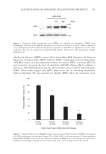
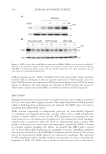
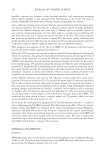
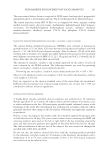
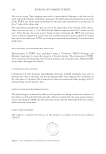
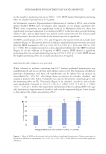
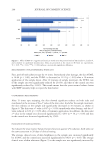
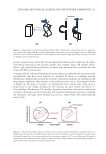
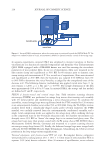
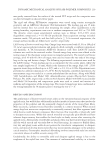
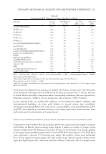
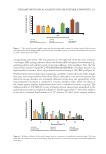
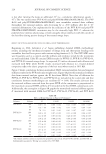
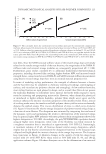
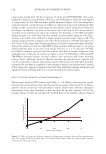
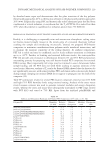
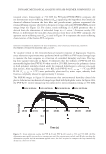
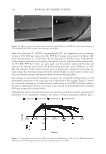
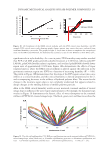
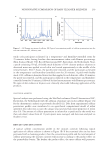
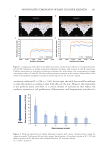
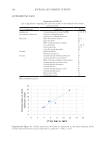
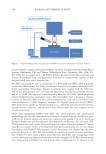
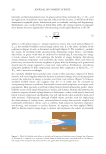
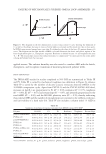
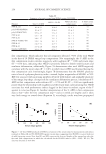
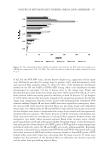
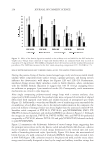
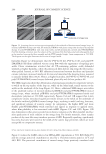
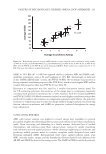
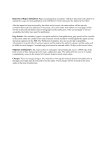
260 JOURNAL OF COSMETIC SCIENCE humidity, Figure 12 demonstrates that the PVP K-90 (D), PVP K-15 (F), and poly(VP/ DMAPMA) (H) films exhibited viscous creep flow with the appearance of tapering spot welds. Closer examination revealed that all VP-containing polymer welds debonded similarly at higher humidity, where the plasticized films did not slip along the fiber surface when pulled. Instead, at 90% RH adhesional attractions between the fibers and (pseudo) cationic polymers increased interfacial friction and intensified the shearing forces required to separate welded fibers (19,21). Hence, at higher humidity, the PVP K-15, PVP K-90, and poly(VP/DMAPMA) treated tresses deformed plastically and did not produce AE. The SEM images also show that deformation of omega loops introduced compressive stresses to welds on the top surface of the loop arc, while on the other hand, tensile stresses to the welds on the underside of the loop (Figure 13). Hence, additional SEM images were taken of the underside surface of stressed imidized p(IB/MA) and poly(VP/DMAPMA) treated omega loops, where imidized p(IB/MA) and poly(VP/DMAPMA) represent brittle and elastoplastic polymers at 35% RH, respectively. Figures 13A and 13B suggest that 4-mm compressive strains introduced significant tensile stresses to the welds on the underside of the brittle imidized p(IB/MA) treated omega loops, resulting in weld cracking, fractures, and significant releases of acoustic energy. In comparison, the higher MW and more flexible poly(VP/DMAPMA) welds stretched and ripped in response to applied stress, where film pliability is less associated with #AED (Figures 13C and 13D). Figure 13D also demonstrates that gravity pooled excess fixative solution at the fiber-mandrel interface after application of resin solution to the omega loop. For brittle materials, these surplus pockets of dry neat film may introduce spurious #AED. Regionally speaking, significantly less stress fractures were noted in the welds of the convex loop perimeter, which are more susceptible to compressive stresses. STYLE CRUNCH VERSUS DHSA-AED (PANEL STUDY USING TREATED OMEGA LOOPS) Figure 14 relates the #AED collected in DHSA-AED experiments at 50% RH (Table IV) and the average perceived crunchiness as rated by a 15-person sensory panel at 22°C and 48% RH. The perceived crunchiness of treated omega loops positively correlated with A 4 mm Underside of omega loop Figure 13. Scanning electron microscope micrographs of the underside of fixative-treated omega loops: A) imidized p(IB/MA) failing seam weld B) imidized p(IB/MA) with glassy strings that developed during film drying C) poly(VP/DMAPMA) with torn seam welds and D) mechanically stressed poly(VP/DMAPMA) thin film showing cavitation note the remains of the continuous film that had pooled and subsequently dried at the interface between the fiber assembly and the PTFE mandrel (single 4-mm compression at 35% RH). The diagram on the right illustrates the location of imaged welds.
Purchased for the exclusive use of nofirst nolast (unknown)
From: SCC Media Library & Resource Center (library.scconline.org)