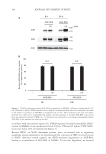
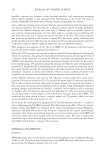
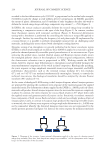
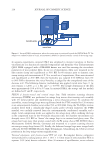
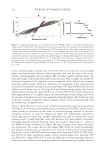
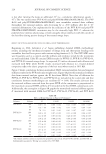
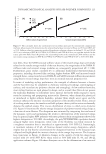
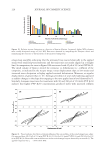
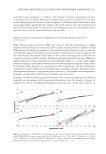
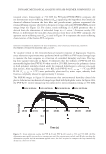
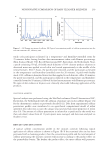
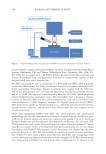
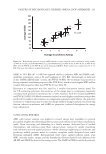
217 DYNAMIC MECHANICAL ANALYSIS OF HAIR-POLYMER COMPOSITES intrinsic film properties, including the dry glass transition temperature (T g ) and moisture regain, may be used to predict brittle-to-flexible enviromechanical phase transitions that influence high humidity curl retention (HHCR) and DHSA performance outcomes. Hence, standard polymeric materials testing was performed to establish relationships between measured materials properties and results from the rheological testing of treated omega loop tresses. Differential scanning calorimetry (DSC). Standard DSC using an indium-calibrated TA Instruments Q2000 DSC and perforated Tzero aluminum pans (TA Instruments) was completed to assess the dry T g of the fixatives. Neat polymers were dried at 60°C in a forced-air oven for 72 hours and mechanically crushed into fine powders. Approximately 10–15 mg of sample was subsequently analyzed at 10˚C/min from –20 to 220˚C in dry nitrogen gas. Universal Analysis software (TA Instruments) was used to determine the T g , which was assessed as the midpoint at half height of the heat flow versus temperature inflection (n ≥ 3). Moisture regain of polymeric fixatives by dynamic vapor sorption. Moisture management of neat films was studied by dynamic vapor sorption (DVS). A small mass of crushed neat polymer (10–15 mg) was loaded into the sample chamber of the TA Instruments Q5000 SA. Samples were then dried in situ at 60°C and 0% RH for 120 minutes prior to ramping the humidity from 0% to 90% RH at 0.5% RH/min and equilibrating at 90% RH for an additional 4 hours. All runs were performed at 26 ± 0.2°C (n = 3). DHSA. The instrumentation and experimental methodology used for the enviromechanical analysis of omega loops is described in detail in prior work (1–5). In brief, omega loop tresses were constructed by gluing 0.3 g of 3.5-inch-long European dark brown hair (International Hair Importers and Products, Inc.) between two acrylic plates to produce a tress that is 0.4 inches wide and 1.5 inches long (637 ± 48 individual fibers). For our studies, the tress was dampened with water and wet set into an omega loop shape using a Teflon™ (PTFE) (The Chemours Company, Wilmington, DE, USA) mandrel. After ambient overnight drying, the mechanical response of the untreated assemblies was evaluated to calculate the denominator of the stiffness ratio. Next, the same omega loops were treated with 45, 90, or 180 µL of 1% (w/w) aqueous polymer solutions and passively dried overnight at ambient temperature and humidity. Subsequently, standard DHSA properties, including F1, F10/F1, E10/E1, and H10/H1 were evaluated at the appropriate isohume (1–5). DHSA studies were carried out with a TA.XTplus texture analyzer (Texture Technologies Corp., Hamilton, MA, USA and Stable Microsystems, Ltd., Goldaming, Surrey, UK) fitted with a cylindrically shaped acrylic probe (25 mm diameter). Uniaxial DMA (stress relaxation and storage modulus [E’] testing). Stress relaxation testing was performed on treated omega loops using a DMTA Mark IV (TA Instruments). The DMA testing was accomplished with the instrument in the inverted position (Figure 4) to enable use of a custom acrylic humidity chamber (5–95 ± 1% RH). The work was performed at ambient temperature (22–25°C). For DMA analyses involving omega loops and experimental resins, 180 µL of polymeric solution was applied to the loop apex, and the liquid was spread evenly throughout the fibers. The treated omega loops were subsequently air-dried overnight, and then equilibrated for 30 minutes at the prescribed humidity prior to administering the test procedure. Stress relaxation testing was then performed using three- point bending: 0.80 mm deformation 25g static force (additional static force was applied to decrease testing times) and 350 pts/3,500 sec using logarithmic data collection. The tresses were equilibrated for 30 minutes at 25%, 50%, or 75% RH prior to testing (n ≥ 3).

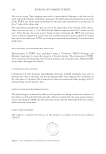
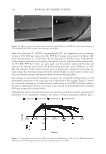
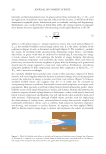
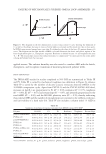
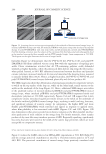
218 JOURNAL OF COSMETIC SCIENCE In separate experiments, uniaxial DMA was employed to monitor variations in fixative viscoelasticity as a function of controlled temperature and humidity. Our TA Instruments Q800 DMA equipped with a DMA-RH fixture was used for assessing the viscoelastic parameters of neat polymer films. In one set of experiments, films were mounted in the film tension clamp and equilibrated at 50% RH for 60 minutes prior to dynamic time sweep testing and measurement of E’. In a second set of experiments, films were mounted and equilibrated at 20% RH then the humidity was ramped 0.5% RH/min from 0% to 90% RH to determine the critical humidity, as judged by the extrapolated onset of the decrease in E’. The following dynamic methodology was applied: initial static force = 1g auto tension = 120% ω = 1 Hz and γ = 0.075%. The sample dimensions of the film were approximately 10.0 x 8.0 x 0.7 mm. In uniaxial DMA, the storage and loss moduli are defined as E’ and E”, respectively. FESEM of fixative-treated and strained omega loops. Field emission scanning electron microscopy (FESEM) was performed on omega loop tresses after treating each assembly with 2% (w/w) polymer and implementing a stress relaxation period. To condition the assemblies, treated omega loops were equilibrated with the PTFE mandrel for 120 minutes in an environmental chamber set at either 35% or 90% RH. Using the TA.XTplus texture analyzer fitted with a cylindrically shaped acrylic probe (25-mm diameter), the PTFE mandrel was carefully removed from the environmentally conditioned assembly, and a single 4-mm compression stroke was applied to the omega loop. After confining the loop in the compressed state for the 45-minute relaxation time, the chamber environment was abruptly set to 35% RH to “freeze” the omega loop in its strained and glassy state. The omega hair loops were then sputter-coated with Au/Pd using a Leica EM ACE600 (Leica Microsystems GmbH, Wetzlar, Germany) and mounted to a custom scanning electron microscope omega loop fixture (12). Finally, the deformed omega loops were imaged with a Hitachi SU5000 FESEM (Hitachi High Technologies, Schaumburg, IL, USA) at several positions in the loop using various magnifications. Torsional experiments with fixative-treated PET felt strips. Rectangular fixative composites were produced by soaking porous 25.0 × 10.0 × 1.5 mm strips of semicrystalline PET in aqueous 5.0% (w/w) fixative solutions. After 30 minutes of equilibration, excess solution DMA ω Hz Humidity probe PC Omega loop dγ/dt RH microcontroller Figure 4. Inverted DMA configuration, where the testing stage is positioned beneath the DMTA Mark IV. The sample was confined within an acrylic environmental chamber to permit humidity control of the testing stage.
Purchased for the exclusive use of nofirst nolast (unknown)
From: SCC Media Library & Resource Center (library.scconline.org)