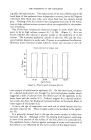
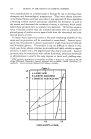
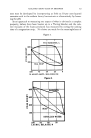
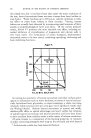
•398 JOURNAL OF THE SOCIETY OF COSMETIC CHEMISTS molecules with considerable energy. Brown, Thuman, and McBain (4) have shown that the surface viscosity of the system discussed here can be ex- traordinarily high. The transition from slow to fast draining is probably akin to a melting phenomenon in two dimensions, the surfaces changing from rigid or semirigid ones to freely flowing ones. In the case of the slow draining films, the rigid surfaces of the film may act like the walls of a plate viscometer in which liquid held between two solid plates can be made to drain very slowly. When the surfaces become mobile, then we have the fast draining case, the bulk liquid descending rapidly along with the sur- faces. The existence of intermolecular compounds in this system is quite con- clusive evidence that there are strong interactions between lauryl alcohol and sodium lauryl sulfate in the bulk and that these are probably respons- ible for the existence of surfaces of .high viscosity. The forces that lead to interaction between these molecules are of the ion-dipole type at the polar ends, and van der Waals interactions between chains. It has been found that the formation of slow draining films is favored by straight chain de- tergents and additives (2), which is in accord with our interpretation since the van der Waals forces increase very rapidly with closeness of approach. Widely different chain lengths of additive and detergent are in general unfavorable, as is branching on either substance. CONCLUSIONS The formulatot of shampoos can use the film drainage technique as a useful method for determining whether a given material will be useful as an additive for enhancing foam characteristics. In addition a study of the concentration relationships for detergent and additive which give slow draining films is useful for choosing that ratio of additive to detergent which will give the highest FDTT at use concentrations. dcknowledgment: The author wishes to acknowledge the active par- ticipation and helpful criticisms in this work of G. D. Miles, J. Ross and M. B. Epstein. REFERENCES (1) Epstein, M. B., Wilson, A., J akob, C. W., Conroy, L. E., and Ross, J., y. Ph)s. Chem., 58, 860 (1954). (2) Miles, G. D., Ross, J., and Shedlovsky, L., y. din. Oil Chemists' Soc., 27, 268 (1950). (3) Williams, R. J., Phillips, J. N., and Mysels, K. J., Trans. Faraday Soc., in press. (4) Brown, A. G., Thuman, W. G., and McBain, J. W., 5 t. Colloid Sci., 8, 491 (1953).

SOME USES AND LIMITATIONS OF RADIOACTIVE ISOTOPES IN COSMETIC CHEMISTRY--FROM A DERMATOLOGIST'S POINT OF VIEW* By VICTOR H. WITTEN, M.D. Department of Dermatology and Syphilology, New York University, Bellevue Medical Center, New York, N.Y. AFTER CONSIDERING VARIOUS ways of presenting this subject, I decided to mention several possible investigative problems, ones that would point out at least some of the uses and limitations of radioactive isotopes in cosmetic chemistry. I believe that all of the problems to be mentioned are, in one way or another, of interest to both the cosmetic chemist and the dermatologist. As you are well aware, various methods have been used to demonstrate absorption of specific chemicals or compounds applied to the surface of the skin. Among these methods are the older chemical, colorimetric and spec- trophotometric determinations of the particular chemical or compound in urine and blood specimens and in sections of the skin. There are also the bioassays, for example, vaginal cornification produced by the topical application of estrogens to the mucous membranes or even to the glabrous skin and of course the use of chemical analysis to demonstrate the ac- cumulation of specific chemicals in various internal structures, etc. Radioactive isotopes are being used with greater frequency for the pur- poses of studying the absorption and distribution of various chemicals the particular chemical or compound being followed is given radioactive properties so that it may be traced by special methods. Perhaps it would be helpful if I review with you the reasons why this approach has proved advantageous in so many instances. 1. Radioactive isotopes are chemically identical with their stable isotope and therefore behave exactly the same in all chemical and bio- chemical processes. 2. The methods used to demonstrate radioactive elements are far more sensitive than the chemical methods employed to test for stable elements, thus making it possible to test for far greater dilutions of the radioactively * Presented at the March 23, 1955, Meeting of the New York Chapter, New York City. 399
Purchased for the exclusive use of nofirst nolast (unknown)
From: SCC Media Library & Resource Center (library.scconline.org)