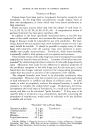
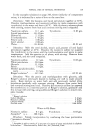
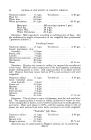
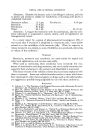
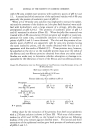
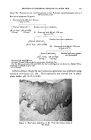
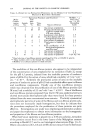
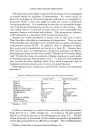
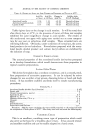
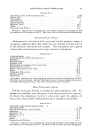
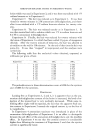
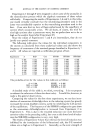
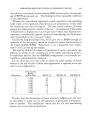
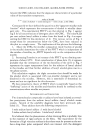
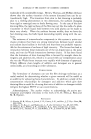
MERCAPTAN-DISULFIDE SYSTEM IN PERMANENT WAVING 391 the solution is increased, maintaining the RSH concentration, the percent- age of RSSW groups goes up. This finding has been repeatedly confirmed in our experiments. Whereas the neutralizing experiment results reported in the preceding table could not be explained, when the data are presented as in this table the conclusions are clear and logical. The true cystine content (A) never exceeds the original cystine content of the hair. A comparison of the results of Experiment 5, Experiment 6 and Experiment 9 shows that Experiment 5 represents a considerably superior method of neutralizing, and the Experi- ment 9 procedure is very, very poor indeed. Excessively long processing times, which give rise to RSSR through air oxidation of the mercaptan, should be avoided to reduce the formation of the mixed disulfide WSSR. Experiment 7, as a departure from experi- ments 1 and 5, points up this danger. The equality of the C-E values in Experiments 3 and 6 is extremely sig- nificant, we think, in the consideration of the whole neutralizing process. It emphasizes the fact that the SSR-RSS configuration is not directly con- vertible to cystine bonds by oxidation. Let me show you one more table in which the total number of bonds broken at the end of each of these nine experiments is reported as the per cent in each configuration. Total Cystines Broken Experiment (mM/g. Hair) SH-HS, % SH-RSS, % SSR-RSS, % 1 0.224 81 18 1 2 0.141 40 47 13 3 0.057 16 48 36 4 0.082 61 34 5 5 0.023 100 0 0 6 0.04l 2 24 74 7 0.075 1 20 79 8 0.186 21 49 30 9 0.092 0 11 89 The fact that the distribution of these terminal configurations can vary so remarkably is surely one for all researchers in permanent waving proc- esses to ponder. The implications which this has for the neutralizing process are, in our opinion, profound.

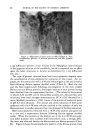
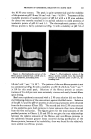
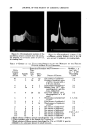
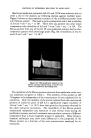
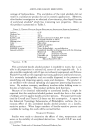
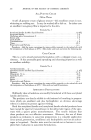
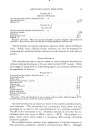
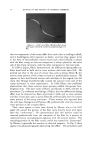
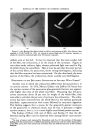
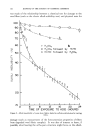
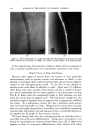
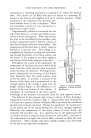
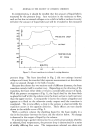
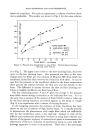
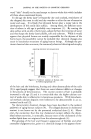
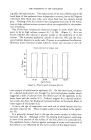
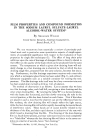
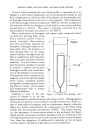
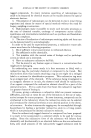
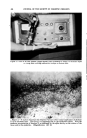
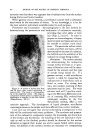
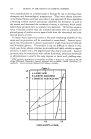
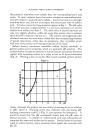
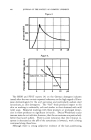
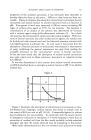
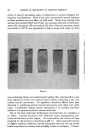
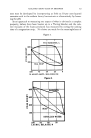
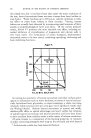
FILM PROPERTIES AND COMPOUND FORMATION IN THE SODIUM LAURYL SULFATE-LAURYL ALCOHOL-WATER SYSTEM* By ABRaHaM WtLSON Textile Resins Research, dinerican Cyanamid Co. Bound Brook, N. •. WE ARE PRESENTING here essentially a review of previously pub- lished work and in particular some quantitative aspects of simple experi- ments of considerable significance with respect to the evaluation of foam properties by single film techniques (1). The effect of long chain polar additives upon the rate of drainage of detergent films is directly related to their effect on the quality of the foam which can be produced from the same system. The temperature at which a given slow draining foam will sud- denly change to a fast draining one is identical to that at which the slow draining single film, prepared from the same solution, becomes fast drain- ing. Furthermore, the film drainage experiment requires only a test tube into which a rectangular glass frame has been sealed (Fig. 1), and ordinary laboratory equipment such as a suitable container for varying the tem- perature. The film drainage tube itself may be of any convenient size and has been scaled down to hold as little as 1 mi. of solution. The method of observation is as follows: Let us assume that we have two film drainage tubes, each half-full, one giving a slow draining and the other a fast draining film. By rotating the tubes 90 ø to a horizontal plane, with the frame also horizontal, and then slowly returning the tube to the vertical position, a film has been formed on each frame. Now if the tubes are placed in such a way that the observer can see the reflections from the film surfaces, the slow draining film will simply reflect the light source, while the fast draining film will exhibit rapidly descending horizontal bands of interference colors. These bands are of course directly related to the thickness of the film, and their rapid descent is indicative of the rate with which liquid is draining from the film. The thinning of the slow draining film is a much slower process, and may take many hours to drain completely to a "black film" whereas the fast draining film will drain to the same con- dition in a matter of seconds, hence "fast draining." * Presented at the May 13, 1955, Meeting, New York City. 392
Purchased for the exclusive use of nofirst nolast (unknown)
From: SCC Media Library & Resource Center (library.scconline.org)