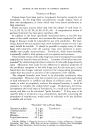
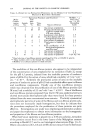
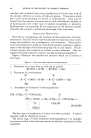
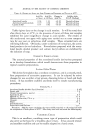
318 JOURNAL OF THE SOCIETY OF COSMETIC CHEMISTS VEHICLES OR BASES Various bases have been used to incorporate bacitracin, neomycin and tyroehricin. In the drug field, manufacturers usually employ bases of their own development, or those which they have found satisfactory in their experience. There are many sources which deal with the subject of such bases (1, 3-5, 9, 10, 12, 15, 18, 29, 35, 49, 65-67, 69). A comprehensive review of pertinent literature has been given elsewhere (28). In addition to the bases specifically mentioned above, it was felt that some of the useful ointment and ointment-like bases employed for sulfa drugs in the past would be adaptable for use with antibiotics. For baci- tracin, bases of the non-aqueous type (with moisture content not ore, 1 per cent) should be suitable. It should be possible to employ many of these bases with neomycin, even the aqueous type, since neomycin is water- soluble and usually water-resistant. Tyrothricin, while water-insoluble, is unusually stable in both aqueous and non-aqueous environments. Very recently certain of the sulfa drug bases were investigated for possible adaptation as bases for these antibiotics. A number of formulas were com- pounded* by substituting individual antibiotics for the sulfa drugs formerly used. Allowances were made for the differences in physical properties of the antibiotics compared to the sulfa drugs and, for the most part, it was found that the changes required concerned the compounding procedures, rather than the nature or amounts of the components of the vehicles. The adapted formulas were found to be physically satisfactory after compounded. However, time did not permit any actual studies pertaining to such information as stability and release of antibiotic action. In other words, in order to completely evaluate the adapted formulas, it would be necessary to complete the studies before usage. Furthermore, the formu- las represent the initial steps of formulation, on a small scale of experimen- tation, and thus can be considered "guide formulas." If they were to be used for pilot or production runs, amendments, especially concerning the procedures of manufacture, would surely be indicated to fit the facilities available and so forth. "Washable" Oil-in-Water Bases Neomycin sulfate ....... 0.5 gm. Triethanolamine ........ 2.0 gm. Water ................. 24.0 ml. Beeswax ............... 5.0 gm. Liquid petrolatum ...... 68.5 gm .................... 68.95 gm. Tyrothricin ........... 0.05 gm. * By Mr. William L. Weingold, Instructor in Pharmacy, College of Pharmacy, Columbia University, New York. More than two dozen satisfactory formulas were compounded. Because of space limitatiori, a limited number of examples are tabulated herein.

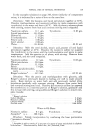
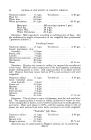
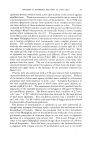
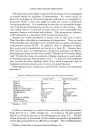
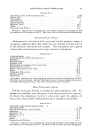
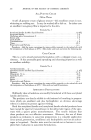
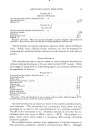
TOPICAL USES OF SEVERAL ANTIBIOTICS 319 In the examples tabulated on page 318, where similarity of components exists, it is indicated by a series of dots on the same line. Directions: Melt the beeswax and liquid petrolatum together at 65øC. Dissolve triethanolamine and neomycin sulfate (or make suspension with tyrothricin) in the water and heat to 65øC. Add oil phase to aqueous phase with stirring, remove from heat and continue stirring until congealed. Neomycin sulfate ...... 0 5 Liquid petrolatum ..... 40 Peanut oil ............ 2 Triethanolamine ....... 1 Stearic acid ........... 3 Cetyl alcohol .......... 2 Water ................ 50 Directions: Melt the cetyl petrolatum together at 65øC. 42 15 43 00 00 50 Tyrothricin ........... O. 05 gm. gm. gm. gm. gm. gm. gm .................... ml .................... 50.95 ml. alcohol, stearic acid, peanut oil and liquid Dissolve the neomycin sulfate (or suspend the tyrothricin) in the water, add the triethanolamine and warm to same temperature. Add the aqueous to oil phase, with stirring. Remove from water bath, and stir until congealed. Neomycin sulfate ....... 0.5 gm. White petrolatum ....... 20.0 gin. Glycerin ............... 11.8 gm. Pectin ................. 5.0 gm. Methyl parahydroxyben- zoate ................ 0.2 gm. Ringer's solution* ....... 62.5 mi. Tyrothricin ........... 0.05 gm. ................... ................... 62.95 mi. Directions: Wet the pectin and methylparaben with glycerin, add Ringer's solution previously heated to boiling, stir well to make smooth paste. Keep mixture on water bath and add previously melted white petrolatum gradually with constant stirring. Remove from water bath and continue stirring until cool. Dissolve the neomycin sulfate (or suspend the tyrothricin) in a reserved portion of Ringer's solution, gradually add this to base with stirring, using additional Ringer's solution to insure com- plete transfer. * Ringer's solution Sodium chloride ......................................................... 8.60 gm. Potassium chloride ...................................................... 0.30 gm. Calcium chloride ..................................................... 0.33 gm. Distilled water ........................................................ 1000.00 mi. Water-in-Oil-Bases Neomycin sulfate ...... 0.5 gin. Tyrothricin ............ 0.05 gm. Aquaphor* q. s ....... 100.0 gm ...................... Directions: Simple incorporation by combining the base portionwise ("geometric dilution"). * Aquaphor is said to consist of "6 per cent of a group of esters and alcohols in aliphatic hydrocarbons." Manufactured by Duke Labs., Inc., Stamford, Conn.
Purchased for the exclusive use of nofirst nolast (unknown)
From: SCC Media Library & Resource Center (library.scconline.org)