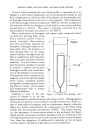
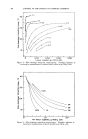
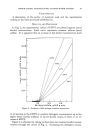
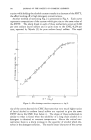
326 JOURNAL OF THE SOCIETY OF COSMETIC CHEMISTS tissue. Senile keratoses occurs most often in exposed areas of the skin and in this disease the epidermis is elevated, irregular in outline, grayish in color and covered with much keratin. Senile keratoses is considered to be pre- cancerous as squamous-cell carcinomas arise in 20 to 25 per cent of the cases. Since the primary function of epidermis is the biosynthesis of the protec- tive coat of keratin, and since the prekeratin proteins of this tissue are closely related to, or are the structural proteins (14), investigations of the properties and synthesis of the latter are essential for a better understand- ing of normal, aging and pathological epidermis. The basis for our present understanding of the structural proteins of epidermis is dependent upon the x-ray diffraction investigations of Astbury and his co-workers (15). The polypeptide molecular chains of the crystalline or fibrillar portions of many fibers (fibrous proteins) exist in three principal stages of contraction or extension, each characterized by a distinctive x-ray diffraction pattern (16). In such structures as mammalian hairs, the chains are in the con- tracted or a-form. Under conditions of elevated temperature in aqueous environments the application of longitudinal tension results in an elonga- tion (70 to 100 per cent) with transformation of the polypeptide chains to the extended or 3-form. With the help of reducing and/or hydrogen-bond relaxing agents, complete release of tension ensues and the fiber or hair con- tracts to considerably less than the original length (a-form) to give the cross 3-configuration. This type of contraction, according to Rudall (17), is the result of a superfolding of the polypeptide chains. In Astbury's classification of the native fibrous proteins, the structural proteins of epidermis belong to the keratin-myosin-fibrinogen group (18). This group comprises in part the hard and soft keratinous products of mammals, amphibians, fishes, birds and reptiles and muscle fibers of all kinds. The soft epidermal layer of all the animal classes mentioned above normally exhibit the a-type diffraction pattern which is also given by the hard keratins (hairs, quills, nails, claws, horns, whalebones) of mammals. The hard keratins (feathers, scales, scutes, beaks, and claws) of reptiles and birds show a structure resembling the 3-type x-ray diffraction pattern. For mammalian epidermis (cow snout) Derksen, Heringa and Weidinger showed that the a-keratin pattern was present in the Malpighian and soft keratinized layers of this tissue (19). Furthermore, stretching of these layers of the epidermis to 100 per cent of their original size in warm, moist conditions produced the 3-form diffraction pattern. An examination of the epidermis of a number of species by Rudall revealed that the character- istic fibrous protein of this tissue and its cellular products in vertebrates is the a-type (20). He also demonstrated that the absence of the a-type or the presence of another type-is apparently-rare in cyclostomes, teleosts, amphibia and-mammals. Another..fibrous• protein, feather- ke•atin, is

PROTEINS OF EPIDERMIS, RELATION TO AGING SKIN 327 present in the epidermal structures of reptiles and birds in addition to the a-form (20). Another important consideration of the structural proteins of epidermis aside from their role as the precursors of keratin, is their close association with or as an integral part of the tonofibrils or intracellular bridges. This association was emphasized by Giroud and Champetier (21) and has been further strengthened (22) for both the Malpighian and keratinized layers of epidermis. The tonofibrils are found close to the cell walls rather than uniformly dispersed throughout the cytoplasm, and they are perpendicular to the skin surface in the stratum germinativum, but become more parallel to the surface as the cells move outward. Giroud and Champetier con- sidered that the continuity of the tonofibrils may help in holding the squa- mous cells together and thus explain their resistance to rupture (21). This resistance to rupture may be a consequence of the ability of the keratin proteins on the tonofibrils to elongate instead of breaking. From the results discussed above, it may be •concluded that a protein or proteins with the keratin x-ray diffraction pattern (a-form) exists in the Malpighian layer of epidermis. These keratin precursors apparently be- come the true keratin between the stratum granulosum and stratum cor- neum (14, 23). This concept was confirmed by Rudall who has made the most significant contributions to our knowledge of the structural proteins of epidermis (17). He employed cow snout epidermis which is some 1.5 min. thick, is practically hair free and is low in lipids (17). Rudall was able to extract from cow snout epidermis with a 6 M urea solution a fibrous pro- tein which he called epidermin. Films of this protein showed an a-type diffraction pattern which changed to the/g-type upon stretching. A non- fibrous protein was also extractable with a 6 M urea solution and films of this protein gave the/g-type diffraction pattern. Both of these proteins were partially purified by dialysis of the urea extractable material from epidermis this procedure was followed by resolution of the fibrous protein in a 6 M urea solution and then after dialysis reprecipitation at the isoelec- tric point of pH 5.5. The non-fibrous protein which is more soluble in water, was partially purified by resolution in water at pH 7 and then by reprecipitation at the isoelectric point of pH 4.5. An interesting aspect of Rudall's work is that the outer, inner and middle levels of the Malipighian layer contain both proteins. The sulphur con- tent of the non-fibrous protein increases from the inner to the outer strata of the epidermis, whereas that of the fibrous protein decreases. Extensive investigations were carried out by Rudall on the x-ray diffraction patterns of the fibrous protein in its a and/3 forms and on thermal contraction of this protein and of the various strata of epidermis. Mercer and Olofsson have shown that urea extracts of cow lip and snout gave several peaks when sedimented in the ultracentrifuge (23). They
Purchased for the exclusive use of nofirst nolast (unknown)
From: SCC Media Library & Resource Center (library.scconline.org)