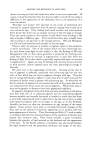
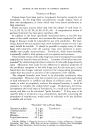
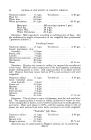
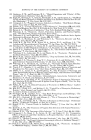
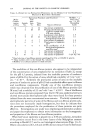
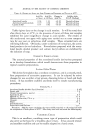
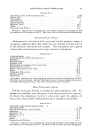
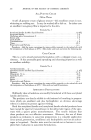
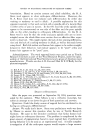
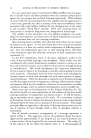
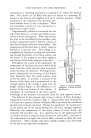
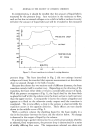
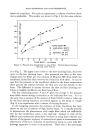
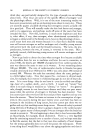
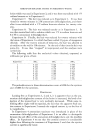
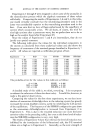
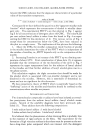
320 JOURNAL OF THE SOCIETY OF COSMETIC CHEMISTS Neomycin sulfate ....... 0.5 gm. Tyrothricin ........... 0.05 gm. W6ol fat ............... 20.0 gm .................... White wax ............. 10.0 gm .................... White petrolatum ....... 69.5 gm .................... 69.95 gm. Bacitracin ............... 500 units/gin. (approx. 1 gin.) Wool Fat ................ 20.0 gin. White Wax .............. 10.0 gin. White Petrolatum ........ 69.0 gin. Directions: Melt ingredients according to melting points of base. Add the antibiotics by simple incorporation in the congealed base, portionwise ("geometric dilution"). Vanishing Creams Neomycin sulfate ....... 0.5 gin. ß Tyrothricin ........... 0.05 gin. Liquid petrolatum (low ................... viscosity) ............ 15.0 gm .................... Stearic acid ............ 5.0 gm .................... Lanolin ................ 5.0 gm .................... Glyceryl monostearate... 12.0 gm .................... Petrolatum ............. 20.0 gm .................... Water ................. 42.5 ml .................... 42.95 ml. Directions: Dissolve the neomycin sulfate (or suspend the tyrothricin) in the water. Melt the other components of the base together, considering proper melting points in order. Add aqueous phase to oil phase and stir well. Remove from heat (water bath at 65øC.), and continue to stir until congealed. Neomycin sulfate ....... 0.5 gin. Cetyl trimethyl ammo- nium bromide ........ 1.0 gin. Castor oil .............. 25.0 gin. Beeswax ............... 1.8 gm. Wool fat ............... 1.8 gm. Cetyl alcohol ........... 5.0 gin. Glycerin ............... 10.0 gm. Water ................. 56.9 ml. Tyrothricin ........... 0.05 gm. ................... 57.35 ml. Directions: The oil phase is castor oil, beeswax, wool fat, and cetyl alco- hol. The aqueous phase is neomycin sulfate (dissolved in water) or tyro- thricin (suspended in water), cetyl trimethyl ammonium bromide, glycerin, and water. Heat each phase to 60øC., add the aqueous phase to the oil phase, stir well, remove from water bath, continue to stir until congealed. "Washable" Jelly Bases Neomycin sulfate ....... 0.5 gm. Tyrothricin ........... 0.05 gm. Pectin ................. 10.0 gm .................... Benzoic acid ........... 0.2 gm .................... Ringer's solution ........ 89.3 ml .................... 89.75 ml. .(Glycerin may be substituted for Ringer's solution, for its antidrying effect.)

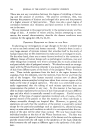
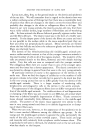
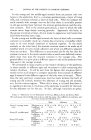
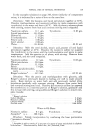
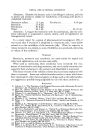
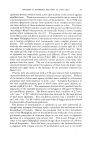
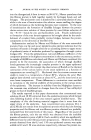
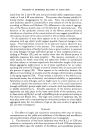
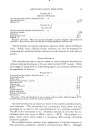
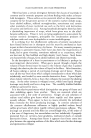
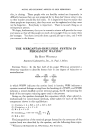
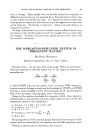
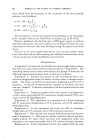
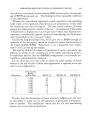
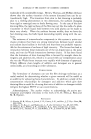
TOPICAL USES OF SEVERAL ANTIBIOTICS 321 Directions: Dissolve the benzoic acid in hot Ringer's solution, add this to pectin and neomycin sulfate (or tyrothricin), triturating until pectin is completely hydrated. Neomycin sulfate ....... 0. $ gin. Tyrothricin ........... 0.05 gm. Bentonire .............. 25.0 gm .................... Petrolatum ............ 50.0 gm .................... Water ................. 24. $ ml .................... 24.95 ml. Directions: Levigate the bentonire with the petrolatum, add the anti- biotic (dissolved or suspended in water), slowly, until all ingredients are homogeneously mixed. In a recent report by a group of pharmaceutical investigators (69), it was stated that if neomycin is employed in a bentonitejelly, "some doubt existed as to the suitability of the bentonire jelly. When its capacity to release neomycin was tested, no zone of inhibition was produced, indicating no release of the antibiotic." SUMMARY Bacitracin, neomycin and tyrothricin are used mainly for topical and other local applications, and are also used orally. When used as mentioned, these antibiotics-have extremely low inci- dences of sensitization and drug resistance, and are virtually nontoxic con- sequently their evaluation in the cosmetic and allied fields is warranted. The status of some of the vehicles or bases that have been employed with them is reviewed. Some new vehicle formulas similar to those which have been employed for other chemical agents or drugs, such as the sulfonamides, are suggested as possibly being adaptable for use with these antibiotics. REFERENCES (1) Lubowe, I. I., "The Treatment of the Pyogenic Dermatoses with a Bacitracin-Ne•mycin Ointment," Arm. Practitioner, 4, 625 (1953). H " ' (2) Most, ., Recent Advances in the Therapy of the More Common Protozoan and Helminthic Infections of Man," Bull. N.Y. ,'Icad. Med., 25, 717 (1949). (3) Meleney, F. L., and Johnson, B. A., "Bacitracin," •lm. •. Med., 7, 794 (1949). (4) Eggers, H., "Clinical Ophthalmic Experience with Bacitracin," rlm. •. Ophthalmology, 34, 1706 (1951). (5) Chandler, C. A., "Antibiotic Therapy," Yale •. Biol. and Med., 25, 369 (1953). (6) Philip, A. J., "Bacitracin-Polymyxin B Sulfate Lotion," Arntibiot. and Chemoth., 4, 763 (1954). (7) Madden, J. F., "Management of the Pyodermas," Minnesota Med., 33, 462 (1950). (8) Miller, J. L., Slatkin, M. H., and Johnson, B. A., "Local Use of Bacitracin," •. Investi- gative Dermatol., 10, 179 (1948). (9) Kile, R. L., Rockwell, E., and Schwarz, J., "Topical Use of Polymyxin-Bacitracin Oint- ment in Dermatology," Arrch. DermatoL and $yphilol., 68, 296 (1953). (10) Derzavis, J. L., Rice, J. S., and Leland, L. S., "Topical Bacitracin Therapy of Pyogenic Dermatoses: Clinical Report," •. Arm. Med. Arssoc., 141, 191 (1949). (11) Meleney, F. L., and Johnson, B. A., "Bacitracin Therapy: The First Hundred Cases of Surgical Infections Treated Locally with the Antibiotic," Ibid., 133, 675 (1947). (12) Miller, J. L., Van Velsor, H., and Johnson, B. A., "Tyrotrace in Topical Therapy," Arrch. Dermatol. and $yphilol., 68, 303 (1953). (13) Braley, A. E., as cited by Meleney in reference (3). (14) Miller, J. L., Slatkin, M. H., and Johnson, B. A., "Evaluation of Bacitracin in Local Treatment of Pyogenic Infections," Arrch. Dermatol. and Syphilol., 60, 106 (1949).
Purchased for the exclusive use of nofirst nolast (unknown)
From: SCC Media Library & Resource Center (library.scconline.org)