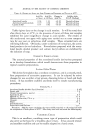
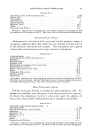
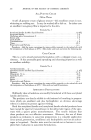
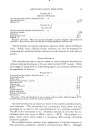
ACYLATED AMINO ACIDS IN SHAMPOOS 407 appropriate and acceptable vehicles those trained in the use of radioactive isotopes on and in the skin are required to plan and carry out the necessary isotope technics and last, but not least, the dermatologist must be part of the team with his knowledge of the anatomy, histology, physiology, phar- macology and biochemistry and immunology of the skin, all requisites for the proper execution and evaluation of such exacting studies. ACYLATED AMINO ACIDS IN SHAMPOOS* By H. W. ZUSSMAN and W. J. LENNON Geigy Industrial Chemicals, New York 8, N.Y. DESPITE THE TREMENDOUS growth of synthetic detergents, cleansing of the skin is still the special domain of the soaps. Even where synthetics have made inroads, as in shampoos, the straight chain hydrocarbon struc- ture characteristic of the soap has been retained. The carboxylflte ion, however, has been replaced by other water-solubilizing groups in the in- terest of improved hard water performance. One can hardly avoid reflect- ing that for cosmetic use it might be desirable to preserve as much as pos- sible of the soap molecule structure on the supposition that it possesses fea- tures specially suitable to the human epidermis. Soaps may of course be fortified with sequestering agents and dispersants, but another approach to this problem is chemical modification of the soap molecule short of disturbing its most important characteristics. Surface active carboxylate ions other than soap are by no means un- known. Most familiar to the cosmetic chemists are the Lamepons, pre- pared from fatty acid chlorides and polypeptides amphoteric carboxylic acids such as the N-alkyl-alanines have also received some attention in recent years. Another group of products of interest in this connection are N-acyl amino acids of which the simplest representatives are the deriva- tives of glycine (RCONHCH2COOH). Chemically these differ from the fatty acids only to the extent that the hydrocarbon chain is interrupted by a single amide group. This modifica- tion, however, increases the melting point considerably and decreases the solubility of the alkali salts. If a methyl group is now attached to the nitrogen, these effects of the amide group are cancelled out and the result- ant products have at least a superficial resemblance to the fatty acids. These materials--the N-acyl safcosines, RCON(CH•)CH2COOH--were first described by Hentrich (1) in Germany about twenty years ago and * Presented at the December 9, 1954, Meeting, New York City.

ACYLATED AMINO ACIDS IN SHAMPOOS 407 appropriate and acceptable vehicles those trained in the use of radioactive isotopes on and in the skin are required to plan and carry out the necessary isotope technics and last, but not least, the dermatologist must be part of the team with his knowledge of the anatomy, histology, physiology, phar- macology and biochemistry and immunology of the skin, all requisites for the proper execution and evaluation of such exacting studies. ACYLATED AMINO ACIDS IN SHAMPOOS* By H. W. ZUSSMAN and W. J. LENNON Geigy Industrial Chemicals, New York 8, N.Y. DESPITE THE TREMENDOUS growth of synthetic detergents, cleansing of the skin is still the special domain of the soaps. Even where synthetics have made inroads, as in shampoos, the straight chain hydrocarbon struc- ture characteristic of the soap has been retained. The carboxylflte ion, however, has been replaced by other water-solubilizing groups in the in- terest of improved hard water performance. One can hardly avoid reflect- ing that for cosmetic use it might be desirable to preserve as much as pos- sible of the soap molecule structure on the supposition that it possesses fea- tures specially suitable to the human epidermis. Soaps may of course be fortified with sequestering agents and dispersants, but another approach to this problem is chemical modification of the soap molecule short of disturbing its most important characteristics. Surface active carboxylate ions other than soap are by no means un- known. Most familiar to the cosmetic chemists are the Lamepons, pre- pared from fatty acid chlorides and polypeptides amphoteric carboxylic acids such as the N-alkyl-alanines have also received some attention in recent years. Another group of products of interest in this connection are N-acyl amino acids of which the simplest representatives are the deriva- tives of glycine (RCONHCH2COOH). Chemically these differ from the fatty acids only to the extent that the hydrocarbon chain is interrupted by a single amide group. This modifica- tion, however, increases the melting point considerably and decreases the solubility of the alkali salts. If a methyl group is now attached to the nitrogen, these effects of the amide group are cancelled out and the result- ant products have at least a superficial resemblance to the fatty acids. These materials--the N-acyl safcosines, RCON(CH•)CH2COOH--were first described by Hentrich (1) in Germany about twenty years ago and * Presented at the December 9, 1954, Meeting, New York City.
Purchased for the exclusive use of nofirst nolast (unknown)
From: SCC Media Library & Resource Center (library.scconline.org)