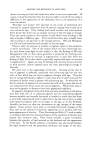
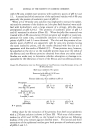
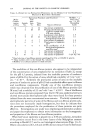
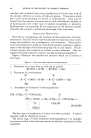
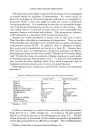
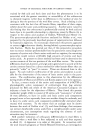
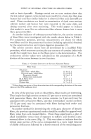
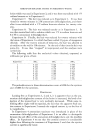
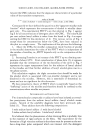
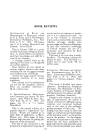
MERCAPTAN-DISULFIDE SYSTEM IN PERMANENT WAVING 389 lotion which was used in Experiment 3, and it was then neutralized with I N sodium bromate as in Experiment 5. Experiment 7: The hair was reduced as in Experiment 1. It was then rinsed for twenty minutes in 2 M ammonium dithiodiglycolate, and there- after it was oxidized with a I N sodium bromate solution for twenty min- utes. Experiment 8: The hair was reduced exactly as in Experiment 1. It was then neutralized with a solution which was 1 N in sodium bromate and 0.2 M in ammonium dithiodiglycolate. Experiment 9: Finally, the hair was reduced for twenty minutes with the lotion of Experiment 1 to which had been added 35 p.p.m. of manganese chloride. After the twenty minutes of reduction, the hair was allowed to air oxidize on the rod for 150 minutes. At the end of that time the hair was quite dry. It was then "stopped" in isopropanol, and the analyses were carried out. The following table lists the analytical values obtained, expressed as millimoles per gram of hair. Experiment (SS)o (SS)^ (SH) x 1 0.715 0.535 0.444 2 0.715 0 678 0.243 3 0.715 0.726 0.074 4 0.715 0.669 0.155 5 0.715 0.692 0.04q 6 0.715 0.744 0 022 7 0.715 0.773 0 032 8 0.715 0 71q 0.04• 9 0.715 0.797 0 020 The probable errors in these determinations were q-0.006 for the cystines and 4-0.003 for the cysteines. DISCUSSION Looking first at Experiments 1, 2 and 3, it is apparent that as the am- monium dithiodiglycolate content of the lotion is increased, the level of re-' duction of the treated hair is very markedly decreased. While some in- hibiting effect might well be expected, the fact that the apparent final cys- tine content in Experiment 3 exceeds the original content is, on the face of it, inexplicable. In Experiment 4 ammonium succinate was introduced in place of the ammonium dithiodiglycolate of Experiment 3 in an effort to distinguish between the salt effect of the ammonium dithiodiglycolate and the disulfide effect. In Experiment 4 we see that the cysteine content is considerably higher than following the treatment of Experiment 3 and that the cystine content is significantly lower.

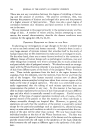
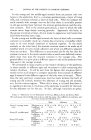
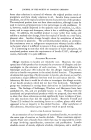
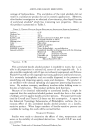
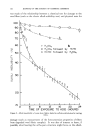
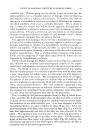
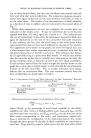
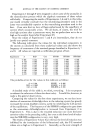
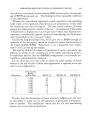
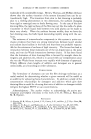
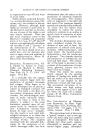
390 JOURNAL OF THE SOCIETY OF COSMETIC CHEMISTS Experiments 5 through 9 were designed to show some of the anomalies in the neutralization process which the algebraic treatment of these values will clarify. Comparing the results of Experiments 5, 6 and 9, in this table, one would certainly conclude that the neutralizing procedure used in the latter was considerably superior to the neutralizing procedure used in the first. (I am sure that we have all been embarrassed by the superfluity of cystine which occasionally arises. We all share, of course, the wish for nice high cystines after a permanent wave, but we prefer them not to be as high as the analyst found after Experiment 9 !) Since the values of Experiments 7 and 8 are intermediate, they do not justify any special comment. The following table gives the values for the individual components in the system as calculated from these analytical values and also shows the frequency of occurrence of the terminal groups described in Equations 6, 7 and 8. All values are reported as millimoles per gram of hair. Experiment A B-D C-E SH-HS SH-RSS SSR-RSS 1 0.491 0.202 0.022 0.182 0.040 0.002 2 0.574 0.089 0.052 0.056 0.066 0.019 3 0.658 0.023 0.034 0.009 0.028 0.020 4 0.634 0.064 0.018 0.050 0.028 0.004 5 0.692 0.023 0.006 0.023 0.000 0.000 6 0.674 0.006 0.035 0.001 0.010 0.030 7 0.640 0.009 0.067 0.001 0.015 0.059 8 0.681 0.016 0.019 0.007 0.017 0.010 9 0.623 0 005 0.087 0.000 0.010 0.082 The probable errors for the values in this table are as follows: A •- 0.006 SH-HS q- 0.006 B-D q- 0.0003 SH-RSS q- 0.010 C-E q- 0.006 SSR-RSS q- 0.006 A detailed study of this table is, we think, rewarding. I do not propose to exhaust the substance of these data here today. I would like, however, to make a few general observations. Comparing the values for the first three experiments, we see that intro- duction of ammonium dithiodiglycolate to the reducing system has greatly increased the mixed disulfide content, surely by inhibiting the C-D portion of the equilibrium. The frequency of the SH-RSS configuration goes down as the ammonium dithiodiglycolate is increased from Experiment 2 to Experiment 3. This is due to the retarded reduction rate (note the lower cysteine values in the preceding table), but even at this lower level of reduc- tion the SSR-RSS configuration is very, very high. The results of Experiment 4 show that whereas the level of reduction was inhibited by the introduction of the bi-functional salt, the C-E terminal values are as high as in Experiment 1. Generally, as the ionic strength of
Purchased for the exclusive use of nofirst nolast (unknown)
From: SCC Media Library & Resource Center (library.scconline.org)