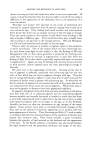
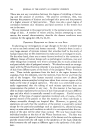
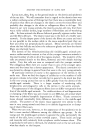
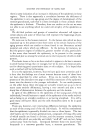
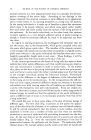
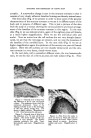
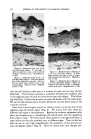
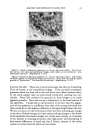
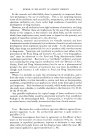
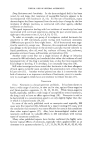
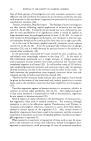
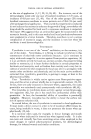
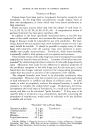
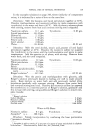
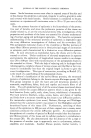
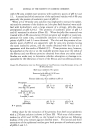
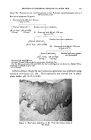
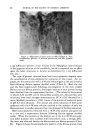
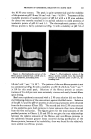
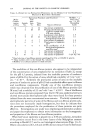
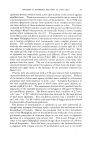
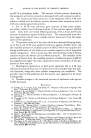
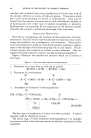
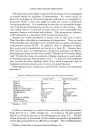
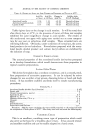
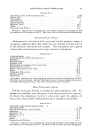
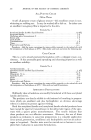
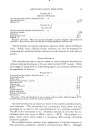
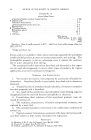
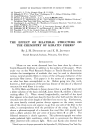
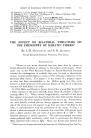
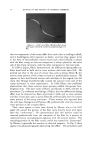
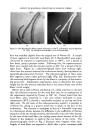
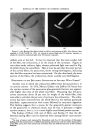
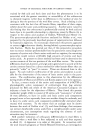
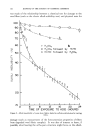
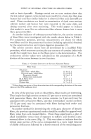
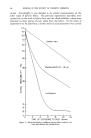
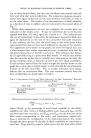
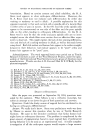
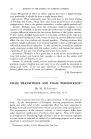
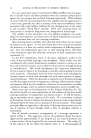
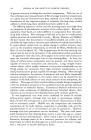
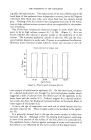
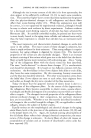
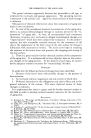
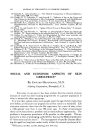
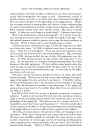
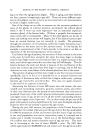
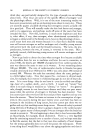
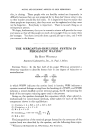
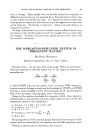
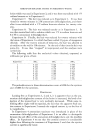
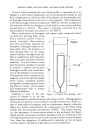
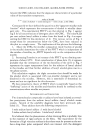
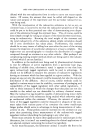
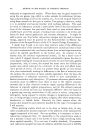
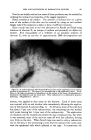
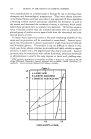
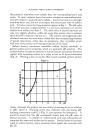
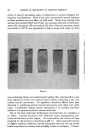
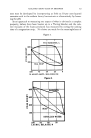
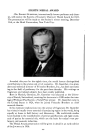
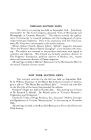
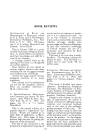
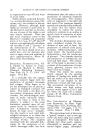
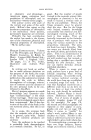
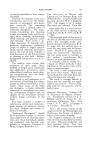
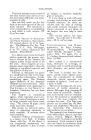
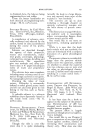
EFFECT OF BILATERAL STRUC• URE ON KERATIN FIBERS 357 .%. ':'• ...... .. er : .:,,. '2 (a) (g) Figure 2.--64's Rarnbouillet fibers treated with water at 120øC., followed by trypsin digestion (X 150) (a) viewed in normal light, (b) in polarized light. here was modified slightly from the original one of Mercer (8). A sample of short segments of some 64's wool fibers (U.S. Rambouillet) were super- contracted by exposure to superheated water at 120øC., over a period of four hours, using a pressure cooker. Following this, the supercontracted fibers were treated with the enzyme trypsin at pH 7 for a period of forty- eight hours. Figure 2a, a photomicrograph taken with ordinary light, shows how this process removed the orthocortex cleanly, leaving behind an epicuticle-plus-paracortex fraction. The photomicrograph of these same fiber segments, taken under polarized light (Fig. 2b), demonstrates how the remaining birefringence shown by the fibers is a property of the remain- ing paracortex. Independent experiments, done to determine the actual weight loss by this process, indicated that it was about 50 per cent of the fibers' initial weight. Mercer (8) as well as Horio and Kondo (7), called attention to the fact that this bilateral structure for the wool fiber may be an explanation of the experiments reported by Freney in 1947 (4). Freney found that fine wool fibers, when immersed in 1 per cent sodium hydroxide at room temperature (20øC.), showed a remarkable tendency to curl up and form tight coils. On the basis of the ortho-paracortex model it is possible to attribute this coiling to a greater sensitivity to alkali on the part of the orthocortex. The situation is analogous to that of a bimetallic strip used in a thermostat, where, because of a difference in the coefficients of thermal expansion of the two metals involved, the bimetallic strip curls when heated. In the case of the wool fiber, the curling comes about because of the dif- ference in the tendency to swell of the two halves of the cortex. The photomicrographs shown in Fig. 3 illustrate what happens when short lengths of wool fibers are exposed to alkali after a prior treatment with

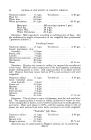
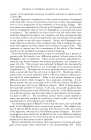
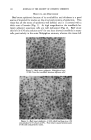
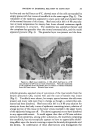
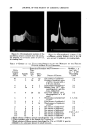
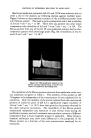
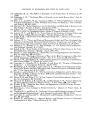
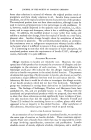
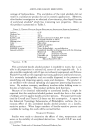
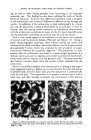
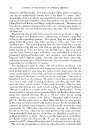
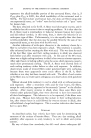
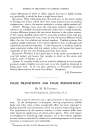
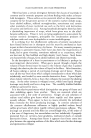
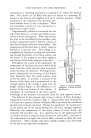
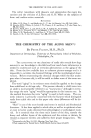
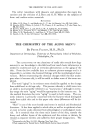
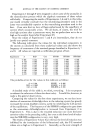
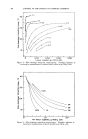
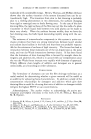
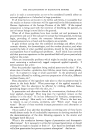
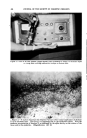
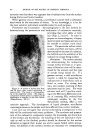
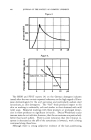
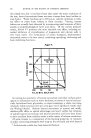
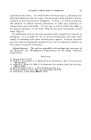
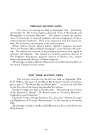
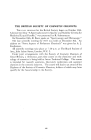
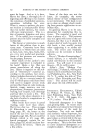
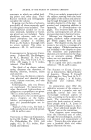
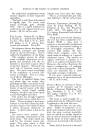
358 JOURNAL OF THE SOCIETY OF COSMETIC CHEMISTS (a) (3) Figure 3.--64's Rambouillet fibers boiled in sulfuric acid solution ofpH 1.8 for 8 hours, then exposed to 2•/u% NaOH () 150) (a) viewed in normal light after 19 minutes' exposure to alkali, (b) viewed in polarized light after 20 minutes' exposure. sulfuric acid at the boil. It may be observed that the more swollen half of the fiber, the orthocortex, is on the inside of the curvature. Figure 3a was taken under ordinary light, whereas polarized light was used for Fig. 3b which shows the same fibers. Here it may be seen that the outer portion of the curved fibers, the paracortex, shows strong birefringence, indicating that the fiber structure has been maintained. On the other hand, the inner portion of the fibers, the orthocortex, shows scarcely any birefringence. DISCUSSION OF THE BILATERAL STRUCTURE OF APPAREL WOOL FIBERS* Another way in which the orthocortex differs from the paracortex is in its cystine content. In 1954, Mercer, Golden and Jeffries (9) found that the cystine content of the paracortex-plus-epicuticle fraction was appreci- ably higher than that of the whole wool fiber. Reasoning that the para- cortex constitutes about 50 per cent by weight of the whole fiber, they were able to calculate the per cent of cystine in the orthocortex. The ortho- cortex had been removed from the whole fiber by the method previously described: supercontraction with steam followed by enzymatic digestion. This finding suggests that a reason for the apparently greater resistance of the paracortex to chemical attack may be that it possesses a higher cystine content that is, it is a more highly cross-linked protein system. The finding of Ohara (10) and of Horio and Kondo (7) that the dif- ferential dyeing effect may be observed when dyeing follows cross section- * In view of recent work reported by Dusenbury and Coe (2) the portions of this paper dealing with the interpretation of differential-dyeing experiments and the amino add analyses of the fiber cortex have been extensively rewritten since the 1954 presentation at the Cosmetic Seminar.
Purchased for the exclusive use of nofirst nolast (unknown)
From: SCC Media Library & Resource Center (library.scconline.org)