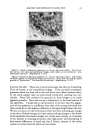
THE STRUCTURAL PROTEINS OF EPIDERMIS AND THEIR POSSIBLE RELATION TO AGING SKIN* By C. C^aaVT•IEaS, D. L. WOEa•rLE¾, A. B^VMLEa, and H. SHORTS Departments of Biochemistry and Biophysics, Roswell Park Memorial Institute, Buffalo 3, N.Y. EPIDERMIS OFFERS some unusual and interesting aspects of bio- chemical interest because this tissue is so different from any other tissue in the body. To quote Cowdry (1) "Epidermis is Nature's most effective frontier tissue. In it, life and death are more closely joined than anywhere else. The cells composing the tissue--all probably of one type, ecto- dermal-are well organized. They stand closely together. The inner cells, next to the underlying blood vessels of the dermis, have adequate supplies. Some of their descendents take up positions nearer and nearer to the external environment. The farther they move in this direction, the more unfavorable their living conditions become, not only as to supply, but also in respect to removal of waste. They gradually die, still more closely clasped together, and in such a condition that in death they serve as a protective shield of exceeding thinness, conditioned by the oily secretion of sebaceous glands." The primary function of epidermis, then, is to limit the organism and to protect other tissues from harmful changes in their environment. The structure of epidermis is such that the direct entry of water or its loss through this tissue is practically nil. Epidermis is repaired rapidly by cell multiplication and quick drying, and the necessity of this function is ap- parent from the fact that this tissue is subjected to such hazards as mechan- ical injury, extremes of heat and cold, radiation from the sun, micro6rgan- isms and ectodermal viruses. Perhaps the many external sources of irrita- tion to epidermis are responsible for the ease with which this tissue becomes hyperplastic and is thus highly susceptible to the induction of cancer. Epidermis offers to the biochemist an opportunity to study various phases of cellular growth (differentiation) concomitant with the biosyn- thesis of the complex fibrous protein, keratin. The wear and tear which * Presented at the May 13, 1955, Meeting, New York City. 324

PROTEINS OF EPIDERMIS, RELATION TO AGING SKIN 325 epidermis withstands during the day appear to be remedied in part by the increased production of new cells at night since at this time the rate of mitosis is almost twice that found during the day (2, 3). The rate of cell multiplication is slow in the basal cells, is accelerated in the spinous layer and is practically nil near the surface of the skin (4, 5). Changes in the morphology of a tissue may be correlated with some meas- urable biochemical alterations. It is common knowledge that young skin is rosy, smooth and elastic, while old skin is generally pale, wrinkled and flaccid. Epidermis becomes atrophic or thinner due to a decrease in cell size with advancing age according to Cooper (6). Evans, Cowdry and Neilson found that the epidermis (antecubital region) of old individuals (89-94 years) was 27.3 microns thick, whereas that from young adults (19-30 years) was 33.8 microns thick (7). They considered that part of the difference in the thickness of the epidermis was due to a greater shrink- age in the old skin following biopsy and fixation than occurred in young skin. Ejiri counted the number of layers of epidermal cells in young and old cadaver skins and he found that the epidermis of the head and face be- came atrophic with advancing age, but no such changes were found in the epidermis of the extremities (8). On the other hand, Hill and Montgomery were not able to demonstrate any change in the stratum corneum of epi- dermis covered by clothing in individuals from birth to 78 years of age (9). Their studies suggested that the granular layers increased in thickness with age, but no apparent alteration in epidermal thickness was found in the prickle cell layer. A moderate atrophy of the rete ridges occurred in old age in both exposed and unexposed skin. Although some of the evidence indicates that a thinning of the epidermis takes place with advancing age, an increase in mitotic rate appears to com- pensate for this phenomenon, for Thuringer and Cooper demonstrated that an increase in the epidermal mitotic rate (abdominal skin) occurred in in- dividuals from 1 month to 77 years of age (10). The suggestion was made that the increase in epidermal mitotic rate might be associated with a higher incidence of benign hyperplasia and cancer in senile skin. Estrogenic hormones appear to be related to the atrophy of epidermis in old people. For example, Goldzieher (11, 12) and Eller and Eller (13) have shown that the application of these hormones to the skin of elderly women past the menopause brought about an increase in the thickness of their epidermis, development of the rete pegs and less fragmentation of the collagen fibers in the dermis. In general the principal effect of age on the epidermis is atrophy of this tissue. However, two diseases, seborrheic and senile dermatoses, which are more common in older individuals, show pronounced pathological changes in the epidermis (6). In seborrheic dermatoses the epidermis is thick and has numerous cysts filled with laminated keratin and islands of connective
Purchased for the exclusive use of nofirst nolast (unknown)
From: SCC Media Library & Resource Center (library.scconline.org)