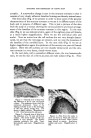
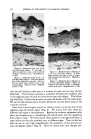
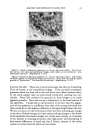
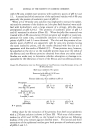
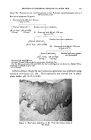
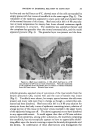
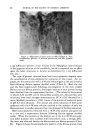
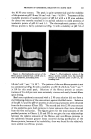
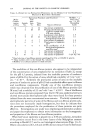
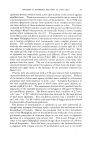
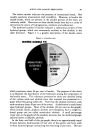
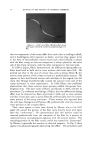
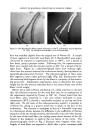
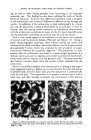
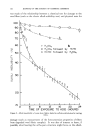
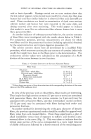
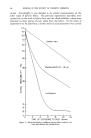
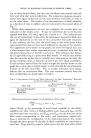
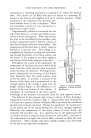
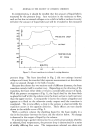
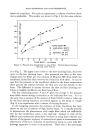
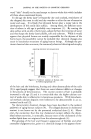
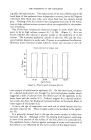
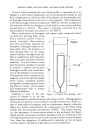
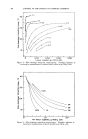
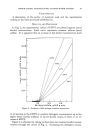
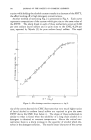
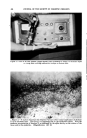
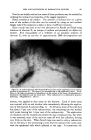
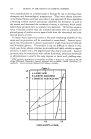
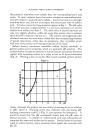
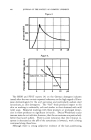
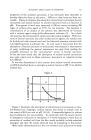
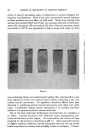
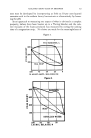
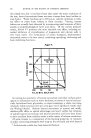
USES AND LIMITATIONS OF RADIOACTIVE ISOTOPES 40_• Now let me briefly outline how some of these problems may be studied by utilizing the radioactive properties of the tagged ingredient. Direct counting at the surface: The amount of radioactivity on a given area of the surface of the skin can be counted by using an end window Geiger tube if the radiation is alpha or beta of sufficient intensity. Such a study was done in our own laboratory by Kerdel and Kopf using dilutions of thorium X, an isotope of radium and primarily an alpha ray emitter. Five thousandths of a milliliter of an alcoholic solution of thorium X, with an activity of approximately 2000 disintegrations per .. .. .• '•.::'• .•. ., .. .•: ., ... .. •.: :.7'" . .:•.• ß .. •.• .... :.. . :•" .... '• ":5' •' . ......... •.. Figure 3--A section of human skin biopsied 48 hours after topical application of an aqueous solution of phosphorus 32. The tissue is cut perpendicular to the epidermal surface. In ad- dition to the large accumulation of phosphorus on the surface of the tissue, the phosphorus is localized in the epidermis and the sweat duct. Here radioactivity is evidenced by granular darkening. (Magnification: 250 X) minute, was applied to four areas on the forearm. Each of these areas was counted with an end window tube immediately following the applica- tion of the thorium X solution (Fig. 1). At 24 hours, three of the sites had lost about 75 per cer/t of the radioactivity the remaining site was washed with water leaving but 1.4 per cent of the radioactivity. The application of collodion over the treated sites slowed the loss of radioactivity, but when it was removed, most of the activity came off with the collodion, leaving very little on the skin. When Scotch tape was used to strip a radioactive site on the skin, it was interesting to note that the radioactivity came away with the epidermal cells which adhered to the tape. A noteworthy ob-

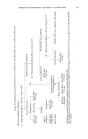
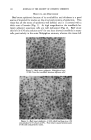
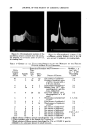
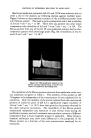
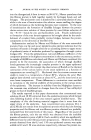
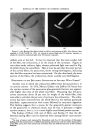
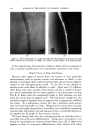
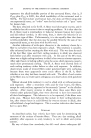
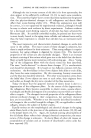
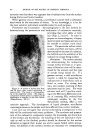
406 JOURNAL OF THE SOCIETY OF COSMETIC CHEMISTS servation was that there was a greater loss of radioactivity from the surface during the hot and humid weather. Where gamma rays are emitted, a scintillation counter with a collimated head would be the instrument of choice. To my knowledge, it is by far the most sensitive instrument available today for such purposes. Penetration and Localization: Autoradiography is the best method for demonstrating the penetration and localization of radioactive materials, providing they emit alpha or beta Figure 4.--A section of human skin biop- sled 48 hours after topical application of mercury 203. The tissue is cut perpendicu- lar to the epidermal surface. The large ac- cumulation of black grains is evidence of the localization of mercury in this hair follicle. (Magnification: 900 X). rays (Figs. 2, 3 and 4). In order to prepare an autoradiogram, a biopsy must be made and tissue sections cut for transfer to nuclear track emul- sions. The particular technic which is used, and there are many, will be determined by the type of radiation, the half-life and the solubility of the radioactive isotope being studied. dbsorption: The technic selected for demonstrating the radioactive isotope within the body or in speci- mens of blood or urine will be deter- mined by the amount and the type of isotope being looked for. If a gamma emitter, a well scintillation counter is ideal for measuring the radioactivity in body fluids, such as blood or urine. For strong beta rays, end window counting of fluid specimens may be done. For weak emitters such as C TM, gas flow count- ing or the Bernstein-Ballentine tech- nic of counting CO2, evolved from cornbusted samples by the Van Slyke-Folch method, offers a very sensitive approach. The development of liquid phosphor scintillation counting promises to be simpler and more efficient than current. methods. I am sure you will agree that anyone undertaking investigations in this field will be confronted with many problems. The synthesis and prepara- tion of the radioactive compounds requires the knowledge and know-how of the chemist and biochemist the handling of the raw radioactive chem- icals as well as the finished product should be directed by the nuclear physicist as regards their proper use and to assure health safety precau- tions the abilities of the cosmetic chemist are necessary for compounding
Purchased for the exclusive use of nofirst nolast (unknown)
From: SCC Media Library & Resource Center (library.scconline.org)