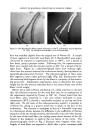
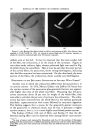
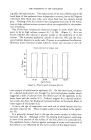
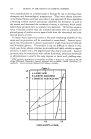
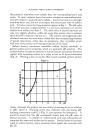
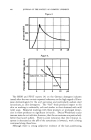
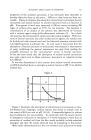
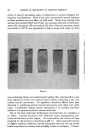
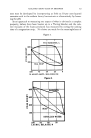
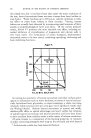
376 JOURNAL OF THE SOCIETY OF COSMETIC CHEMISTS of greater accuracy in fixing the transition temperature. With the use of this technique many measurements of film drainage transition temperatures on a great variety of systems have been reported (1) as well as a detailed examination of one important group of materials, the long chain alcohol sulfates to which long chain alcohols have been added (1, 2). The differing behaviors of slow and fast draining foams and single films are properties of the molecular structure of the surface layers. Because of adsorption these layers are rather different in composition from the under- lying bulk solution. Slow drainage is believed to be due to a well-ordered surface structure of considerable viscosity. Brown, Thuman, and McBain (4) have shown that the presence of unsulfated alcohol can confer an ex- traordinarily high surface viscosity upon solutions of sodium lauryl sulfate. It seems almost certain that an abrupt change in surface viscosity must occur at the transition temperature, as stressed by Miles, Shedlovsky and Ross (5) and by Sporck (6). The disappearance of the slow draining con- dition must be due to the disruption of the well-ordered surface postulated. In agreement with this view, there appear to be severe steric limitations upon the materials which give rise to slow draining films. At least two types of surface-active components must be present, and these must be capable of extensive interaction and association. Long, straight hydro- carbon chains, which readily adlineate and provide considerable van der Waals energy for association favor high transition temperatures, as do small, terminal polar groups capable of hydrogen bonding. Often through selective adsorption, the presence of adequate and very likely comparable amounts of each component in the surface layers can be ensured by the presence in the bulk solution of very small amounts of one component, the additive. The soaps and fatty alcohol sulfates normally being accompanied either by hydrolysis products or by unsulfated material provide optimum combinations of molecular species. Commercial alkylaryl sulfonates and ethylene oxide condensates of alkylphenols have branched chains their solutions do not produce slow draining foams with common additives. It was emphasized that with foams stabilized by means of suitable surface-active agents, drainage does not lead to spontaneous collapse. And of course the drainage rate is only one of many characteristics of foam and its associated system. Bubble size, the composition and molecular constitution of the bulk solution, suspended or emulsified soils, and the adsorbed layers at air or oil interfaces are also of importance. However drainage and foam persistence are not unrelated. The time scale seems much extended for slow draining foams and in a sense they age at a slower rate than the fast draining foams. Once a foam is past its initial period of formation, drainage seems to be a necessary precursor for collapse, and those foams for which the drainage rate is much slower retain for a longer time a resistance to outside destructive forces.

THE CHEMISTRY OF THE AGING SKIN 377 The writer remembers with pleasure and appreciation the many dis- cussions and the criticism of J. Ross and G. D. Miles on the subjects of foam and surface-active materials. REFERENCES (1) Miles, G. D., Ross, J., and Shedlovsky, L., 7. Arm. Oil Chemists' Soc., 27, 268 (1950). (2) Epstein, M. B., Wilson, A., Jakob, C. W., Conroy, L. E., and Ross, J., 7. •im. Chem. Soc., 58, 860 (1954). (3) Epstein, M. B., Ross, J., and Jakob, C. W., 5 e. Colloid Sci., 9, 50 (1954). (4) Brown, A. G., Thuman, W. G., and McBain, J. W., Ibid., 8, 491 (1953). (5) Miles, G. D., Shedlovsky, L., and Ross, J., •7. Phys. Chem., 49, 93 (1945). (6) Sporck, C. R., 7. •im. Oil Chemists' Soc., 30, 190 (1953). THE CHEMISTRY OF THE AGING SKIN*,• By P•.T•.R FL•.scH, M.D., Ph.D. Department of Dermatology, University of Pennsylvania School of Medicine, Philadelphia, Pa. THE LITERATURE ON THE chemistry of senile skin reveals how frag- mentary is our knowledge in this field and how much basic information is needed to understand such an everyday phenomenon as the aging of the skin. From the few available data no coherent picture emerges and it is impossible to correlate the chemical findings with the morphological obser- vations. Before enumerating the chemical changes which the skin under- goes when it becomes old, it will be useful to define some of the terms em- ployed. The word "aging" in its strictest sense should be applied to the change from adulthood to old age only. The process whereby a child turns into an adult is more properly referred to as "maturation," although in every- day usage the term "aging" would be appropriate in this instance too. In the medical literature the term "aging" is used in both senses. The cos- roetic industry is primarily concerned with the features which distinguish senile from adult skin and in this paper only these differences will be dis- cussed. "Skin" is one of the most loosely used terms in medical and biochemical literature. It has been applied to whole skin, as well as to epidermis alone or even to horny scales obtained from physiological or pathological mate- rial. It is essential that the three main layers of the skin, namely the horny and cellular layers of the epidermis and the corium or dermis, be treated as separate entities and called by their proper designations. The * Presented at the May 13, 1955, Meeting, New York City. • Work supported by United States Public Health Service Grant #G-4257.
Purchased for the exclusive use of nofirst nolast (unknown)
From: SCC Media Library & Resource Center (library.scconline.org)