THE CHEMISTRY OF THE AGING SKIN 377 The writer remembers with pleasure and appreciation the many dis- cussions and the criticism of J. Ross and G. D. Miles on the subjects of foam and surface-active materials. REFERENCES (1) Miles, G. D., Ross, J., and Shedlovsky, L., 7. Arm. Oil Chemists' Soc., 27, 268 (1950). (2) Epstein, M. B., Wilson, A., Jakob, C. W., Conroy, L. E., and Ross, J., 7. •im. Chem. Soc., 58, 860 (1954). (3) Epstein, M. B., Ross, J., and Jakob, C. W., 5 e. Colloid Sci., 9, 50 (1954). (4) Brown, A. G., Thuman, W. G., and McBain, J. W., Ibid., 8, 491 (1953). (5) Miles, G. D., Shedlovsky, L., and Ross, J., •7. Phys. Chem., 49, 93 (1945). (6) Sporck, C. R., 7. •im. Oil Chemists' Soc., 30, 190 (1953). THE CHEMISTRY OF THE AGING SKIN*,• By P•.T•.R FL•.scH, M.D., Ph.D. Department of Dermatology, University of Pennsylvania School of Medicine, Philadelphia, Pa. THE LITERATURE ON THE chemistry of senile skin reveals how frag- mentary is our knowledge in this field and how much basic information is needed to understand such an everyday phenomenon as the aging of the skin. From the few available data no coherent picture emerges and it is impossible to correlate the chemical findings with the morphological obser- vations. Before enumerating the chemical changes which the skin under- goes when it becomes old, it will be useful to define some of the terms em- ployed. The word "aging" in its strictest sense should be applied to the change from adulthood to old age only. The process whereby a child turns into an adult is more properly referred to as "maturation," although in every- day usage the term "aging" would be appropriate in this instance too. In the medical literature the term "aging" is used in both senses. The cos- roetic industry is primarily concerned with the features which distinguish senile from adult skin and in this paper only these differences will be dis- cussed. "Skin" is one of the most loosely used terms in medical and biochemical literature. It has been applied to whole skin, as well as to epidermis alone or even to horny scales obtained from physiological or pathological mate- rial. It is essential that the three main layers of the skin, namely the horny and cellular layers of the epidermis and the corium or dermis, be treated as separate entities and called by their proper designations. The * Presented at the May 13, 1955, Meeting, New York City. • Work supported by United States Public Health Service Grant #G-4257.

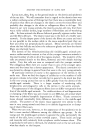
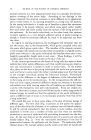
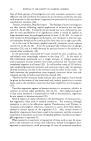
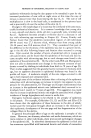
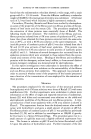
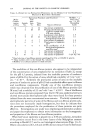
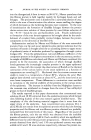
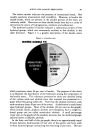
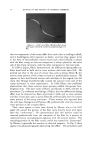
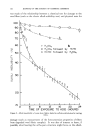
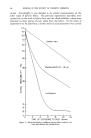
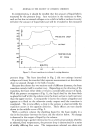
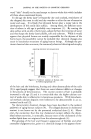
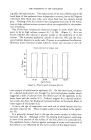
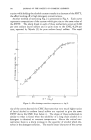
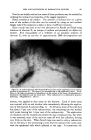
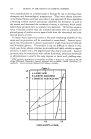
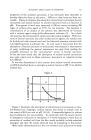
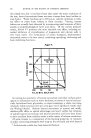
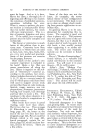
378 JOURNAL OF THE SOCIETY OF COSMETIC CHEMISTS word "skin" should not be used except to denote whole skin which includes all three above-mentioned layers. In old age the horny layer is frequently dry and cracked, reminiscent of the chapped skin seen in cold and dry weather or after the use of excessive water and soap. It is likely that physical factors play a major role in the development of this senile skin surface. Among these, the deficient secre- tion of sebum in old age is probably very important (1). By coating the skin surface with an oily or fatty layer, sebum furthers the retention of water and thus keeps the horny layer pliable, soft and coherent. While it would appear that physical factors are mainly responsible for the dryness of the horny layer, the possibility cannot be excluded that chemical changes also occur in keratinous structures of aging human beings. Although the per- tinent chemical data are scant, the commonlyobserved thinning and atrophy CALCIUM CONTENT OF HUMAN SKIN 50 30 u 20 10 28-51 yrs. 65-87 •rs. Figure 1.--Calcium content of human skin in various age groups (7). of the hair and the brittleness, fraying and other abnormalities of the nails (2) in aged people suggest that there are some inherent defects or changes in the process of keratinization. The cystine content of hair is probably increased in old age (3) and it is conceivable that the higher calcium con- tent of senile skin is reflected in its keratinous products. With histochemi- cal methods calcium deposits w•ere believed to be demonstrable in an oc- casional senile nail (2). No characteristic chemical changes have been described in the isolated epidermis of aging human subjects (4). The alleged decrease in cholesterol content is not borne out by the presented analytical data (5, 6). More- over, the contention that this low cholesterol content reflects the dimin- ished sebum secretion, is untenable, because most of the cholesterol of the surface lipids does not originate from the sebaceous glands (5). The graying of the hair and frequent appearance of freckles and other anomalies of pigmentation, point to a chemical change in the pigment form-
Purchased for the exclusive use of nofirst nolast (unknown)
From: SCC Media Library & Resource Center (library.scconline.org)