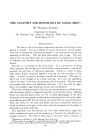
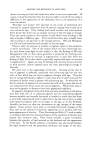
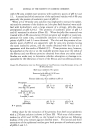
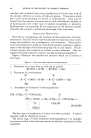
SOCIAL AND ECONOMIC ASPECTS OF SKIN GERIATRICS 387 this, in closing. These people who are forcibly retired are frequently in difficulty because they are not prepared for it, they don't know what to do, so they wander around like lost souls. It is imperative that we realize that these people are important, that they must not be neglected and they must not be forgotten. Everybody is important. There is no such thing as an unimportant person. We hope, furthermore, that you in cosmetic science will provide the ways and means so that all the people can look a lot younger if we can make them feel younger. You have certainly done a grand job up to date, and I wish you success in the future. THE MERCAPTAN-DISULFIDE SYSTEM IN PERMANENT WAVING* By Ross WHITMAN Raymond Laboratories, Inc., St. Paul 1, Minn. EDITORS NOTE: In the first half of his paper Whitman presented a three-way equation to describe human hair in any degree of reduction or neutralization: (A) (B) (C) WSSW • WSH q- WSSR WSSR WSH (E) (D) in which WSSW indicates the cystine bond in keratin, WSH indicates a cysteine terminal linkage arising from the breaking of a WSSW, and WSSR indicates a mixed disulfide cystine terminal group, the R representing the body of the mercaptan reducing agent used in the process. Going on, the speaker developed five equations which, when solved si- multaneously by conventional methods, yield values for each of the five components shown in this equilibrium: (1) (Cystine)o = A q- B/2 q- C/2 q- D/2 q- E/2 (2) (Cystine)•na•. = A q- C q- E (3) B+E = C+ D (4) (Cysteine)an•. = B + D + E + C B E (5) B:E = D:C The juxtaposition of the terminal groups formed by the severance of the cystinc bond was described by the speaker, and the following three equa- * Presented at the September 23, 1954, Seminar, New York City.

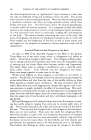
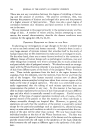
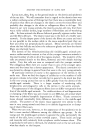
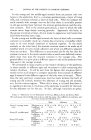
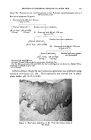
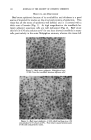
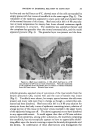
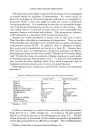
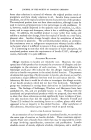
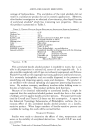
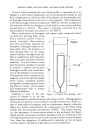
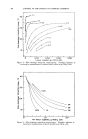
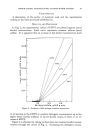
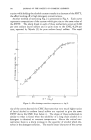
388 JOURNAL OF THE SOCIETY OF COSMETIC CHEMISTS tions, which show the frequency of the occurrence of the three possible patterns, were developed. D (6) SH-- HS = B D + C D (7) SH-- RSS = E•+C C (8) SSR -- RSS = E{2 +• B+E This introductory matter was subsequently published in the Proceedings of the Scientific Section of the Toilet Goods dssociation, 22, 23-29 (1954). Herein is published only the latter part of Whitman's report in which he described experiments that were conducted in the Rayette laboratories and commented on the data that were developed using the equations set forth above. Now, let us run some simple experiments, carry out the analyses which I have described and see what meaning the calculated concentrations of the various components of the equilibrium can have for us. EXPERIMENTAL A large shock of virgin hair was divided into twenty-eight 2-gram tresses. One tress was analyzed for cystine content (to give us "(Cystine)O"). The remaining twenty-seven tresses were divided into groups of three and the following experimental processes were carried out in triplicate. Experiment 1: The hair was wound on rods and reduced with a con- ventional thioglycolate lotion for twenty minutes under a nitrogen atmos- phere. The lotion was 0.85 N in ammonium thioglycolate and 0.72 N in ammonia. At the end of twenty minutes' exposure to this lotion, the reac- tion was "stopped" in absolute isopropanol and the requisite analyses were carried out. Experiment 2: Triplicate samples of hair were treated as in Experiment 1 with a lotion analyzing 0.85 N in ammonium thioglycolate, 0.72 N in am- monia and 0.5 M dithiodiglycolate. Experiment 3: The experiment was repeated with a lotion analyzing 0.85 N ammonium thioglycolate, 0.72 N ammonia and 2.3 M ammonium dithiodiglycolate. Experiment 4: In this experiment the lotion was 0.85 N ammonium thioglycolate, 0.72 N ammonia and 2.3 M ammonium succinate. Experiment 5: Here the hair was reduced with the same lotion that was used in Experiment 1. After twenty minutes' reduction the hair was thor- oughly washed (for about thirty minutes) with oxygen-free water, and thereafter it was rinsed repeatedly with a 1 N solution of sodium bromate. Experiment 6: In this experiment the hair was reduced with the same
Purchased for the exclusive use of nofirst nolast (unknown)
From: SCC Media Library & Resource Center (library.scconline.org)