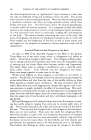
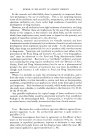
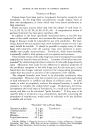
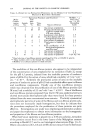
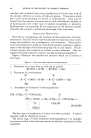
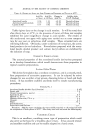
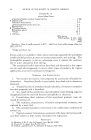
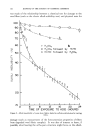
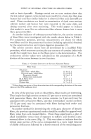
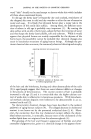
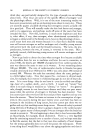
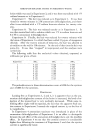
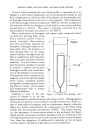
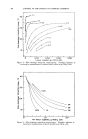
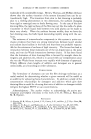
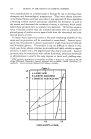
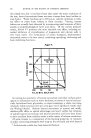
414 JOURNAL OF THE SOCIETY OF COSMETIC CHEMISTS this simple test, but it has been found that under the static conditions of the test, lauroyl sarcosinate foams are more viscous than lauryl sulfate or soap foams. Water hardness up to 250 p.p.m. calcium carbonate is with- out effect on either foam volume or foam viscosity. Viscous, creamy lathers are actually best obtained by incorporating small amounts of fatty amides or polyethyleneglycol fatty acid esters. Of the various products tested, Altosol C* produces the most desirable end effect, including ex- tended inhibition of crystallization of magnesium and calcium salts in very hard water. For formulation of cream shampoos, hydroxyethyl- stearamide seems to be best suited, combining opacifying, thickening and foam stabilizing functions. Fisur• •. 400 := 300 ,• 200 1oo 100 7,5 50 25 0 % LAURYL SULFATE In testing the sensitivity of lauroyl sarcosinate and other surface-active agents to defoamants such as water hardness, mixtures of neutral and par- tially hydrolyzed fatty glycerides, or carpet sweepings, a shake test using relatively dilute solutions (0.1 per cent) gave more significant results than the Waring blender. Sodium lauroyl sarcosinate at neutral and mildly alkaline pH's offers no special advantage over lauryl sulfate but mixtures of sodium lauroyl sarcosinate and lauroyl sarcosine acid have been found to have excellent foam stability under a wide variety of adverse conditions. Of some interest is a comparison of the foaming properties of mixtures of sulfur containing detergents with soap on the one hand and with lauroyl * An alkylolamide available from Geigy Industrial Chemicals.

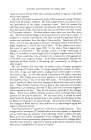
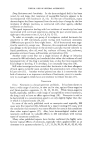
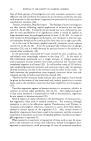
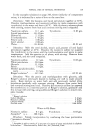
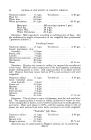
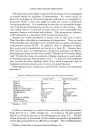
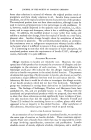
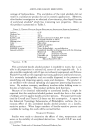
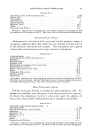
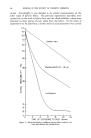
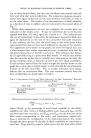
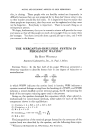
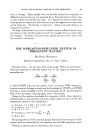
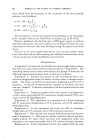
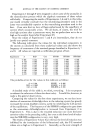
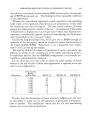
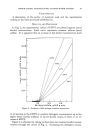
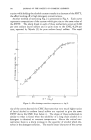
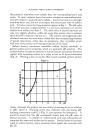
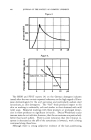
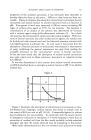
ACYLATED AMINO ACIDS IN SHAMPOOS 415 sarcosine on the other. It is well known now that soap is a defoamknt for alkyl aryl sulfonates and vice versa this principle is even utilized in the for- mulation of low foam laundry detergents. In Fig. 7, it will be noted that the addition of sodium lauroyl sarcosinate to alkyl aryl sulfonate in- creases foam quite markedly. In the case of lauryl sulfate the effect is not quite as dramatic in soft water (Fig. 8), but quite remarkable in hard water (Fig. 9). To summarize, lauroyl sarcosine possesses many properties of interest in shampoos. It is suitable for use in aerosol formulations and lends itself readily to blending with other surface-active agents. Lauroyl sarcosine and acyl sarcosines generally should prove to be an important addition to the cosmetic chemist's formulary. dcknowledgment: The authors gratefully acknowledge the assistance of the Research and Development Departments of the Geigy Chemical Corporation. REFERENCES (l) German Patent 635,$22. (2) Fosdick, L. S., Calandra, J. C., Blackwell, R. Q., and Burrell, J. H., y. Dental Research, 32, 486 (1953). (3) Dreger, E. E., Keim, G. I., Miles, G. D., Shedovsky, Leo, and Ross, John, Ind. EnX. Chem., 36, 610 (1944). (4) BIOS Final Report 418, p. 11 FIAT Final Report 1141, p. 8. (5) Iwasenko, Helene, •e. Assoc. Od•c. Agr. Chemists, 37, 534 (1954). (6) Troll, Walter, y. Biol. Chem., 202,479 (1953).
Purchased for the exclusive use of nofirst nolast (unknown)
From: SCC Media Library & Resource Center (library.scconline.org)