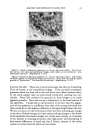
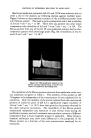
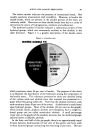
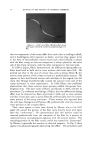
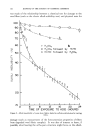
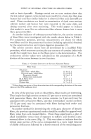
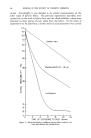
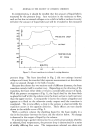
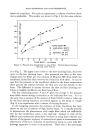
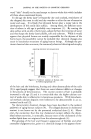
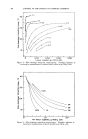
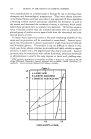
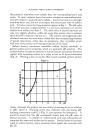
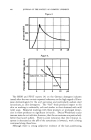
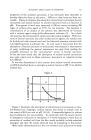
THE CHEMISTRY OF THE AGING*SKIN 379 ing cells, the melanocytes. The melanocytes of the hair follicles and of the basal layer of the epidermis form independent systems hence old Negroes still retain their black skin color, even when their hair has already turned gray. Graying of the hair results from extinguished activity of the tyrosi- nase or dopa oxidase enzyme systems which are responsible for the produc- tion of melanin. One of the most conspicuous chemical changes in senile whole skin ap- pears to be its high calcium content (4, 7, 8, 10). (Figure 1.) It is not known whether this calcium is present mainly in the epidermis or in the corium. The increased epidermal calcium in old mice (10) and the occa- sional calcium deposits in senile nails (2) point to an epidermal localization. However, direct chemical studies failed to reveal any increase in the cal- WATEK CONTENT OF HUMAN SKIN 6O • 40 •.30 20 10 10-29 30-49 Age in Years 50-69 70-89 Figure 2.--Water content of human skin (5). cium content of senile human epidermis (9). On the other hand, evidence for a dermal localization was brought by microincineration studies which suggested a shift of calcium from the cellular part of the epidermis to the horny layer and the corium (11). Indirect support for a dermal localiza- tion comes also from the finding of increased calcium in the elastic fibers of other organs of old people (12). A rise in old age of magnesium and total ash of whole human skin has also been reported (4). These changes could not be localized in the epider- mis (9). It is generally claimed that in old age the water content of whole skin increases (Fig. 2). Although at first this finding would appear surprising, in view of the dryness of the surface of old skin, there is no contradiction. The epidermis forms a barrier against exchange of water and hydration of the surface is not influenced by the water content of the deeper layers.

380 JOURNAL OF THE SOCIETY OF COSMETIC CHEMISTS Although the rise in water content of old skin is far from spectacular, the data appear to be sufficiently confirmed (13-15) to merit some considera- tion. The somewhat higher water content h/rs been explained on the ground that the physico-chemical changes in old collagenous and elastic fibers affect their water-binding ability (15). While this explanation may well be correct, it is not supported by experimental evidence, although it would be easy to obtain such evidence by direct experiments. Indirect evidence for a decreased water-binding capacity of old skin has been advanced by Herrmann (20). In carefully controlled studies, he pointed out that water is more loosely bound to the aging tissue colloids and released more easily thus the false impression is created that old skin has an increased water content. The most impressive and characteristic chemical changes in senile skin occur in the coriurn. The exact nature of these changes is unknown, but there is ample evidence for their existence. Thus young collagen is trypsin- resistant, but aging collagen is digested by trypsin (16). The tinctorial properties of the corium are also markedly changed. There is an increase in elastic staining of the corium which gave rise to the belief that the elastic fibers actually become more numerous with advancing age. Also a "merg- ing" of the collagenous fibers with the elastic tissue has been described. The term "senile elastosis" to denote these changes (17) is anachronistic and should be abandoned. It is based on two fallacies common with his- rochemists: the first fallacy is that if two objects look alike or stain alike, they have the same composition. By this reasoning, faraway mountains and the blue sky should be identical. The other misconception stems from the belief that if two objects are next to each other, they originate from each other, as though the sky were a product of the blue mountains. Today we know that the apparent increase of elastic tissue is due to a degeneration of the collagenousfibers. In the course of this degeneration, the collagenous fibers become susceptible to elastic stains, assume abnor- mal shapes and finally disintegrate into amorphous masses which are vulner- able to trypsin. The changed tinctorial properties of the collagenous fibers indicate profound changes in their composition, but pertinent chemical data are not available. Whether or not the recently described histochemi- cal changes in the so-called basophilic collagen (18) are applicable to senile collagen, remains the subject of further studies. Equally serious are the morphological and chemical changes in the aging elastic fibers, both at the junction of the epidermis and dermis (12, 19) and in the deeper layers (12, 15). Again, the marked staining abnormalities of the old elastic fibers reflect their changed chemical composition the exact nature of this change is unknown. In elastic fibers of other old tissues an accumulation of calcium and an increase of dicarboxylic amino acids has been reported (12).
Purchased for the exclusive use of nofirst nolast (unknown)
From: SCC Media Library & Resource Center (library.scconline.org)