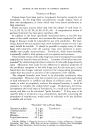
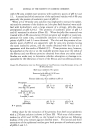
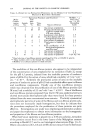
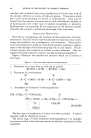
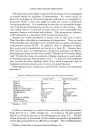
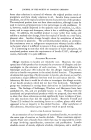
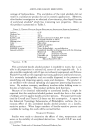
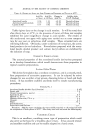
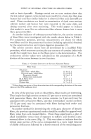
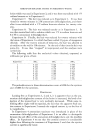
ACETYLATED LANOLIN DERIVATIVES* By L•sx•.P, I. Co•P,^r) and K^LMEN MOTIUK almerican Cholesterol Products, Inc., Milltown, N. •. S•.VERAL R•cEs•r publications (1-4) have shed light on the nature of lanolin. This has given active workers in the field an opportunity to synthesize new derivatives based upon sound information and revised con- cepts of composition. Derivatives of lanolin have been produced both in the United States and abroad for many years. A review of the published literature (5, 6) reveals that the chemical reactions employed in manufacturing these products in- volve chiefly unsaturated bonds and ester linkages. L^NOLIN EST•.•S Lanolin is essentially a mixture of esters formed from many types of alcohols and a great variety of fatty acids. A small percentage of free alcohols is also present (1, 4). Table 1 contains analytical data for lanolin U.S.P. TABLE 1--ANALYTICAL DATA FOR VARIOUS U.S.P. LANOLINS Ester No. Iodine No. Hydroxyl No. Sample A 89.4 29.8 29.9 Sample B 97.0 28.1 31.9 Sample C 95.2 27.4 36.7 Sample D 98.8 25.0 33.8 Note that the ester number ranges from approximately 89 to 98 the iodine number from 25 to 30 the hydroxyl number from 30 to 37. This data discloses the presence of the reactive groups which can be uti- lized to form derivatives. Lanolin can be split into acid and alcohol com- ponents by saponification of its esters. Although the complete saponifica- tion of lanolin is difficult to achieve, this has been accomplished (7). Lano- lin alcohols, and extracts and fractions thereof, are now widely used as surface active topical emollients. Displacement reactions, also based on ester linkages, have resulted in water soluble derivatives of lanolin. Other products may be looked for in the future based on this approach. * P•desented at the May 13, 1955, Meeting, New York City. 344

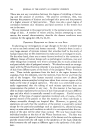
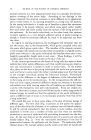
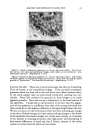
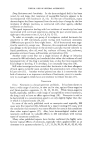
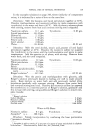
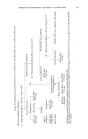
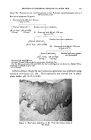
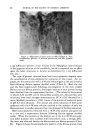
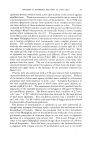
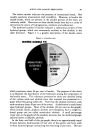
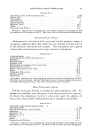
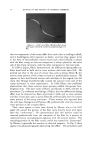
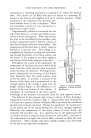
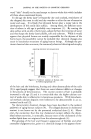
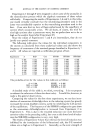
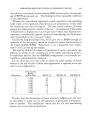
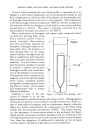
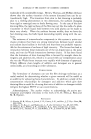
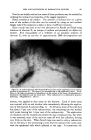
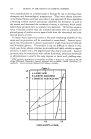
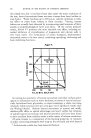
ACETYLATED LANOLIN DERIVATIVES 345 The iodine number indicates the presence of unsaturated bonds. One usually associates unsaturation with instability. However, in lanolin the double bonds, which are present in the alcohol portion of the ester, are relatively stable. Reactions on these double bonds have led to a series of derivatives by means of hydrogenation, oxidation and sulfonation. The hydroxyl number of lanolin indicates a substantial content of free hydroxyl groups, which was erroneously ascribed to free alcohols in the older literature. Figure 1 is a graphic description of the lanolin esters Figure 1.--Lanolin esters OIHYDRIC ALCOHOLS 5% which constitute about 96 per cent of lanolin. The purpose of this chart is to illustrate the distribution of the hydroxyls among the components of the lanolin esters. This schematic presentation omits any detailed listing of the various acids and alcohols since that material was presented in a paper before this group earlier (4). Note that the alcohols and fatty acids each constitute about 50 per cent of the esters. A subdivision is made based upon hydroxyl groups. Most of the alcohols (45 per cent on the graph), which include steroIs, aliphatic alcohols and triterpenes, have a single hy- droxyl group and are called rnonohydric alcohols. A small percentage (5 per cent on the graph) of the alcohols, however, has two hydroxyl groups and are known as dihydric alcohols. In the fatty acid half of this pie graph, there is an approximately equal division between hydroxyacids (25 per cent of the esters) and fatty acids without hydroxyl groups (comprising the remaining 25 per cent). One can
Purchased for the exclusive use of nofirst nolast (unknown)
From: SCC Media Library & Resource Center (library.scconline.org)