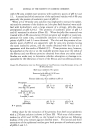
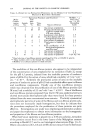
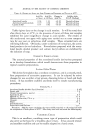
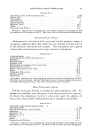
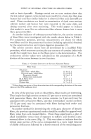
354 JOURNAL OF THE SOCIETY OF COSMETIC CHEMISTS Formula No. 10 Arerosol Hand Cream 'Acetylated lanolin alcohols (liquid fraction) ........................... 3.0% A Stearic acid .......................................................... 2.6 ß Glyceryl monostearate ................................................ 3.0 ' Polyoxyethylene lanolin derivative ............................... 3.0 Preservative ..................................................... 0.1 B Triethanolamine ................................................ 1.0 Propylene glycol .................................................. 3.0 Water ............................................................. 84.0 C Perfume ............................................................ 0.3 9:2% Actives 8% Propellent--F-114-- 40% F-12 -- 60% 100% Procedure: Heat A and B separately to 80øC. Add B to A slowly while mixing when cool add C and mix. * Dodge and Olcott, Inc. bromo acids are insoluble in them, these materials, especially the acetylated lanolin alcohol product, do seem to increase penetration and staining. The hydrophobic property is also an advantage since it reduces the tackiness due to water absorption from the lips. The acetylated lanolin derivatives described and discussed in this report can be used advantageously in many other types of products for topical application, and merit continued investigation. SUMMARY AND CONCLUSIONS 1. New lanolin derivatives were prepared by acetylation oflanolin hy- droxyesters. Acetylated lanolin is particularly described and its chemistry discussed. 2. A liquid fraction ofacetylated lanolin alcohols, of interest in cosmetics was also prepared, and is described. 3. As a result of the acetylation, the hydrophilic water-binding capacity disappeared and the material became hydrophobic in character. 4. Crystal-clear, fluid solutions of the acetylated products were ob- tained in mineral oil. 5. The tackiness, characteristic of lanolin-compounded cosmetics, was replaced by a waxy feel. 6. The acetylated products were found to be stable under conditions of normal use. 7. Typical cosmetic formulations prepared with these derivatives indi- cate their value in a wide variety of products for topical use. REFERENCES (1) Bertram, S. H., 7. Arm. Oi! Chemists' $oc., 26, 454 (1949). (2) Truter, E. V., •uart. Rev., 5, 390 (1951). (3) Tie&, J., and Truter, E. V., ChemDtry & Industry, 403 (1952).

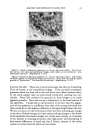
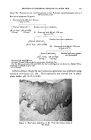
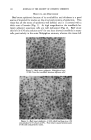
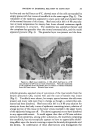
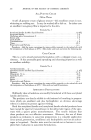
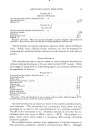
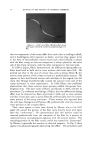
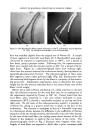
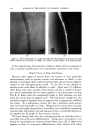
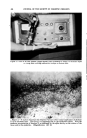
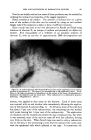
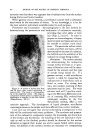
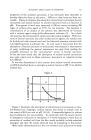
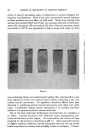
EFFECT OF BILATERAL STRUCTURE ON KERATIN FIBERS 355 (4) Conrad, L. I., 5 e. Soc. Cosmetic Chem., 5, 11 (1954). (5) Gillespie, D. T. C., "Wool Wax," Washington, D.C., Hobart Publishing (1948). (6) Croda Publication, "Lanolin" (1951). (7) Drekter, I. J., and Conrad, L. I., U. $. Patent 2,302,678 (1942). (8) Jenkins, G. L., and Hurtung, W. H., "The Chemistry of Organic Medicinal Products," 3rd edition, New York, John Wiley and Sons (1949). (9) Greenberg, L. A., and Lester, D., "Handbook of Cosmetic Materials," New York, Inter- science Publishers, Inc. (1954). (10) Sulzberger, M. B., and Lazar, M.P., •7. Investigative DermatoL, 15, 453 (1950). (11) Sulzberger, M. B., Warshaw, T., and Herrmann, F., Ibid., 20, 33 (1953). (12) Warshaw, T. G., •7. Soc. Cosmetic Chem., 4, 290 (1953). (13) Everall, J., and Truter, E. V., •7- Investigative DermatoL, 22, 493 (1954). THE EFFECT OF BILATERAL STRUCTURE ON THE CHEMISTRY OF KERATIN FIBERS* By J. H. DtYSENBUP,¾ and E. B. JEFFRIES Textile Research Institute, Princeton, New yersey INTRODUCTION Much or THE WORK discussed here has been done by others at Textile Research Institute in addition to the authors of this paper. Work under way on the Wool Research Project at Textile Research Institute includes the investigation of methods that may be used to characterize various natural protein fibers in terms of the ortho-para behavior of the particular fiber cortex. This paper is in the nature of a progress report on what has been accomplished so far. Before going into this work, however, a brief summary of the previous history of the idea of a bilateral structure for wool fibers is in order. In 1953, Horio and Kondo in Japan showed that a wool fiber dyed with a dilute solution of the basic dyestuff, Janus Green B, exhibits a bilateral staining effect (7). When viewed longitudinally, one-half of the dyed fiber appears to be dyed more heavily than the other half and this bilateral structure runs the entire length of the fiber from root to tip. Furthermore, the more heavily stained portion always appears on the outer, convex side of the crimp wave and appears to go from one side of the fiber to the other, in correspondence with the periodicity of the crimp. In Fig. 1 is shown a photomicrograph of a domestic fine wool fiber (64's grade) dyed with a dilute solution (0.1 per cent) of Janus Green B at pH 7. The bilateral structure is clearly apparent. This photomicrograph was taken under polarized light conditions, which tend to accentuate the bilateral effect observed with ordinary light. Horio and Kondo also showed that * Based in part on the paper presented at the September 23,1954, Seminar, New York City.
Purchased for the exclusive use of nofirst nolast (unknown)
From: SCC Media Library & Resource Center (library.scconline.org)