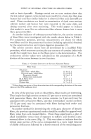
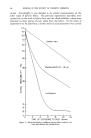
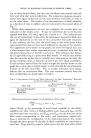
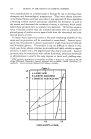
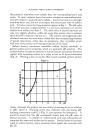
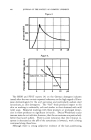
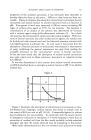
PROTEINS OF EPIDERMIS, RELATION TO AGING SKIN 339 epidermis proteins which formed a clot upon dialysis of the extracts against distilled water. These concentrations of urea probably extract most of the structural proteins from the lower strata of the epidermis. Six or 10 M urea solutions apparently extracts from epidermis more complex protein mate- rial since dialysis of these epidermal extracts results in a clot. The latter is cleaved by 6 M urea solution to give the fibrous and non-fibrous proteins. According to Rudall these proteins are chemically bound to form a complex protein which comprises the clot (17). The proteins of the clot and some of the fibrous and non-fibrous proteins in all probability are extracted from the upper Malpighian layers of the epidermis where the keratinization proc- ess is nearing completion and consequently more complex proteins are present. The insoluble proteins of isoelectric point of pH 6.3 apparently form the clot material since this insoluble protein is further split by a 6 M urea solution to yield proteins of isoelectric points of pH 4.5 and 5.5. Since the yields and the type of the proteins obtained from the 6 M urea extract of epidermis are respectively greater and different (Chart I) than those isolated from the 2 M urea extract (Chart III), it seems unlikely that the dilute and concentrated urea solutions extract proteins of the same com- position from this tissue. The use of micro-methods for the study of the structural proteins may permit the isolation of them from the lower, inter- mediate and upper strata of the epidermis by the procedure employed by Rudall (17). Proteins were also extracted with a 6 M urea solution from hyperplastic (methylcholanthrene and benzpyrene induced) mouse epidermis. Dialysis of the extracts of this tissue against distilled water resulted in a ftocculent precipitate with little tendency to form a clot. Complete fiocculation of the very insoluble proteins, part of which came down upon dialysis, oc- curred at pH 6.2 to 6.3. The supernatant fraction which resulted from the separation of the insoluble proteins by centrifugation (24) gave the fibrous and non-fibrous proteins. The fibrous protein had a mobility of 2.5 cm. 2 volt -• sec.-• X 10 -5 which is lower than that obtained for the same protein of beef snout epidermis. The non-fibrous protein had a mobility of 3.2 cm. 2 volt -• sec. -• X 10 -5 which is the same order of magnitude as that found for this protein of beef snout epidermis. The process of keratinization in epidermis is not well understood al- though some attempts have been made to postulate the mechanism of the biosynthesis of keratin. Mercer has proposed that in the intermediate zone of the Malpighian layer of the epidermis the molecules of the primary pre-keratin precursors of unknown shape or size may exist as organized particles of a corpuscular type protein (14). End-to-end linkage of the latter in the upper Malpighian stratum brings about formation of a fibrous form of the protein. Since the latter, in contrast to the hardened keratin, is digested with trypsin and two N hydrochloric acid and is converted

340 JOURNAL OF THE SOCIETY OF COSMETIC CHEMISTS into the disorganized B form in water at 90-95øC., Mercer postulates that this fibrous protein is held together weakly by hydrogen bonds and salt linkages. The pre-keratin zone is dissolved by a saturated solution of urea, while in the area of keratinization this solution causes swelling, the degree of which decreases as the hardening becomes more complete. In the zone of keratinization the formation of disulfide linkages between the protein chains occurs since solution of these proteins by urea follows reduction of the --SINS -- bonds by zinc and hydrochloric acid. Finally stabilization or formation of the true keratin appears to be brought about by the estab- lishment of covalent links, probably cystine bridges, between the protein components in the direction of the fiber (14). Sedimentation analysis by Mercer and Olofsson of the urea extractable proteins from cow lip and snout (epidermis plus dermis) indicates that the synthesis of keratin is brought about by an ascending (lower to upper strata of epidermis) series of molecules produced by aggregation through cystine bridges (23). From the sedimentation rate and diffusion coefficient of the component present in the highest concentration in the urea extract, a molecu- lar weight of 60,000 was calculated, and Mercer and Olofsson considered this protein to be the monomer, the association of which through disulfide bonds generates the increasingly complex proteins in the upper epidermal strata. In line with this concept the observations of Rudall on the thermal contraction of the various layers of cow snout epidermis as a function of temperature are revealing (17). He showed that the stratum corneum was stable in water to a temperature of about 80øC., whereas the outer Mal- pighian layer showed contraction at about 65øC., and the inner level at an even lower temperature. These differences in contraction were ascribed to variations in the internal stability of the proteins in the various strata of the epidermis. The increase in stability from the Malpighian layers to the corneum was attributed to changes from the zone of free sulfhydryl groups to that of disulfide groups. The results reported in this paper demonstrate that concentrated urea solutions (6 and 10 M) extracted from the epidermis proteins which formed clots following dialysis of the urea extracts against distilled water. The complexity of this clot-forming material suggests that it arose from the upper strata of the epidermis. Less concentrated urea solutions (0.5, 1 and 2 M) did not extract from the epidermis proteins which had clot forming properties and the fibrous and non-fibrous proteins obtained are probably extracted from the lower levels of this tissue. Regardless of the source of the fibrous protein, only the one which was obtained from the insoluble proteins of isoelectric point of pH 6.3 had a mobility which was significantly different from the other fibrous protein preparations. However, the fibrous protein obtained from the 0.5 and 1 M urea epidermal extracts was quite soluble in 0.5 and 1 M urea solutions respectively, whereas this protein iso-
Purchased for the exclusive use of nofirst nolast (unknown)
From: SCC Media Library & Resource Center (library.scconline.org)