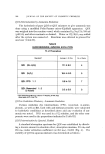
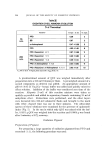
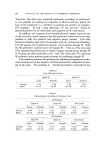
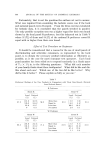
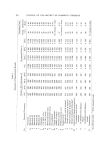
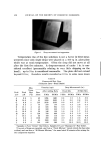
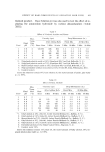
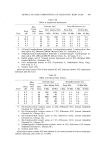
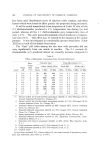
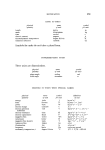
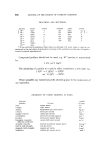
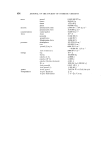
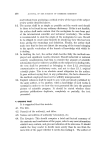
EFFECT OF BASE COMPONENTS ON OXIDATION HAIR DYES 437 Effect of Fatty Alcohols Table VI summarizes the effects resulting from adding fatty alcohols to Base Solution #3. The fatty alcohols were dissolved in isopropanol before adding them to the dye base. In this series, several of the addi- tives were tried at more than one concentration for viscosity reasons. Fatty alcohols proved to be excellent additives to the dye base for a number of reasons: they do not affect pH, nor do they contribute to a temperature rise when the base is mixed with peroxide when used at a sufficiently high level they also give excellent viscosity and drop-move- ment control. At 15%, cetyl alcohol gave a very solid product which was not satis- factory as a dye base at 7.5%, it controlled drop-movement well, but showed poor viscosity results and some sedimentation upon aging. Stearyl alcohol gave even less satisfactory results (tested only at 7.5%), showing a viscosity drop on dilution with peroxide, poor control of drop- movement, and sedimentation with aging, even at ambient tempera- tures. Oleyl and ricinoleyl alcohols gave excellent results at the 15% level. The oleyl alcohol gives a lower viscosity increase on dilution with peroxide, but better control of drop-movement. The ricinoleyl alcohol gives a higher initial viscosity, which increases ten times on dilution with the peroxide. Oleyl alcohol at 7.5% gave indifferent results ricinoleyl alcohol was not tried at this lower level. Ethoxylated Fatty Alcohols and Amine Oxides Table VII summarizes the effects resulting from adding two ethoxy- lated lanolin alcohols, ethoxylated myristyl alcohol, and two amine oxides. The amine oxides used were commercially available (30%) solutions when incorporated at 30% of the dye base, this resulted in 9% amine oxide present on an actual "Solids" basis. Increasing the ethylene oxide (EtO) chain length on the lanolin fatty alcohol resulted, as would be expected, in decreasing the viscosity obtained the 5-mol EtO product gave good results both in terms of viscosity and drop-movement control, whereas the 25-mol EtO product was unsatisfactory at the 15% level tested. The 4-tool EtO myristyl alcohol derivative gave results quite similar to those obtained with 5-mol EtO lanolin alcohols. None of these ethoxylated products affected dye uptake. The amine oxides showed a certain amount of shade darkening when hair was dyed with aged dye bases containing them. Neither com-

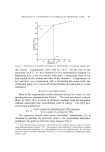
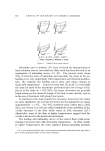
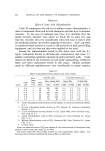
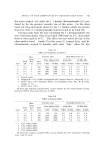
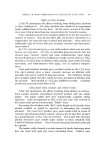
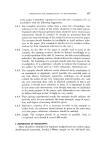
438 JOURNAL OF THE SOCIETY OF COSMETIC CHEMISTS pound produced sufficient increase in viscosity upon dilution with the peroxide, and control of drop-movement was only considered "fair" for both. A mphoteric Surfactants Table VIII summarizes the effect of adding four different amphoteric surfactants to Base Solution//3. This series was of special interest in terms of the development of "shampoo-in" colors. These particular additives were not chosen for their potential thickening ability, but rather because of their possible value for mildness, foam, or hair condi- tioning properties. One of them, the •-imino dipropionic acid derivative (//3, Table VIII) showed definite interference with color uptake when used in this base at 15%. The other three amphoterics had no effect on color. All pro- duced clear bases which lathered to some degree. The imidazolinium coconut derivative (#1, Table VIII) gave excel- lent increase in viscosity, but did not control drop-movement well at all. The heptadecenyl imidazolinium amphoteric (//2), on the other hand, controlled drop-movement better than the other three, but showed no improvement on the viscosity. Both imidazolinium compounds were the salt-free grades. Tertiary Fatty Amines Table IX summarizes results with the three cationic type surfactant amines, each a fatty acid derivative. None of the three contributed to an unusual temperature rise when peroxide was added to dye bases containing them, nor did they affect pH particularly. One of them, the bis-2-hydroxyethyl soybean amine, was quite effective in raising vis- cosity and controlling drop-movements when used at the 15% level at 7.5%, however, its value was almost nil in these respects. The stearyl analog of this soybean amine gave excellent viscosity increases at 15% on dilution with peroxide, but did not control drop-movement well. At 7.5%, it too was almost useless. The third fatty amine tested (2-hydroxyethyl, 3-hydroxyethyl soy amine) was relatively inefficient in controlling viscosity and drop- movements. It has a higher level of ethylene oxide than the other two, and once again, the depressing effect of high EtO levels on viscosity is noted. There was some evidence of occasional darkening of shades when swatches of hair were dyed from aged solutions containing these fatty
Purchased for the exclusive use of nofirst nolast (unknown)
From: SCC Media Library & Resource Center (library.scconline.org)