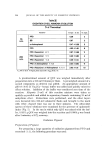
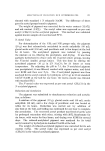
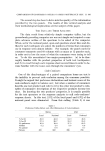
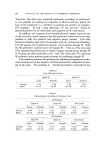
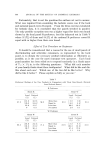
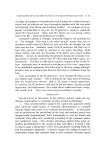
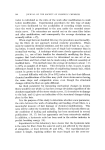
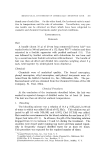
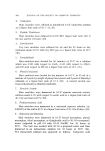
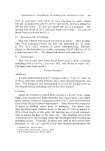
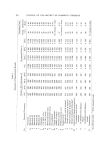
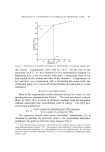
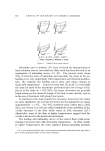
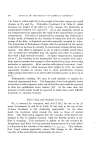
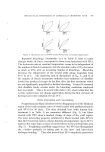
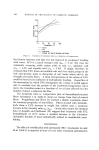
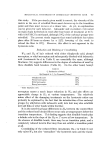
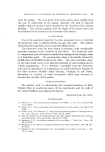
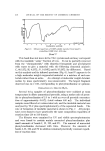
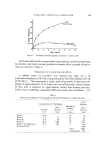
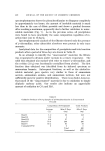
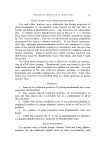
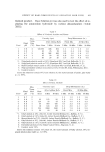
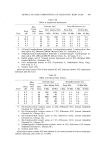
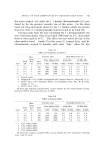
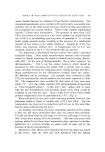
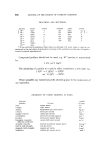
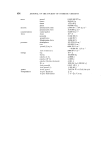
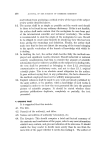
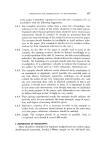
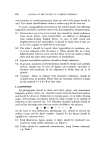
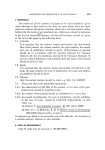
EFFECT OF BASE COMPONENTS ON OXIDATION HAIR DYES 435 the water control (#9) while the 1:1 linoleic diethanolamide (//5) pro- duced by far the greatest viscosity rise of this series. On the other hand, the drop-movement shown by the 1:1 linoleic amide was greater than two of the 2:1 diethanolamides tested (#4 and//7 in Table IV). Dyeings made from the base containing the 1:1 diethanolamide (#2) were somewhat darker when it had aged 1000 hours at 2 øC, than when fresh or when aged at 48 øC. This effect was not noted for any of the other amides tested. Amide//7 in this series (2:1 mixed fatty acid di- ethanolamide) seemed to interfere with color "take" when the dye Table XI Effect of Polypeptide and EDTA Max. Viscosity (cps) Drop-Movements (in.) Temp. After Adding H202 Fresh Mix 30 Min Mix Final Rise Base Test s pH (øC) Alone 5 Min 30 Min 5 Min 30 Min 5 Min 30 Min 1 9.6 1 120 3020 1060 2.7 3.4 2.0 2.9 2 9.4 2 80 640 1020 2.9 3.5 2.0 2.4 3 9.2 i 160 1540 1280 2.0 2.4 2.3 3.3 4 9.3 i 140 2400 1760 2.4 3.3 2.7 5.1 '• 1. Control, water. 2. Polypeptide--2.5% (Solids) (Polypeptide LSN, Stepan Chem. Co., Maywood, N.J.). 3. EDTA (Na2)--0.2% (Ha•npene EDTA, Na= Hampshire Chem. Div., W. R. Grace, Nashua, N.H.). 4. EDTA (Na=)--0.5%. All above dye solutions contained 85% of base solution //2, the stated amount o[ poly- peptide or EDTA (Na=), plus water q.s. to 100%. Table XII Effect of Sodium Sulfite Max. Viscosity (cps) Temp. After Adding Final Rise Base Test • pH (øC) Alone 5 Min 30 Min Drop-Movements (in.) Fresh Mix 30 Min Mix 5Min 30Min 5Min 30Min 1 9.7 2 25 720 740 2.6 2.8 2.7 3.0 2 9.6 2 160 2520 2420 0.2 0.2 0.2 0.2 3 9.6 5 570 1840 3060 2.5 4.1 1.6 1.9 4 9.4 8 125 3000 3400 2.5 7.9 2.4 7.9 a 1. 0.2•0 sodium sulfite. 2. 0.5% sodium sulfite. 3. 1.0% sodium sulfite. 4. 2.0% sodium sulfite. All above dye solutions contained 85(•o of base solution //4, 10•: ammonimn hydroxide (conc.) and 5% water.

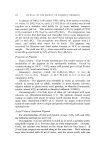
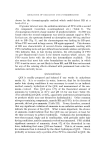
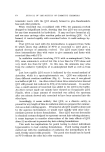
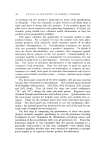
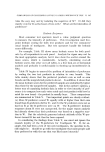
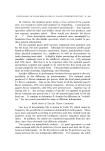
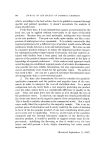
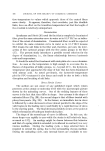
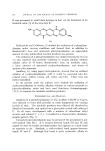
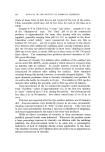
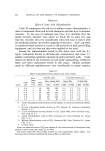
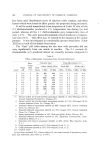
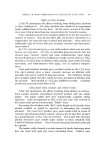
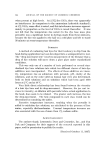
436 JOURNAL OF THE SOCIETY OF COSMETIC CHEMISTS base was fresh, but this interference disappeared on aging. None of the other amides had any effect on color uptake. t•ffect of Nonionic Additives Table V summarizes the effects of adding several nonionic materials to a dye base. At 15%, a polyglycol palmitic amide gave a solid dye base (before dilution with peroxide) it was therefore also tried at the 7.5% level. At 15%, it gave excellent viscosity readings after dilution with the peroxide, as well as minimum drop-movement. At 7.5%, it performed much more poorly and material settled out on standing. The hydroxy- ethyl stearyl amide tested also gave excellent viscosities and drop-move- ments. Polyoxyethylene sorbitan monoleate, on the other hand, did not help viscosity or drop-movement (results about equal to the water control), and definitely interfered with color uptake on the hair at the concentration used. The other two nonionics did not interfere in this respect. Temperature rises were considered reasonable for this whole series. Table XIII Effect of Replacement of All or Part of the Ammonia with Other Amines Max. Viscosity (cps) Drop-Movements (in.) Temp. After Adding H.zO.z Fresh Mix 30 Min Mix Final Rise Base Test a pH (øC) Alone 5 Min 30 Min 5 Min 30 Min 5 Min 30 Min 1 9.6 2 25 656 704 2.4 2.6 2.7 2.9 2 9.5 30 75 448 2440 0.5 0.6 0.6 0.7 3 9.0 13 65 264 400 1,4 1.7 2.6 3.3 4 10.2 3 20 400 380 6.5 7.6 6.6 8.1 5 9.8 4 25 860 936 0,9 0.9 0.8 0,8 6 9.6 6 35 500 320 0.6 0.7 0.9 1.0 7 9.7 19 40 452 1020 0.2 0.3 0.4 0.4 8 9.9 21 60 480 860 1.2 1.3 1.2 1.2 a 1. Am•noniu•n hydroxide 10%. 2. Diethanolamine 18%. 3. Triethanolamine 29%. 4. Monoisopropanolamine 7.0%. 5. Diethanolamine 2.5%. 6. Diethanolamine 5.0%. 7. Diethanolamine 7.5%. 8. Diethanolamine 10.0%. All above dye solutions contained 85% of base solution #4, the stated amount of ammonia or amine, plus water q.s. to 100%.
Purchased for the exclusive use of nofirst nolast (unknown)
From: SCC Media Library & Resource Center (library.scconline.org)