SKIN PLASTICISATION BY 2-HYDROXYOCTANOIC ACID 407 (3) J. Wepierre and M. Adrangui, Factors in the occlusivity of aqueous emulsions, J. Soc. Cosmet. Chem., 33, 157-167 (1982). (4) J. D. Middleton, Sodium lactate as a moisturiser, Cosmet. Toilet., 93, 85-86 (March 1978). (5) M. Takahashi, K. Kawasaki, M. Tanaka, S. Ohta, and Y. Tsuda, "The Mechanism of Stratum Corneum Plasticisation With Water," in Bioe,gi,eeri,g a,d the Ski,, R. Marks and P. A. Payne, Eds. (MTP Press Limited, Lancaster, 1981), pp. 67-73. (6) M. Takahashi, Y. Machida, and Y. Tsuda, The influence of hydroxy acids on the rheological proper- ties of stratum corneum,J. Soc. Cosmet. Chem., 36, 177-187 (1985). (7) S. G. Alderson, M. D. Barratt, and J. G. Black, Effect of 2-hydroxyacids on guinea-pig footpad stratum corneum: Mechanical properties and binding studies, I,t. J. Cosmet. Sci., 6, 9 l-100 (1984). (8) J. D. Middleton, The mechanism of water binding in stratum corneum, Br. J. Derre., 80, 437-450 (1968). (9) J. Ferguson and P. Agache, Influence of site, storage and trypsin treatment in the mechanical proper- ties of stratum corneum,J. I,vest. Dermato/., 68(4), 256 (1977). (t0) M. Nicollier, P. Agache, J. L. Kienzler, R. Laurent, R. Gibley, N. Cardot, andJ. C. Henry, Action of trypsin on human plantar stratum corneum, Arch. Dermato/. Res., 268, 53-64 (1980). (t 1) P. A. Bowser and R. J. White, Isolation, barrier properties and lipid analysis of stratum compactum, a discrete region of the stratum corneum, Br. J. Derre., 112, t-14 (1985). (12) R. J. Scheuplein, Mechanism of percutaneous absorption. I: Routes of penetration and the influence of solubility, J. I,vest. Dermato/., 45, 334-346 (1965). (13) A. C. Park and C. B. Baddid, Rheology of stratum corneum--II: A physico-chemical investigation of factors influencing the water content of the corneum, J. Soc. Cosmet. Chem., 23, 13-21 (1972). (14) S. K. Chandrasekaran and J. E. Shaw, Factors influencing the percutaneous absorption of drugs, Curr. Prob/. Dermato/., 7, 142-155 (1978).

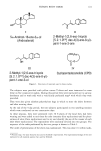
j. Soc. Cosmet. Chem., 37, 409-428 (November/December 1986) Odorants related to human body odor E. P. KOSTER, J. s. JELLINEK, N. D. VERHELST, J. MOJET, and M. R. I. LINSCHOTEN, Psychological Laboratory, Ryksuniversiteit, Sorbonnelaan 16, 3594CA Utrecht, Netherlands (E.P.K., N.D.V.,J.M., M.R.I.L.), and Dragoco, D-3450 Holzminden, West Germany (J. S.J. ). Received July 23, 1986. Synopsis Using a T-shirt test design described by M. Schleidt and co-workers with young female (n = 29) and male (n = 30) respondents, the relations between concentration, odor intensity, odor pleasantness, and sex attribution were studied for female and male perspiration, androstenol (I, a natural ingredient of perspira- tion), for two synthetic androstenol analogues (II and III), and for cyclopentadecanolide, a synthetic musk. It was found that the synthetic analogue III and, to a lesser extent, II exhibit patterns similar to the natural stimuli. Cyclopentadecanolide was perceived more as a feminine perfume. INTRODUCTION There is a notion that body odor may play a role in human interactions, not only in the sense of repulsion by the smell of unwashed, sweaty bodies and clothing but also in the sense of sexual attraction and of individual recognition. This notion is not new (la). However, the evidence supporting it has been, until recent years, largely anecdotal. Practices such as the use of a perspiration-drenched handkerchief as an aphrodisiac, reported for peasant populations in several European countries, have been based on tradition and belief (lb). During the past decade, a number of studies have been con- ducted in which human reactions to human body odors have been tested under con- trolled conditions. Some of these were conducted with body odors in their natural form others involved two pure substances which have been identified in human perspiration and urine: 5o•-androst- 16-ene-3o•-ol and 5o•-androst- 16-ene-3-one (2). Well before these recent studies were undertaken, Paul Jellinek (3) postulated the cen- tral importance to perfumery of odorants with odor qualities reminiscent of human body odor. He proposed the following theses: 1. The function of perfumes worn by women is to enhance the wearers' sexual attrac- tion to the opposite sex. 2. Perfumes perform this function by virtue of their content of "erogenous" odorants. 3. These odorants, which are to be found primarily in perfume materials of animal origin (musk, civet, ambergris, castoreum) but also in essential oils and extracts from plants and among synthetic aromatic chemicals, owe their erogenous effect to the similarity of their odor to some aspect of human body odor. 4. These odorants exert an erogenous effect only if used at low levels. 4O9
Purchased for the exclusive use of nofirst nolast (unknown)
From: SCC Media Library & Resource Center (library.scconline.org)