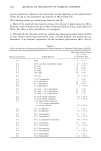
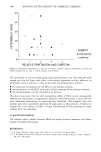
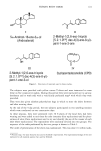
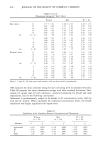
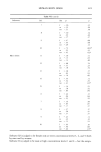
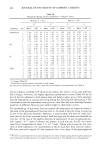
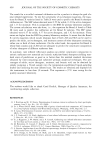
428 JOURNAL OF THE SOCIETY OF COSMETIC CHEMISTS human body odors, reactions to these chemicals 'are similar to those to natural body odors in a number of respects: 1. They are predominantly attributed to the one or the other sex. 2. Perceived intensity and pleasantness rating are negatively correlated. 3. When the materials are perceived as relatively strong or as relatively unpleasant, they tend to be attributed to male wearers. 4. At low concentration, the average pleasantness rating is comparable to that of nat- ural body odor (this is not true for the less pleasant substance II). For the synthetic musk, cyclopentadecanolide (IV), observations 2 and 3 do not hold. Furthermore, these synthetic odorants including cyclopentadecanolide were similar to the natural human body odorant, androstenol, in the following respects: 1. Low olfactory threshold. 2. Low slope of the psychophysical function. A surprising and important finding was the attribution of androstenol to females rather than to males, at all concentration levels, both by male and female respondents. The responses to the shirts that had actually been worn by test subjects confirmed M. Schleidt's findings in all respects: 1. Correct sex attribution by a significant majority of the respondents. 2. A significant tendency to attribute stronger smelling shirts to male wearers. 3. Stronger rejection of high intensity odors by female respondents. REFERENCES (la) A. Comfort, Dragoco Report, 19(11), 226-233 (1972). A. Comfort in Pheromones, M. C. Birch, Ed. (North Holland Publ., Amsterdam 1974), pp 386-396. (lb) I. Bloch, Odorants Sex/•alis (Panurge Press, New York, 1934). (2) For reviews of this work, cf. Richard L. Dory, Chemical Senses, 6(4), 351-376 (1981) J. N. Labows, K.J. McGinley, and A.M. Kligman, J. Soc. Cosmet. Chem., 34, 193-202 0uly 1982) D. B. Gower, M. R. Hancock, and L. H. Bannister in Biochemistry of Taste and Olfaction, R. H. Cagan and M. R. Kate, Eds. (Academic Press, New York, 1981), pp 7-31. (3) P. Jellinek, Die psychologischen Grundlagen der Parfiimerie (Dr. A. Hi•thig Verlag, Heidelberg, 1951). (4a) E. Paukner, J. Soc. Cosmet. Chem., 16, 515 (1965). (4b) W. Steiner, E.-F. Hanisch, and D. Schwarz, Parr. undKosm., 58, 189-196 (1977). (5) M. Schleidt, Ethology Sociobiol., 1, 225-231 (1981) and M. Schleidt, B. Hold, and G. Artill, J. Chem. Ecol., 7, 19-31 (1981). (6) J. S. Jellinek, Dragoco Report, 34(2), (1987). (7) A. R. Jonckheere and G. H. Bower, Brit. J. Math. and Social Psychol., 20(2), 163-186 (1967). (8) J. E. Amoore, P. Pelosi and J. L. Forrester, Chem. Senses and Flavor, 2, 401-425 (1977). (9) J. S. Jellinek, Dragoco Report, 26(2), 85-87 (1979). (10) D.C. Bicknell and D. B. Gower, J. SteroidBiochem., 7, 451-455 (1976). (11) S. Bird and D. B. Gower, J. Endocrinol., 85, 8P-9P (1980). (12) M.D. Kirk-Smith, D. A. Booth, in Olfaction and Taste VII, H. v. d. Starre, Ed. (IRL Press, London 1980), pp 397-404. (13) M.D. Kirk-Smith, D. A. Booth, D. Carroll, and P. Davies, Res. Commun. in Psychol., Psychiatry and Behavior, 3(4), 379-384 (1978).

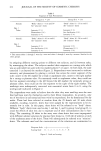
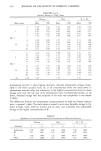
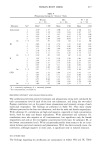
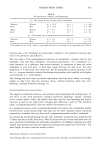
j. Sac. Cosmet. Chem., 37, 429-444 (November/December 1986) Influence of solvents on paraben permeation through idealized skin model membranes j. N. TWIST and J. L. ZATZ, Rutgers University College of Pharmacy, P.O. Box 789, Piscataway, NJ 08854. Received June 23, 1986. Presented at the Annual Meeting of the Society of Cosmetic Chemists, New York, December 4-5, 1986. Synopsis The effect of various solvents on permeation of methyl- ethyl- propyl-, and butylparaben through polydi- methylsiloxane membranes, a model for skin, has been investigated. Flux of a given paraben from saturated solution should theoretically be the same, independent of solvent, in the absence of membrane-solvent interaction. This was experimentally observed for water, various glycols, and glycol-water mixtures, de- spite enormous differences in paraben solubility in these vehicles. However, there was significant increase in flux from solutions containing various concentrations of ethanol. The nature of the solvent-membrane interaction was investigated through studies on solvent uptake, paraben partitioning, and diffusivity within the membrane. The results indicated that an increase in partition coefficient was the major effect responsible for the enhanced flux. Adsorption to silica filler was quantitated and found to parallel solute polarity. The variables investigated here are also expected to determine solvent interaction with skin. INTRODUCTION Experiments attempting to determine the effect of solvents on percutaneous absorption are often difficult to interpret due to the highly complex nature of the stratum corneum and its interaction with the vehicle. It is advantageous to test new permeation tech- niques or mathematical models intended for applications for skin transport by per- forming preliminary studies utilizing less complex membranes. Synthetic membranes offer advantages concerning the physical-chemical properties of the diffusional barrier, such as perm-selectivity, high diffusivity, thickness control, and less stringent storage and handling requirements. Polydimethylsiloxane (PDMS) is a non-polar, non-porous elastomer which is amorphous at ambient temperature. Permeation through PDMS membranes consists of initial dissolution of the solute into, and then diffusion through, the polymer matrix (1). Silica filler (20-30% w/w) is usually included to enhance the physical strength of cast sheets of the polymer and behaves as an inert dispersed phase. These properties make it an ideal model for drug transport across biologic membranes including skin. Nakano and Patel (2) studied the release of salicylic acid from several ointment bases using silicone rubber membranes as a model for skin. Their in vitro release results exhibited a perfect rank order correlation to published in viva data for the same systems. Experiments measuring the uptake of the solute into the ointment bases revealed a high affinity (complexation) between the solute and polyethylene glycol ointment. 429
Purchased for the exclusive use of nofirst nolast (unknown)
From: SCC Media Library & Resource Center (library.scconline.org)