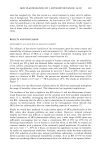
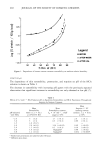
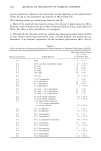
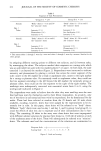
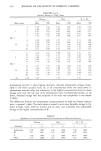
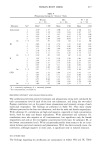
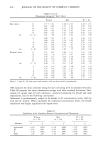
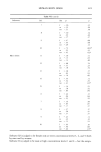
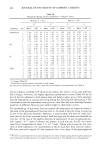
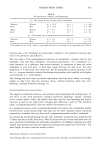
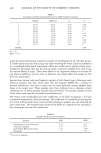
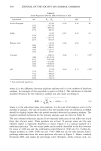
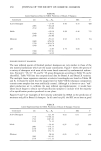
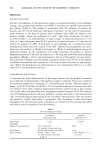
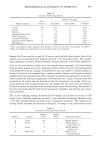
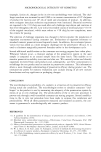
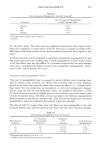
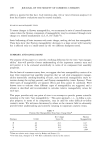
MICROBIOLOGICAL INTEGRITY OF COSMETICS 483 A microbiological assay is performed prior to product distribution. In the case of eye product panels, microbiological assays of the product are conducted at several time intervals throughout the test rather than only at test initiation and completion. Products are coded and distributed randomly to the panelists, using a double crossover study design in which panelists first use one test product and are then "crossed over" to use the second test product. Panelists are given instructions for product use and a calendar to record the frequency of product use. Panels are conducted for 3-8 weeks. The actual length is dependent on the product and its intended use. More intensive evaluation of sensitive eye area products require longer test panels mascara in use testing averages eight weeks or greater in length. At the conclusion of the use test, the microbiological evaluation is performed first, followed by any additional physical/chem- ical testing. MICROBIOLOGICAL EVALUATION/CRITERIA Following the consumer-use test, an assay is performed on the used product 24 hours after the last application of the product. Preservative efficacy is more accurately mea- sured by allowing 24 hours before assaying since this more closely simulates ordinary use. Assays are performed on nutrient agar (BBL 12174) with 2% polysorbate 80, which is added for neutralization of the preservative, Vogel-Johnson agar (BBL 11812 for detection of Staphy/ococcus species), Pseudomonas Isolation agar (Difco 0927-01), and Mycophil agar (BBL 11450 for detection of yeasts and molds). Plates are incubated for 48 hours at 35øC and the test results are recorded. Enrichment tests are performed for mascara and eye products. A broth dilution of the product [1/10 in AOAC Letheen Broth (BBL 10914)] is incubated at 35øC for 24 hours. These broth dilutions are then streaked onto enrichment plates of Vogel-Johnson agar, MacConkey agar (BBL 11387 for the detection of gram negatives), and Pseudomonas Isolation agar, which in turn are incubated for 48 hours at 35øC. Criteria for formula acceptability after use is recovery of • 100 cfu/g total aerobic plate count including yeasts and molds and 10 cfu/g gram negatives on initial assay or recovery of 10 cfu/g total plate count on retest of the product. In addition, the product should not contain Pseudomonas species, Escherichia coli, or Staphylococcus aureus, All microorganisms recovered after retest are identified. RESULTS One-hundred forty three products were consumer-tested from 1980 through early 1985. A full complement of cosmetic and toiletry products containing a wide range of cosmetic preservatives were evaluated after consumer use. Preservative efficacy under various use conditions was measured. Table II itemizes the creams and lotions which have been tested. Twenty-eight creams were panel-tested these include night creams, cleansing creams, moisturizers, sunscreens, and eye creams. Seventy-three lotions were evaluated, including moisturizers, cleansers, skin lotions, milky lotions, fresheners and toners, foundations, sunscreens, and body lotions. Other product types evaluated during this five-year period are listed in Table III. The complete history of consumer-use testing is summarized in Table IV. Only four of the 143 products failed to meet the test criteria, i.e., three lotions and one shower gel. With 2182 lotion samples assayed, five samples (0.22%) were unacceptable. With 254

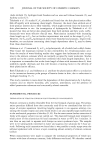
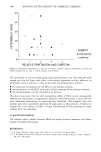
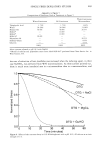
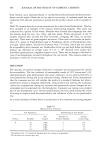
484 JOURNAL OF THE SOCIETY OF COSMETIC CHEMISTS Table II Consumer Tests--Creams & Lotions Product Category Product Type Creams Lotions Night Cream 11 -- Cleanser 7 7 Moisturizer 5 32 Freshener/Toner -- 15 Foundation -- 5 Skin Lotion/Milky Lotion -- 9 Other 5 5 -- Total 28 73 shampoo/shower gel samples assayed, four samples (1.6%) were unacceptable. These product samples did not meet the criteria for acceptability of 10 cfu/g upon retest and absence of S. aureus, E. co/i, and Pseudomonas species. Lotion A (Table V) was consumer-tested for four weeks early in 1980. Bacteria were recovered from three out of 189 samples (1.6%). Microbiological testing in early 1980 was not performed by a standard pour plate method. The product was directly streaked onto plates of nutrient agar and MacConkey agar. At this time in the test program, recovered organisms were not identified according to species. For Lotion A, growth occurred from streaks on nutrient agar only and not on MacConkey, indicating the absence of gram-negative contaminants. Microbial recoveries from the used product persisted for four weeks after test completion. After daily (2 x ) use of Lotion B for three weeks, Enterobacter cloacae was recovered (•103 cfu/g) from one out of twelve samples (8.3%). Recoveries of the organism re- mained after retest. One sample out of twenty-six (3.8%) of Lotion C had recovery of 1.2 X 10³ cfu/g gram-positive Bacillus species upon retest. Bacillus species are not considered pathogenic, but these high recoveries of microbes were not acceptable. Table III Consumer Tests--Other Products Product Category No. Cleansing Foams 3 Toothpastes 3 Lip Treatment 2 Masks 2 Roll-On Deodorant/AP 1 Concealing Sticks 1 Cheek Blush/Pdr. Foundation 5 Lipstick/Lip Gloss 4 Eyeshadows/Eyeliner 7 Shampoos/Shower Gels 9 Hair Conditioners 4 Water-Based Mascara 1 -- Total 42
Purchased for the exclusive use of nofirst nolast (unknown)
From: SCC Media Library & Resource Center (library.scconline.org)